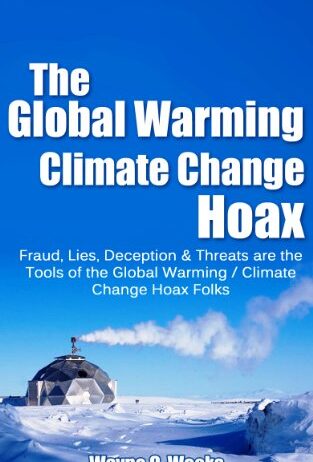

Climate change has become a polarizing subject, often viewed through the lens of skepticism or fervent belief. Within the public discourse, various factions assert their arguments, making the discussion both complex and compelling. The crux of the debate hinges on whether climate change is a legitimate crisis or an orchestrated hoax. Proponents of the latter are often labeled as climate skeptics. This article aims to dissect the arguments surrounding this contentious issue, examining scientific evidence, the basis of skepticism, and the implications of these divergent viewpoints.
To understand the skepticism surrounding climate change, it’s vital to assess the scientific consensus on the matter. The overwhelming majority of climate scientists concur that climate change is not only real but also significantly driven by human activity. According to extensive research, including reports from organizations such as the Intergovernmental Panel on Climate Change (IPCC), rising levels of greenhouse gases—primarily carbon dioxide and methane—are directly linked to anthropogenic activities such as fossil fuel combustion, deforestation, and industrial processes. This acceptance of climate change as an environmental reality is rooted in empirical evidence collected over decades.
Nevertheless, skepticism remains prevalent. Some individuals argue that the science is uncertain or that climate models are flawed. Such skepticism can stem from various motivations: economic interests, ideological beliefs, or distrust in governmental and scientific institutions. Indeed, the narrative of climate change being a hoax often serves as a rallying cry for those who resist what they perceive as overreaching regulations and economic burdens imposed by climate policies.
One of the central arguments posited by climate skeptics is the claim that climate change forecasts are based on unreliable models. They argue that these models often fail to accurately predict future climate conditions or do not account for natural climate variability. Critics frequently highlight historical instances where forecasts have been proven incorrect, suggesting a pattern of alarmism among climate scientists. However, while it is accurate to state that models are not infallible, the fundamental principles of physics underlying climate science remain sound.
The uncertainty often cited by skeptics should not be interpreted as evidence against climate change. It is crucial to differentiate between scientific uncertainty and denialism. The latter rejects evidence outright, while the former acknowledges the complexities of climate systems yet still validates the overarching trend of global warming. Science, by its nature, is an evolving discipline. Scientific understanding may shift with the introduction of new data, but this dynamism does not negate the established evidence that climate change is occurring and exacerbated by human actions.
In addition to the critique of scientific models, skeptics contend that the motivation behind climate change narratives is suspect. They argue that such discussions are often driven by a desire for power and control rather than a genuine concern for the environment. This perspective insinuates that politicians and climate activists exploit fear to promote agendas. While it is true that political and economic interests intertwine with environmental advocacy, this intersection should not detract from the empirical evidence supporting climate change. The challenge lies in navigating the space where science meets policy, rather than dismissing the science altogether.
Further complicating matters is the phenomenon of confirmation bias, which pervades the climate change debate. Individuals often seek out information that reinforces their pre-existing beliefs, leading to polarized perspectives. For those who doubt climate change, sensational headlines portraying apocalyptic scenarios may be met with skepticism, leading to a dismissive attitude toward scientific findings warranting immediate action. Conversely, ardent advocates for climate awareness may perceive skeptics as misinformed, fueling a divide that hampers constructive dialogue.
The implications of framing climate change as a hoax extend far beyond academic discussions. If society collectively adopts the stance that climate change is unfounded, the consequences could be dire. Failure to mitigate emissions and adopt sustainable practices could exacerbate climate impacts such as extreme weather events, rising sea levels, and biodiversity loss. Hence, the stakes remain alarmingly high.
Furthermore, the narrative surrounding climate change also influences climate justice issues. Disproportionately affected by climate change, marginalized communities face the brunt of environmental degradation without having contributed significantly to its causes. Recognizing the reality of climate change necessitates addressing these inequities and advocating for a transition toward a more sustainable and equitable society. Skepticism, when wholly unfounded, can perpetuate cycles of injustice and inaction that adversely affect the world’s most vulnerable populations.
Encouragingly, there is space for collaboration among diverse viewpoints. Constructive dialogue must prevail if society is to address the challenges posed by climate change effectively. Engaging skeptics in reasoned discussions about climate science and its implications can pave the way for more nuanced understanding and potential avenues for consensus. This includes acknowledging legitimate concerns while emphasizing that the existence of climate change is backed by robust, comprehensive scientific inquiry.
In conclusion, declaring climate change a hoax does not change the observable realities shaping our planet today. It undermines the significance of credible scientific research and disregards the urgent necessity for cohesive action. Whether viewed through scientific or skeptical lenses, the imperative remains clear: adapting to and mitigating the effects of climate change is not merely an option but a necessity for securing our planet’s future. The dialogue must pivot from denialism to empowerment, from skepticism to stewardship. Only then can society grapple with the profound challenges posed by a changing climate, transforming skepticism into solutions.