
The ocean is the ancient, throbbing heart of our planet, its vastness encapsulating an intricate system of currents that serve as the lifeblood for the climate. These currents, much like hidden threads in a tapestry, weave together disparate regions, steering the environmental patterns that dictate weather phenomena on a global scale. The significance of ocean currents transcends mere geographical boundaries, acting as powerful agents of climatic influence. This article unravels the complex relationship between ocean currents and climate, illuminating the oft-overlooked forces that orchestrate our weather systems.
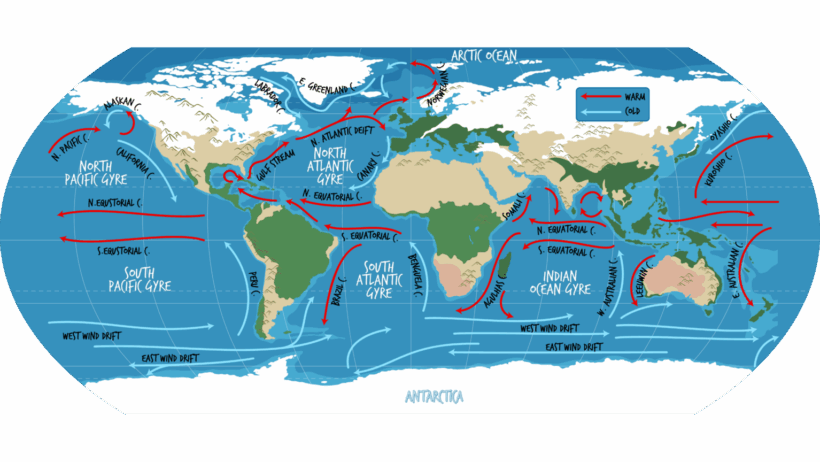
To comprehend the profound impact of ocean currents, it is essential to first delineate what they are. Ocean currents can be characterized as continuous movements of seawater, generated by factors such as wind patterns, temperature gradients, and the Earth’s rotation. While some currents snake through the oceans at the surface, others dwell in the great depth, creating a dynamic system that regulates thermal properties and nutrient distribution across marine ecosystems. For instance, the Gulf Stream, a prominent warm ocean current, propels itself from the Gulf of Mexico toward the North Atlantic, imparting a temperate climate to regions like western Europe.
The interplay between ocean currents and atmospheric conditions is akin to a dance, where each partner influences the other’s movements. When ocean water warms, it evaporates, infusing the air above with moisture. This process isn’t uniform; it varies significantly, fueled by the warm and cold currents. As a result, regions adjacent to warm currents often experience increased precipitation and milder winters, whereas cold currents can contribute to aridity and harsh conditions. Thus, the ebb and flow of these currents govern not only localized weather patterns but also broader climatic trends that can shift over decades.
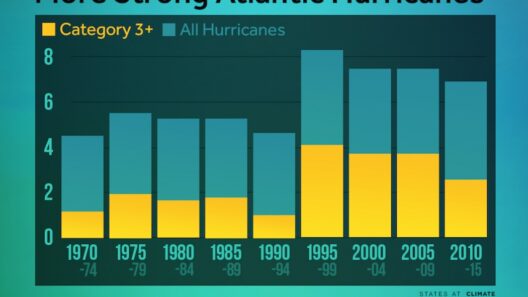
Consider the role of ocean currents in shaping hurricane activity. Warm waters are the veritable fuel that powers these formidable storms. The correlation is striking: a rise in sea surface temperatures due to alterations in currents can catalyze more intense and possibly more frequent hurricanes. Data suggest that the migration of warm currents towards higher latitudes, a phenomenon ostensibly arising from climate change, is stimulating shifts in storm tracks and increasing the likelihood of severe weather events. This burgeoning trend elucidates a pressing concern—how the dynamics of ocean currents may offer insight into future climatic trajectories.
However, the influence of ocean currents does not solely lie in their ability to steer weather patterns. They also play a crucial role in carbon sequestration, a process pivotal to regulating atmospheric carbon levels. The ocean absorbs approximately one-third of anthropogenic carbon emissions, and currents help distribute this carbon-dense water into the depths of the ocean. The thermohaline circulation, often referred to as the “global conveyor belt,” is integral to this process. As currents transport carbon-rich water to the ocean’s abyss, they essentially delay the return of carbon to the atmosphere, a natural mitigating factor against global warming.
Yet, this equilibrium may be precariously poised. Climate change threatens to disrupt the delicate balance. Melting polar ice caps and the thawing of permafrost release fresh water into the oceans, potentially altering the salinity and temperature gradients that drive major currents. Such perturbations could unravel the shifting tapestry of oceanic flows, leading to catastrophic feedback loops. The prospects of a weakened Gulf Stream, for instance, portend dire consequences for weather systems in Europe, possibly plunging countries into severe winters or unleashing unprecedented flooding.
Furthermore, the socio-economic ramifications tied to the fluctuations in ocean currents cannot be overstated. Ecosystems reliant on predictable seasonal patterns become increasingly vulnerable as currents shift. Fisheries that have sustained coastal communities for generations may collapse or migrate, displacing livelihoods and igniting conflicts over dwindling resources. This cascading effect underscores the interconnectedness of human civilization and oceanic health, illustrating that the nuanced balance struck by ocean currents is not just a distant environmental concern; it is an immediate threat to our societal fabric.
Ultimately, the intrigue of ocean currents lies not merely in their role as climatic arbiters but in their embodiment of the interconnectedness of Earth’s systems. The adage “it takes a village” resonates within the vast breast of the ocean. Through intricate pathways, warm and cold currents come together, influencing everything from regional climates to global weather phenomena. Navigating this complex web requires holistic approaches, emphasizing conservation and sustainable practices to ensure the integrity of these vital currents.
In conclusion, it is imperative that we elevate the discourse surrounding ocean currents and their climatic implications. To disregard their significance is to ignore one of the most fundamental forces shaping our planet. As we grapple with the burgeoning specter of climate change, embracing a paradigm shift towards understanding and preserving our oceans is not merely prudent; it is essential for the sustainability of our future. The ocean currents are not merely a scientific curiosity; they are the invisible architects of our climate, steering us toward either a flourishing future or a tempestuous downfall. It is time we recognize them as such and act accordingly.