
The debate surrounding carbon dioxide (CO₂) and its purported role in climate change can often resemble a murky swamp—teeming with data, theories, and a cacophony of voices, where clarity is hard to find. At its core, it is vital to understand the central claim: CO₂ is a greenhouse gas that significantly contributes to the warming of our planet. The question isn’t merely rhetorical; it unfolds into myriad discussions spanning scientific, economic, and even ethical considerations.
Imagine Earth as a delicate garden. The Sun, an omnipresent gardener, provides warmth and light essential for growth. However, this garden’s ability to flourish can be stifled or enhanced by the presence of certain elements—like carbon dioxide. When CO₂ levels rise, it acts like a thickening blanket over the garden, trapping heat and leading to an increase in temperature.
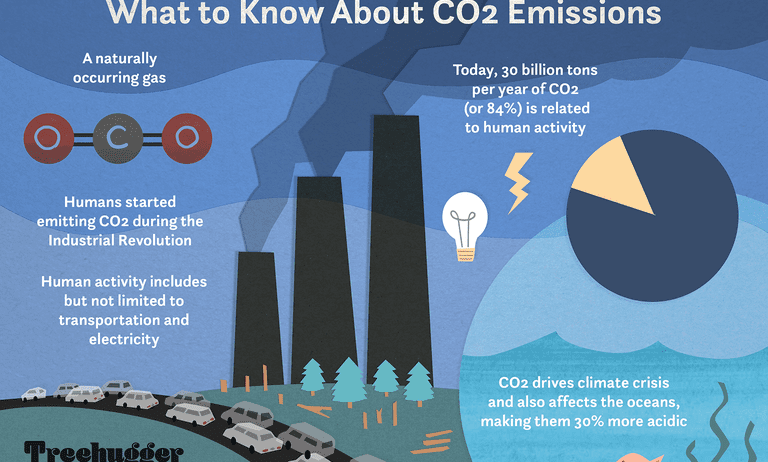
Think back to the industrial revolution; this era marked the dawn of extensive fossil fuel extraction and greenhouse gas emissions. Factories puffed out plumes of smoke, and cars crisscrossed budding cities, releasing CO₂ into the atmosphere. Scientific data illuminate this crucial timeline: atmospheric concentrations of CO₂ have surged from about 280 parts per million (ppm) in the late 18th century to over 400 ppm today. This transformation has induced pronounced changes in the global climate system.
One must also engage with the carbon cycle to fully appreciate the complexity surrounding CO₂. In this cycle, CO₂ emerges from sources such as volcanic eruptions, oceanic release, and anthropogenic activity—particularly fossil fuel combustion. Conversely, it is absorbed by vegetation and oceans. However, the contemporary elevation of CO₂ due to human actions leads to an atmospheric imbalance, disrupting this natural cycle akin to an orchestra where one section plays out of harmony.
Climate change theorists cast a spotlight on the greenhouse effect, a phenomenon best illustrated through an analogy of Earth as a greenhouse. Just as glass traps warmth inside a greenhouse, CO₂ and other greenhouse gases trap heat in the atmosphere. While a moderate amount of greenhouse gases is essential to maintain life, excessive concentrations lead to profound alterations: melting ice caps, rising sea levels, and extreme weather fluctuations. Such changes threaten ecosystems and human habitation alike, highlighting CO₂’s insidious role in climate disruption.
Critics may argue that CO₂ is not the sole culprits in the climate crisis. They emphasize the role of other greenhouse gases, such as methane (CH₄) and nitrous oxide (N₂O), asserting that focusing predominantly on CO₂ is an oversimplification. This viewpoint is somewhat valid; however, CO₂’s longevity in the atmosphere—averaging over 100 years, versus methane’s shorter lifespan—renders it a persistent concern. Its environmental footprint is disproportionately significant relative to its atmospheric abundance, thereby justifying the intense scrutiny it receives.
Furthermore, when examining historical climate data, it’s evident that temperature rises correlate with increased CO₂ levels. This connection is graphically illustrated over millennia, showcasing oscillations in temperature and greenhouse gas concentrations. It is as if records of Earth’s history—captured within ice cores—serve as a time-lapse video exhibiting the direct relationship between greenhouse gas emissions and climatic shifts.
Economically, the ramifications of climate change instigated by CO₂ emissions are indeed formidable. Industries reliant on agriculture, fisheries, and tourism face increasing volatility due to changing weather patterns. For instance, droughts may lead to crop failures while rising sea levels threaten coastal tourism economies. The costs of adapting to these changes dwarf any short-term financial benefits derived from fossil fuel consumption. Therefore, one must contemplate the long-term economic wisdom behind addressing CO₂ emissions—not as an emotional crusade but as a pragmatic necessity.
Politically, the discourse surrounding CO₂ has evolved into a nuanced labyrinth. The transition to renewable energy sources has garnered varied responses. Some view this shift as a path towards a sustainable future, while others perceive it as an infringement upon personal liberties or economic viability. Herein lies the crux of the dilemma; addressing CO₂ emissions demands collaborative global action. The Paris Agreement serves as a landmark effort wherein countries collectively commit to curbing greenhouse gas emissions, illustrating a rising acknowledgment of carbon truth. Such international collaboration is crucial to creating infrastructural and technological pathways for reducing emissions.
Intriguingly, while the overwhelming scientific consensus affirms that CO₂ contributes to climate change, a psychological phenomenon known as “climate change denial” complicates matters further. Some individuals, overwhelmed by the apocalyptic implications, reject the science, clinging to a metaphorical lifebuoy of skepticism. This discord—between scientific certainty and public perception—reinforces the necessity for effective communication strategies. Facts alone will not foster action; storytelling and emotional engagement may often sway perspectives far more effectively.
In conclusion, the complexity surrounding CO₂ and climate change demands a multifaceted exploration beyond mere causation. The entwining of ecological, economic, and psychological elements culminates in a narrative that underscores the urgency of action. Yes, CO₂ does indeed cause climate change, serving as a pivotal thread in the tapestry of our planet’s evolving climate narrative. This truth, while daunting, empowers us to embrace innovation and adaptation for a sustainable future. Just as a wise gardener nourishes soil for flourishing plants, humanity must cultivate a conscious approach to CO₂ emissions—ensuring the health of our delicate garden, Earth.