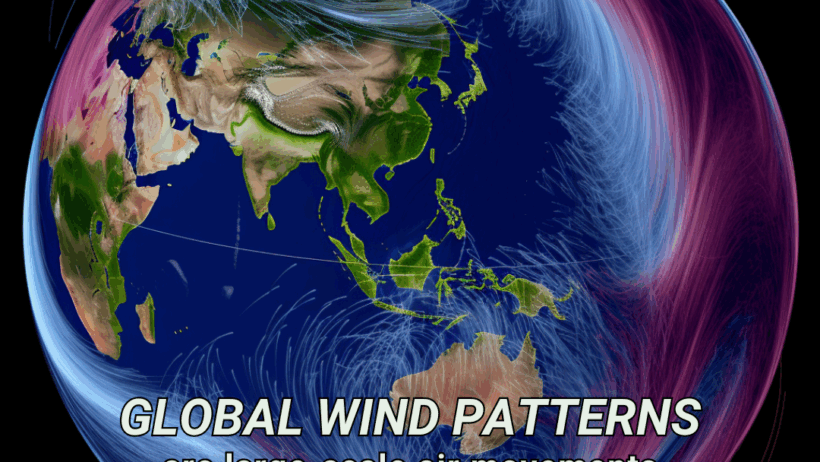

Wind patterns are a fundamental aspect of our planet’s climate system. They are not merely a product of simple meteorological functions, but rather an intricate dance of atmospheric dynamics that plays a pivotal role in regulating weather systems and, consequently, climate change. Understanding these patterns is quintessential for grasping the broader implications of how our planet is changing due to anthropogenic influences.
At the most basic level, wind patterns stem from the uneven heating of the Earth’s surface by the sun. The equator receives more direct sunlight than the poles, leading to temperature gradients that create pressure differences in the atmosphere. These differences drive air movement—from high-pressure areas to low-pressure areas—resulting in the winds that we experience in our daily lives. However, the implications extend far beyond local breezes.
There are major wind belts across the globe, each exhibiting distinct characteristics. The trade winds, westerlies, and polar easterlies form the core of these belts. The trade winds, prevalent in the tropics, blow from east to west and have a significant influence on tropical storms and ocean currents. The westerlies, which prevail in mid-latitudes, are responsible for the movement of weather systems across North America and Europe. Understanding these belts is crucial for predicting weather phenomena and their variations caused by climate change.
As climate change increasingly alters the thermal dynamics of the Earth, it has far-reaching consequences on wind patterns. The increased concentration of greenhouse gases in the atmosphere leads to a rise in overall temperatures, which, in turn, can alter pressure systems. One notable phenomenon is the polar vortex: a large area of low pressure and cold air surrounding the Earth’s poles. When the polar vortex is stable, it contains cold air. However, warming trends destabilize this vortex, leading to erratic shifts that can result in unusually cold conditions in lower latitudes or vice versa. These fluctuations not only disrupt normal weather patterns but also bring about extreme weather events.
Another critical aspect of wind patterns is their influence on ocean currents—an interrelated system that impacts global climate. The Gulf Stream, for example, is a warm ocean current originating in the Gulf of Mexico that affects climate conditions across North America and Europe. Changes in wind patterns can lead to variations in the strength and direction of the Gulf Stream, influencing regional climates and contributing to sea-level rise, particularly along the Eastern seaboard of the United States. The interplay between wind patterns and ocean currents underscores the complexity of climate dynamics and highlights the interconnectedness of various environmental systems.
Moreover, wind patterns are instrumental in the dispersion and transportation of pollutants. Winds can carry particulate matter, chemicals, and even bioaerosols over vast distances, thereby affecting air quality and ecosystem health. As climate change alters these wind patterns, there can be significant implications for human health and environmental integrity. Increased storm intensity, for example, can lead to greater dispersal of pollutants in the atmosphere, exacerbating respiratory conditions and other health issues.
Shifting wind patterns also impact terrestrial ecosystems. Changes in moisture distribution can lead to alterations in plant and animal habitats. Some regions may become drier, while others may experience increased rainfall, leading to floods. Such variations can disrupt local agriculture, affecting food supply chains and economic stability. Understanding how wind patterns influence these ecosystems is vital for developing adaptive strategies that can mitigate the effects of climate change on biodiversity.
Recent studies have indicated that the frequency and intensity of hurricanes are likely to increase in response to warming temperatures and changing wind patterns. The interactions between warm ocean waters and atmospheric conditions create the ideal breeding ground for these severe storms. A warmer atmosphere holds more moisture, leading to heavier rainfall during these events and increasing their destructive potential. This poses significant risks to coastal populations and infrastructure, necessitating a reevaluation of our preparedness and resilience strategies.
Furthermore, the changing dynamics of wind patterns can influence seasonal weather variability, affecting everything from monsoon rains to snowfall in winter months. These alterations have implications for water resources management, agriculture, and energy production. For instance, wind energy production can be adversely impacted if wind patterns shift away from regions traditionally suited for harnessing this renewable energy. Future energy policies must account for these potential shifts to ensure energy security in a changing climate.
In summary, the nexus between wind patterns and climate change is complex and multifaceted. From the alteration of atmospheric pressure systems to the impacts on ocean currents and ecosystems, the drive of wind patterns is a key factor in understanding the broader implications of climate change. As advocates for environmental sustainability, there is a moral imperative to deepen our understanding of these relationships. Proactive measures, informed by scientific research, can help us mitigate the effects of climate change and adapt to the challenges posed by shifting wind patterns. The time to act is now, as the winds of change are already upon us, and they carry with them the potential for both devastation and opportunity.