
Wind is an omnipresent force that profoundly influences our planet’s climate systems. It whispers through the trees, batters coastal shores, and propels entire weather systems across vast distances. But what may be perceived merely as a gentle breeze or a fierce gust actually holds intricate significance in shaping global climate patterns. Understanding the dynamism of wind is essential for grasping the broader environmental phenomena that govern our existence on Earth.
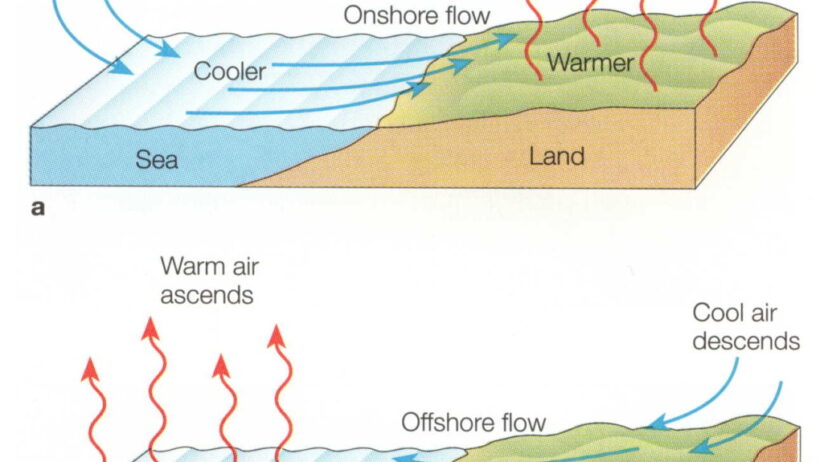
The fascination with wind begins with its seemingly capricious nature. While one can observe the immediate effects of wind — such as the changing direction of smoke or the swaying of tall grass — the underlying mechanisms are far more complex. Wind results from differences in atmospheric pressure, which are caused by a variety of factors, including temperature variations, solar radiation, and the Earth’s rotation. In essence, the movement of air is a response to uneven heating across the planet’s surface.
As the sun’s energy heats the Earth’s surface, some areas qualify as warm, while others become relatively cooler. This temperature disparity creates pressure gradients, which air molecules, in their frenetic dance, seek to equalize by moving from regions of high pressure to low pressure. These gradients are exacerbated by geographic features such as mountains, valleys, and bodies of water, which complicate wind patterns further. Such complexities lead to the formation of distinct wind systems that govern regional climates.
Consider the trade winds, which circulate in the tropics. Originating from the subtropical high-pressure systems, these winds blow towards the equator, where they converge near the Intertropical Convergence Zone (ITCZ). This area is characterized by high humidity, oppressively humid air, and considerable cloud formation, a critical junction where temperature fluctuations lead to persistent thunderstorms and heavy rainfall. The influence of trade winds cannot be underestimated, as they facilitate the transport of heat and moisture, yielding climatic consequences that range from drought in certain areas to deluge in others.
Meanwhile, the westerlies — a dominant wind pattern in the mid-latitudes — chart a course from the subtropics towards the poles. These winds undergo significant modifications as they interact with various topographical features. The result? A myriad of localized weather phenomena. The westerlies play a key role in steering cyclonic systems, which can deliver beneficial rain to parched regions while simultaneously inducing extreme weather events elsewhere. In this regard, wind serves as both a nurturing and destructive force, reflecting nature’s delicate balance.
Moreover, the polar easterlies, originating from the high-pressure zones near the poles, help shape the stark climates of polar regions. Wind carries frigid air, not just influencing local temperatures but engaging in a global exchange of thermal energy. This helps maintain temperature equilibrium, while also playing a pivotal role in oceanic currents through processes that impact the thermohaline circulation. These currents, often described as the ocean’s conveyor belt, are vital for sustaining marine biodiversity and regulating global climate.
Wind’s role in creating ocean currents is particularly noteworthy. As surface winds push against the ocean, they transport water, thereby redistributing heat across the globe. Surface currents, such as the Gulf Stream, ferry warm water from the tropics to higher latitudes, profoundly influencing climate systems. These currents affect weather patterns, ecology, and even human activity, emphasizing the interconnectedness of wind and water as critical components of Earth’s climate system.
Significantly, wind is not merely an agent of weather change; it also possesses an intrinsic relationship with weather systems like hurricanes and tornadoes. These convections, driven by severe atmospheric instability, rely heavily on wind currents for their formation and direction. Hurricanes, in particular, can wreak havoc on coastal regions, leading to disastrous flooding and destruction. As the frequency and intensity of such events have increased in recent years, many researchers are exploring how climate change may be modifying wind patterns, leading to dire implications for future weather extremes.
In examining the implications of wind on climate dynamics, one must also acknowledge its role in the transport of particulate matter and pollutants. Wind can carry dust, pollen, and toxins across vast distances, affecting air quality and public health. Consequently, urban areas can find themselves grappling with environmental challenges that stem from regional wind patterns moving pollutants from industrial centers to rural landscapes. This intricate web of interactions underscores wind’s influence not just on climate but also on ecological health and human sustainability.
As climate change accelerates, understanding wind’s role becomes increasingly crucial. The alteration of wind patterns could exacerbate existing conditions, rendering once-fertile areas into arid wastelands, while flooding others with excessive rain. Predictive models suggest that rising global temperatures may alter wind belts, impacting agriculture, migration patterns, and biodiversity across the globe. This impending shift calls for a deeper exploration of how wind interacts with climate, renewable energy potential, and environmental resilience.
Ultimately, the intricate dance of air currents offers a glimpse into the Earth’s climatic tapestry. Wind, with all its complexities, plays a determining role in shaping our climate today and for future generations. Understanding this dynamic can aid in cultivating strategies for mitigation, adaptation, and resilience in the face of an uncertain and rapidly changing climate landscape. It is a clarion call for collective awareness and action, recognizing that while the wind may carry away remnants of our past, it also holds the potential to shape a sustainable future.