
When considering global climate change initiatives, one might whimsically ask, “Is China the reluctant hero in the saga of international climate agreements?” This query leads us to an intricate discussion about China’s role in the Paris Climate Agreement, a pivotal accord aimed at mobilizing collective efforts to combat climate change and limit global warming.
According to the framework established in the 2015 Paris Agreement, nations have committed to significant reductions in greenhouse gas emissions. The ultimate goal is to limit the increase in global average temperature to well below 2 degrees Celsius above pre-industrial levels. But how does China fit into this ambitious tapestry?
To grasp the nuances of China’s involvement in the Paris Agreement, we must first acknowledge its status as one of the world’s largest emitters of carbon dioxide. In fact, China accounts for roughly 28% of the total global carbon emissions. Thus, the country’s participation in climate agreements is not merely beneficial; it is essential to the efficacy of the entire initiative.
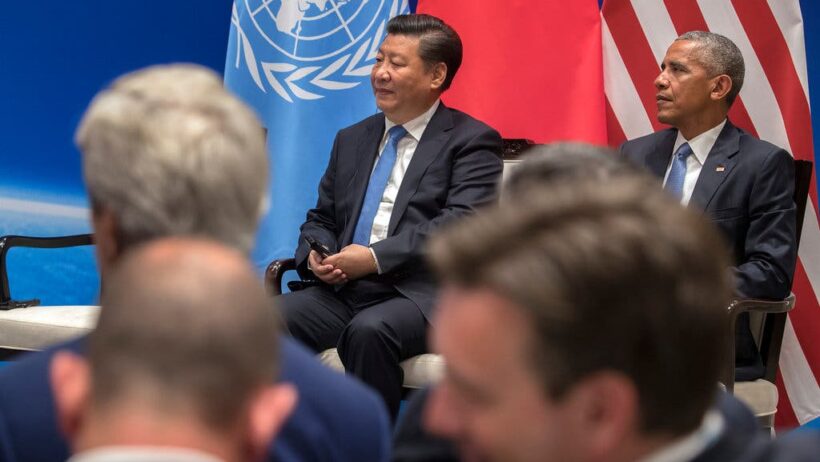
China ratified the Paris Agreement in April 2016, just a few months after the agreement was forged in Paris. This action demonstrated a significant commitment, as China pledged to peak its carbon emissions around 2030 and to increase its non-fossil fuel energy consumption to around 20% by the same year. Such targets position China as an active participant in mitigating climate change, but questions still arise regarding the feasibility and sincerity of these commitments.
While the Paris Agreement acknowledges the concept of “common but differentiated responsibilities,” recognizing that developed countries historically contributed more to the issue of climate change, China’s burgeoning industrial growth presents a conundrum. The rapid economic development has led to substantial emissions increases, raising eyebrows and concerns among environmental advocates worldwide. Can a nation so reliant on coal as its primary energy source transition towards greener alternatives without significant economic repercussions?
The duality of China’s position is striking. On one hand, it champions renewable energy investments, becoming the world leader in solar panel production and wind energy technology. On the other hand, it grapples with the realities of its heavy reliance on coal to fuel economic growth and urbanization. This paradox creates a playful tension: how can a nation exert itself as a leader in one arena while adhering to antiquated practices in another?
Despite these complexities, it is important to examine China’s pledges stemming from the Paris Agreement more closely. The nation has outlined its national climate action plans under the framework, known as the Nationally Determined Contributions (NDCs), which delineate strategies to achieve its emission reduction goals. Importantly, these contributions place an emphasis on enhancing carbon sinks, such as forests, and promoting sustainable urban development.
However, a chorus of skepticism arises from international spectators. Are these promises merely optimistic illusions, or does China have substantial motivations to follow through on its climate commitments? Economic incentives exist; as the world shifts towards sustainability, leaders recognize that failing to adapt could leave them economically isolated. Moreover, the increasing frequency of climate-induced natural disasters in China serves as an unpressurized nudge towards embracing greener technologies.
Moreover, international cooperation is a crucial component of effective climate action. China’s involvement in the Paris Agreement must not be an isolated endeavor; it requires collaboration with other nations. This interplay presents both opportunities and challenges. What happens when nations diverge in their environmental strategies? Cooperative platforms, such as the Belt and Road Initiative, increasingly feature sustainability aspects, highlighting the potential for transnational alliances to foster climate-resilient infrastructure.
Nevertheless, juxtaposed against these proactive measures are emerging concerns. Has China’s engagement in international climate efforts been offset by its domestic policy choices? The government has, at times, reversed course on stringent air quality regulations amidst its economic ambitions. Balancing ecological integrity and economic vitality presents a formidable challenge for policymakers.
This leads to the overarching question: can China pivot from being a significant polluter to a global leader in sustainability without addressing its foundational dependency on fossil fuels?
Addressing that question necessitates recalibrating not just policy, but also public perception and behavior. China, like many nations, faces the arduous task of shifting mentalities from short-term gains driven by industrial growth to long-term sustainability practices.
In summation, China’s participation in the Paris Climate Agreement is indicative of a complex interplay of promises and challenges. While the nation has firmly rooted itself in the agreement and has publicly declared ambitious targets, the path to actualizing these commitments is fraught with obstacles. The success of the Paris Agreement hinges on whether China can reconcile its economic aspirations with environmental responsibilities. This dichotomy will determine not only China’s future but also potentially the future of global climate action.
Ultimately, as the world waits with bated breath, the pivotal question remains: Can China rise to the occasion and emerge as a beacon of sustainability, or will it remain shackled by outdated practices? The answers lie unfurling over the coming decade, as the implementation of the promises made in Paris sets the course for the future of both China and our planet.