
Grasslands and highlands, while both integral components of the Earth’s ecosystems, exhibit distinctive climatic features that underscore their unique characteristics. These biomes vary significantly in terms of temperature, precipitation, and seasonal patterns, leading to diverse flora and fauna that are specifically adapted to their environments. Understanding the relationship between climate and these landscapes reveals not only the complex interactions of natural systems but also the susceptibility of these biomes to the impacts of climate change.
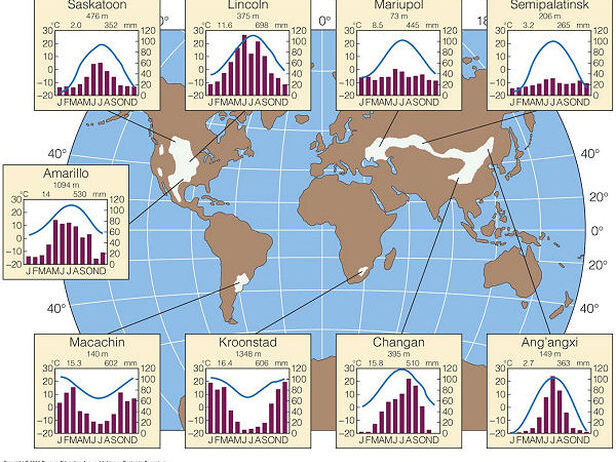
Grasslands, often termed prairies or savannas, are primarily characterized by vast open spaces dominated by grasses and occasional shrubs. The climate of grasslands is typically classified as semi-arid, receiving moderate rainfall that ranges from 10 to 30 inches annually. This precipitation is often seasonal, with distinct wet and dry periods that shape the biotic community. Understanding this water regime is essential when discussing grasslands, as it directly influences the distribution of plant species and, consequently, the herbivores and carnivores that rely on them.
On the other hand, highlands feature more pronounced climatic variations due to their elevation. As altitude increases, temperature generally decreases, leading to cooler conditions at higher elevations. This phenomenon, known as the lapse rate, results in the presence of varied microclimates within relatively small geographic areas. Highlands can experience considerable precipitation, often due to orographic lift, where moist air is forced to ascend over mountainous terrain, cooling and precipitating as it rises. These climatic features create a rich mosaic of habitats, enabling a diverse array of vegetation, from alpine meadows to coniferous forests.
The transition from grasslands to highlands introduces a fascinating gradient of biodiversity. Grasslands play host to a variety of grasses adapted to withstand grazing pressures and fire, while highlands support species that can endure harsher conditions, such as shorter growing seasons and greater exposure to wind. This shift in plant communities is not merely a botanical phenomenon; it has far-reaching implications for the entire food web. For example, large herbivores are more prevalent in grasslands, while highlands may support specialized species of flora and fauna that thrive in cooler, more rugged terrains.
Temperature fluctuations are another critical element that differentiates these biomes. Grasslands usually experience hot summers and cold winters, with temperature swings that can be quite dramatic, particularly in temperate regions. This variability influences ecosystems such as the abundance of wildflowers and other vegetation that flourish during warmer months. In contrast, highlands often present a more stable but cooler temperature regime, which can support ice and snow cover, affecting the organisms that inhabit these regions. The consistent cold of high-altitude environments leads to slower metabolic rates and often results in lower biodiversity compared to the more dynamic grassland ecosystems.
The climatic nuances of these biomes extend beyond mere temperature and precipitation. Winds can significantly alter the environmental conditions experienced in grasslands and highlands. Grasslands are frequently subject to powerful winds that can exacerbate water loss through evaporation, impacting plant growth. The adaptable species found in these regions have evolved resilience strategies, such as extensive root systems that facilitate deep water absorption during dry spells.
In highlands, wind patterns can also have profound effects. The elevation often leads to more pronounced wind exposure, promoting the growth of hardy, wind-resistant vegetation. Microclimatic variations, influenced by local topography, can create sheltered areas that support distinct ecosystems amidst otherwise harsh conditions. Such complexity adds to the allure and ecological significance of highland environments.
Furthermore, the seasonal dynamics in both biomes deserve attention. Grasslands experience a pronounced seasonal cycle with a burst of growth in the spring and a die-back phase in the winter. These cycles not only dictate plant productivity but also influence animal migrations and breeding patterns. In contrast, highlands may exhibit a more subtle seasonal change that results in fluctuating habitats, where certain species may only thrive during specific periods due to the harsher conditions prevailing at higher altitudes.
The adaptability of species within these biomes is indicative of their evolutionary history and ecological interactions. For instance, in grasslands, the presence of periodic fires is a natural phenomenon that many species have evolved to withstand. Fire can rejuvenate grasslands and promote new growth by clearing out old or dead vegetation. Conversely, in highland areas, the adaptations seen in flora often include shorter life cycles or specialized reproductive strategies that enable survival in a more unpredictable climate.
The implications of climate change on these biomes are profound. As global temperatures rise and precipitation patterns shift, both grasslands and highlands face substantial ecological pressures. Grasslands may become more susceptible to desertification, reducing biodiversity and the services these ecosystems provide. In contrast, highlands, particularly those in sensitive regions, may experience glacial retreat and altered water supply dynamics, critically impacting both local wildlife and human communities dependent on these resources.
In summary, the climatic features that distinguish grasslands from highlands are integral to understanding their ecological dynamics. From precipitation regimes and temperature variations to wind patterns and seasonal cycles, each aspect contributes to the rich tapestry of life found in these biomes. As the impacts of climate change continue to unfold, the ongoing study of these ecosystems becomes increasingly vital. The knowledge gained will be essential in informing conservation strategies, ensuring that the intricate relationships within these environments can be preserved for future generations.