


Glaciers, often perceived as mere colossal masses of ice, embody a rich narrative of the Earth’s climatic history. These frozen titans hold clues to our planet’s past, chronicling fluctuations in temperature and atmospheric composition over millennia. As ancient, interlaced repositories of information, glaciers represent both the fragility and resilience of nature, offering invaluable insights into historical climate trends. Understanding what glaciers tell us about ancient climates can help illuminate the trajectory of current and future climatic conditions.
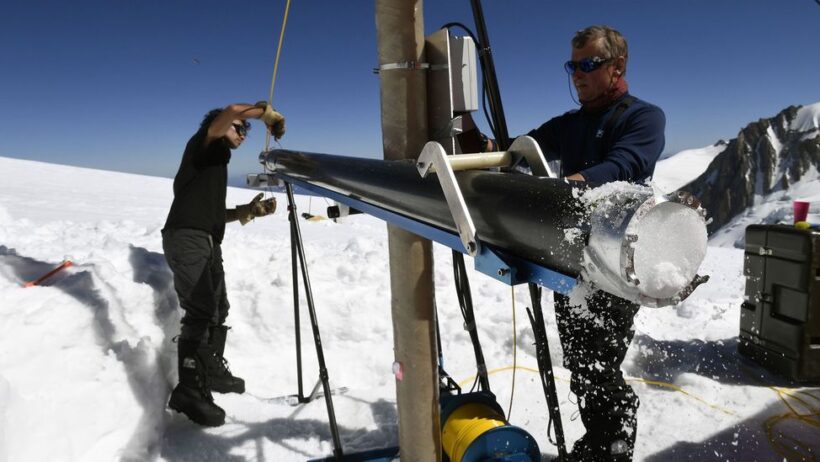
Consider for a moment the ethereal beauty of a glacier — its crystalline façade glistening under the sun. This captivating imagery belies the profound geological role these formations play. As they form, glaciers encapsulate air bubbles and particulates from the atmosphere. These minute inclusions serve as time capsules, preserving a record of both the climate and atmospheric composition at the time of their formation. The study of ice cores, extracted from deep within glacial ice, allows scientists to analyze these ancient air bubbles and gain insights into the earth’s historical temperature and greenhouse gas concentrations.
The significance of ice cores extends beyond mere curiosity. They offer a chronology of climate change, revealing patterns that resonate today. Detailed analysis of the isotopic composition of the trapped air provides a snapshot of atmospheric conditions eons ago. For instance, during the last glacial maximum approximately 20,000 years ago, scientists can ascertain that carbon dioxide levels were substantially lower than those found during our current interglacial period. Such stark contrasts highlight not only the natural variability of Earth’s climate but also the alarming trajectory influenced by anthropogenic activities.
Moreover, the stratigraphy of glaciers serves as a visual indicator of climatic shifts. Layers within a glacier can be likened to the rings of a tree; each layer corresponds to a specific year or season of snowfall. Environmental scientists can interpret these layers to discern periods of warming and cooling across different epochs. The study of glacial geology reveals patterns of cyclical environmental changes — from ice ages to warmer interglacial times — prompted by variations in Earth’s orbit and axial tilt, known as Milankovitch cycles. These long-term natural cycles, however, indicate that current warming is occurring at an unprecedented rate unlike any seen in the geologic record.
When glacial formations begin to retreat, the implications are far-reaching. Glacial melting, driven by rising global temperatures, serves as an alarming harbinger of climate change. The accelerated loss of glacial mass has significant repercussions, including elevated sea levels and altered freshwater resources that many ecosystems and human populations rely upon. The cascading effects of these changes are palpable, echoing the urgency to evaluate and mitigate our impact on the climate system.
Glaciers not only provide a historical archive but also engage our profound curiosity about Earth’s climatic trajectories. They manifest the delicate balance of ecosystems, showcasing how life flourishes in these seemingly inhospitable environments. The complex interplay of temperature, precipitation, and geographical dynamics combines to create unique habitats, housing life forms exquisitely adapted to the cold. Such adaptations challenge conventional notions of biodiversity, demonstrating that life can indeed thrive in extremes.
There lies a symbiotic relationship between glacial environments and adjacent ecosystems. As glaciers melt, they release nutrients trapped within the ice, fostering biological productivity in downstream rivers and lakes. This phenomenon underlines the significance of glaciers, not only as ice reserves but as integral components of larger ecological systems. However, as these icy giants retreat, the timing of these nutrient releases may be disrupted, potentially destabilizing established life cycles and impacting biodiversity.
The cultural significance of glaciers cannot be understated. For numerous indigenous peoples worldwide, glaciers represent sacred landscapes intertwined with ancestral narratives and spiritual beliefs. The retreat of glaciers poses existential threats not only to the physical environment but also to cultural identities and ways of life. Community resilience in facing the challenges posed by climate change necessitates not only scientific understanding but also the incorporation of traditional knowledge and cultural perspectives in the dialogue surrounding environmental stewardship.
As stewards of this planet, we bear the responsibility to heed the messages conveyed by glaciers. They serve as a potent reminder of the interconnectedness of climate systems and the vital importance of sustainability. The perils of climate inaction are underscored by the tales told through these frozen archives — tales of warmth and stability, interspersed with periods of abrupt upheaval. The ongoing melting of glaciers presents a clarion call to re-evaluate our consumption patterns, energy use, and policies affecting environmental health.
To paraphrase, the lessons from glaciers are manifold and multi-dimensional. From documenting the Earth’s climatic past to raising urgent concerns for our future, they encapsulate an intricate tapestry of natural history. The fascination with glaciers stems not just from their majestic physical presence but from their profound and multifaceted role in understanding climate dynamics. As both scientific subjects and cultural symbols, glaciers inspire an imperative to engage with the complexities of climate change action, fostering a commitment to preserving the delicate equilibrium of our planet.
In sum, glaciers are more than mere ice; they are dynamic monuments to Earth’s climatic history. By decoding their stories, we glean wisdom essential for navigating contemporary environmental challenges. These frozen time machines beckon us to act decisively in safeguarding our planet for future generations. Let us cherish the ancient memories trapped within glaciers and extract the knowledge necessary to forge a sustainable path forward.