


The allure of the savanna, with its sun-baked plains and sporadic bursts of life-giving rain, paints an alluring portrait of the Earth’s diverse climates. Nestled precariously between grasslands and forests, the savanna serves as a critical environment characterized by its distinct meteorological phenomena. Understanding the climate of the savanna not only enriches our appreciation of these ecosystems but also underscores their value in the context of global climate change.
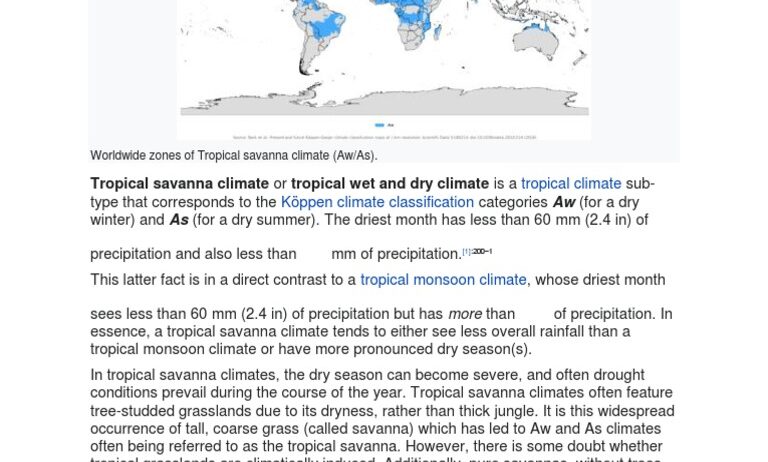
At first glance, the savanna seems to bask in an eternal summer, a vast expanse under an unwavering sun. The climate here is largely tropical, yet it possesses an exquisite duality. One might liken it to a skilled performer who artfully alternates between the roles of a scorching warrior and a benevolent nurturer. With scorching temperatures that frequently soar above 30 degrees Celsius (86 degrees Fahrenheit), the savanna often experiences relentless heat. During the day, the sun’s rays pierce through the azure sky, creating a stage where flora and fauna are tested by the unyielding warmth.
However, the true identity of the savanna is not solely defined by these sun-drenched days; rather, it is the sudden storms that punctuate this climate, much like the dramatic crescendo in a symphony. The savanna experiences a pronounced wet and dry season, which is crucial for its ecological dynamics. During the dry season, which can extend for several months, rainfall becomes a rarity. The landscape transforms into a tableau of dried grasses and parched earth, where survival hinges on adaptation and resilience. The vegetation enters a dormancy of sorts, conserving energy for the much-anticipated arrival of the rains.
As if choreographed by nature’s own hand, the wet season bursts forth like a welcomed guest, altering the scenery in an astonishing display of rejuvenation. Rain showers, sometimes torrential, can occur sporadically. Yet, when they do arrive, they engender a dramatic transformation: vibrant greens supplant the desiccated browns, and a symphony of scents fills the air as once-parched soil quenches its thirst. Small streams often swell into torrents, weaving their way through the savanna, reviving both the flora and fauna that once lay dormant.
In this finely-tuned ecosystem, the interplay between temperature and precipitation plays a pivotal role in dictating the savanna’s character. While annual rainfall typically ranges from 76 to 127 centimeters (30 to 50 inches), its distribution is erratic. Some regions may receive ample downpours, nurturing verdant growth, while neighboring areas suffer under the weight of drought. This variability creates a mosaic of habitats and microclimates, with certain zones favoring the sun-kissed grasses that create the iconic silhouette of the savanna. Other areas may sport patches of trees and shrubs, offering refuge and sustenance for a myriad of wildlife.
Among the most captivating aspects of the savanna’s climate is its capacity to sustain a rich tapestry of biodiversity. Animals in this environment have evolved remarkable adaptations to thrive within it. Whether it is the magnificent migration of wildebeests traversing the vast grasslands in search of food or the stealthy pursuits of predators like lions, the savanna’s rhythms are intricately linked to its climatic conditions. As the rains fall, new life emerges, and the cultural cycle of agriculture among indigenous communities aligns with these natural phenomena, further underscoring the interdependence between climate and survival.
Yet, this symbiotic relationship faces unprecedented challenges in the face of climate change. The savanna, with its delicate balance, is increasingly vulnerable to shifting weather patterns. Rising temperatures and erratic rainfall patterns can lead to more frequent droughts, disrupting the natural rhythms that have long governed this ecosystem. Additionally, the encroachment of human activity poses further threats, as agricultural expansion and urbanization fundamentally alter the landscape.
The extremes of the savanna climate often serve as a metaphor for resilience in the face of adversity. The sudden storms that refresh the parched landscape echo the unforeseen yet timely interventions needed to address the climate crisis. Just as the savanna adapts to the fluctuating seasons, humanity must also recalibrate its approach to environmental stewardship. Embracing sustainable practices, mitigating greenhouse gas emissions, and fostering awareness about climate impacts are fundamental to preserving these unique ecosystems.
In conclusion, the savanna’s climate is an enchanting narrative of sun-baked days juxtaposed with the dramatic arrival of storms. This intricate dance between extremes creates a habitat rich in resources and biodiversity, while challenging those who inhabit it to adapt continually. As we navigate the complexities of our own climate crisis, the insights gleaned from understanding the savanna may illuminate pathways toward sustainability and resilience. Recognizing the unique appeal of such ecosystems will inspire collective action necessary to safeguard these vital environments for future generations. The savanna stands as a testament to the power of nature, teaching us that even amidst the harshest conditions, life not just survives but often thrives, invoking a deeper level of respect and responsibility from all who tread its parched soil.