
Climate change is an ever-present and complex phenomenon that occurs over various timescales, impacting this planet deeply and irrevocably. Understanding the timeline of climate change is integral to comprehending its effects and the urgency with which we must address this global crisis. This discourse will unfold the timeline of our changing Earth, elaborating on critical milestones, the anthropogenic factors involved, and the projections that dictate our future.
To begin, it is essential to acknowledge that climate change, while accelerated by recent human activities, has roots stretching back thousands, if not millions, of years. Over geological time, the Earth has undergone several pronounced climate shifts. For instance, during the Holocene epoch, which began around 11,700 years ago, the climate was relatively stable, allowing human civilizations to flourish. However, this stability began to warp dramatically since the Industrial Revolution, commencing in the late 18th century.
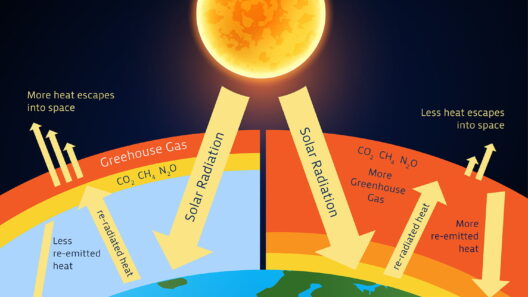
The Industrial Revolution marked a pivotal turning point—emissions of greenhouse gases swelled as coal, oil, and gas became the cornerstone of industrial practices. This era unleashed a torrent of carbon dioxide and methane into the atmosphere, significantly altering its composition. Consequently, the mid-20th century heralded a new epoch of unprecedented warming, commonly referred to as the Anthropocene, where human activities exert profound influences over the Earth’s systems.
By the 1950s, scientific understanding of climate systems began to burgeon. The Keeling Curve, established by Charles David Keeling, illustrated the alarming rise in atmospheric carbon dioxide levels. This graph has become an iconic representation of our changing atmospheric condition, with data indicating a distinct upward trend over the decades—culminating in levels exceeding 400 parts per million by the 21st century.
The observable impacts of climate change began to manifest in the latter half of the 20th century. Global temperatures rose significantly, leading to more severe weather events, rising sea levels, and disrupted ecosystems. The period from 1970 to 2020 recorded some of the warmest years since modern meteorological records began, with 2016 and 2020 often cited as peak heat years. Each decade revealed increasingly erratic weather patterns, showcasing hurricanes of unprecedented ferocity, wildfires raging beyond containment, and droughts intensifying in previously temperate regions.
The 21st century has ushered in a frantic urgency among scientists and global policymakers alike. Climate summits, such as the Kyoto Protocol in 1997 and later the Paris Agreement in 2015, were convened to tackle these burgeoning issues. Such international agreements sought to curtail carbon emissions and limit global warming to well below 2 degrees Celsius above preindustrial levels—a goal now perceived as an uphill battle considering current trajectories.
Nevertheless, it is imperative to recognize the alarmingly high levels of climate-related disasters that have emerged in recent years. The timeline of climate events in the 21st century has been punctuated by devastating phenomena. For example, Hurricane Katrina in 2005 mustered catastrophic destruction across the Gulf Coast of the USA. Its aftermath illuminated the vulnerability of urban centers to extreme weather exacerbated by climate change.
Besides hurricanes, wildfires have heightened significantly in frequency and intensity due to prolonged drought conditions and rising temperatures. The 2019-2020 Australian bushfires provide a devastating case study, where millions of acres were scorched, resulting in the loss of human structures and wildlife on an unprecedented scale. Such episodes underscore the tightening grasp of climate change, showcasing how ecosystems can be irrevocably altered in a few short seasons.
To delve deeper, it is crucial to highlight the implications of climate change on polar regions. Ice melt in the Arctic and Antarctic has accelerated dramatically, with experts estimating that Arctic sea ice extent has diminished to nearly half of its 1980 levels. Permafrost thawing releases stored methane, a potent greenhouse gas, further exacerbating the warming spiral—a feedback loop that could have dire global ramifications.
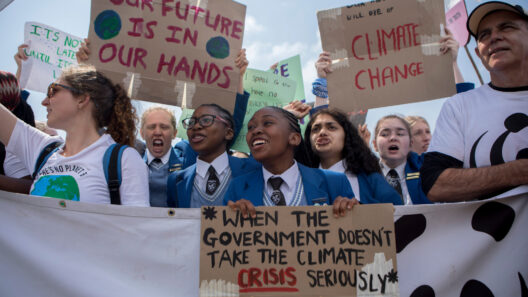
The timeline of climate change is not just a chronology of disasters; it encompasses scientific advances and a growing public consciousness. Noteworthy is the role of movements such as youth-led climate strikes, which have galvanized millions around the world. The passion and urgency conveyed by these young activists echo the historical efforts of the environmental movement, echoing sentiments from the earlier days of the modern environmental movement since the establishment of Earth Day in 1970.
Now, as we stand on the precipice of further change, the question looms: Where do we go from here? Projections indicate that, if current trends persist, the world could warm by 3 to 4 degrees Celsius by the end of the century. This scenario forebodes catastrophic consequences for global agriculture, biodiversity, sea levels, and human health. However, counteracting this trajectory is possible through rigorous adherence to renewable energy transitions, reforestation efforts, and sustainable practices across all sectors.
In summary, climate change is a multifaceted issue that evolves over a timeline underscored with critical events, scientific revelations, and societal shifts. From the early effects of industrialization to the current climate emergencies, the evidence is irrefutable: our planet is undergoing transformative changes. The timeline of our changing Earth emphasizes that while the past is fraught with mistakes and inaction, the future still holds promise, contingent upon our collective actions today. In this transitional epoch, we must choose to act decisively, mitigating further harm and fostering a resilient future for generations to come.