
Roller coasters are iconic symbols of thrill and exhilaration, embodying a unique convergence of physics and engineering that captivates millions. They are not merely metal structures that traverse tracks; they are exhilarating rides propelled by the principles of conservation of energy. The interrelationship between conservation of energy and the dynamic experience of roller coasters invites an exploration of both the science behind their function and the raw excitement they generate.
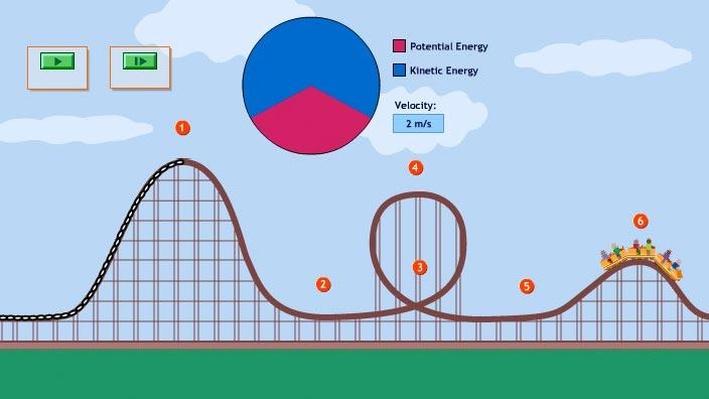
At the heart of every roller coaster is the fundamental concept of potential and kinetic energy. Potential energy—the energy stored in an object at rest—is maximized at the apex of a coaster’s highest point. As the cars ascend, they accumulate this energy, much like a sprinter crouching at the starting line, coiling their muscles in preparation for a powerful leap. Upon reaching the zenith, gravity takes over, transforming that stored potential energy into kinetic energy as the coaster plunges downwards. Riders experience an exhilarating rush, akin to the rush of wind through their hair, as they hurtle towards earth.
The descent of a roller coaster is an extraordinary illustration of the conservation of energy principle. Assuming negligible friction and air resistance, total mechanical energy remains constant throughout the ride. As our coaster descends, the gravitational potential energy diminishes while kinetic energy surges. This transformation happens seamlessly, allowing riders to feel the g-forces that send their hearts racing. The thrill of acceleration becomes an exhilarating dance between physics and emotion, creating an addictive experience that compels enthusiasts to return for more.
Moreover, modern roller coasters employ innovative designs that further capitalize on energy conservation. Take, for example, terrain coasters that intertwine with natural landscapes, enhancing the ride’s experience while reducing energy wastage. These designs demonstrate an environmentally conscious approach while preserving excitement. The undulating terrain creates a visually stimulating backdrop that amplifies the sense of speed and motion, making the coaster feel like a natural extension of the landscape. Such ingenuity not only conserves energy but also resonates with a collective consciousness regarding sustainability.
The concept of energy conservation stretches beyond the immediate thrill of the ride. Consider the hydraulic and magnetic launch systems utilized in some of today’s most cutting-edge roller coasters. Unlike traditional lifts, these systems harness energy stored in compressed fluids or magnetic fields, converting it into massive thrust. This method is not only efficient but also promotes a quieter and smoother transfer of power—ensuring that riders experience seamless transitions from one thrilling moment to the next. Magnetic coaster technology epitomizes the convergence of innovation, sustainability, and excitement; it symbolizes how science and creativity can harmoniously coexist, yielding thrilling rides with reduced energy consumption.
Mesmerizing elements like inversions and corkscrews are meticulously designed to engage riders fully while maintaining energy efficiency. These features create an array of sensations that range from sheer dread to unbridled joy. Inversions redirect a portion of the coaster’s energy, maintaining momentum while strategically adding to the thrill. These designs remind us of a well-crafted symphony, where each note contributes to the overall crescendo of excitement, defying the laws of gravity while beckoning riders to immerse themselves fully in the experience.
While understanding the mechanics can make the ride more appreciable, the true allure of roller coasters lies in their capacity to evoke primal emotions. Roller coasters epitomize a journey—a narrative arc of ascents, descents, and unpredictability. The anticipation felt as the train climbs higher becomes akin to the anxious moments before a significant life event. Each drop triggers a visceral response, the kind of reaction that taps into an innately human craving for exhilaration and adventure. They serve as metaphorical vehicles that allow us to confront our fears, embrace the unknown, and emerge with a renewed perspective on life’s highs and lows.
Furthermore, roller coasters are not just mechanical marvels—they are avenues for connection. Friends and family bond over shared screams and laughter, creating lasting memories amidst the chaos of swirling tracks and twisting turns. The roller coaster experience fosters camaraderie, weaving threads of shared exhilaration through the fabric of human interaction. This aspect of roller coasters underscores a deeper significance; they provide a reminder of the collective spirit inherent in the human experience. As we ride, we become part of a larger narrative that transcends the tracks beneath us.
In conclusion, roller coasters exemplify the marriage between thrill and scientific principles, particularly through the lens of energy conservation. They serve not only as platforms for excitement but also as embodiments of creativity, innovation, and connection in an increasingly technologically driven world. With every gleeful scream echoing through the air, we are reminded of our shared desire for adventure and the remarkable complexities that make these structures possible. The next time you strap in, embrace the story unfolding—the journey that intertwines potential and kinetic energies, human emotions and sustainability—all culminating in a breathtaking ride that propels us forward, much like the very essence of life itself.