
Conservation of energy is a fundamental principle in physics, stating that energy cannot be created or destroyed, but can only change forms. This concept is pivotal in understanding various phenomena, including Lenz’s Law, which plays a significant role in electromagnetism. Moreover, it often finds intriguing applications in thrilling amusement park rides, where the principles of physics come to life in exhilarating ways.
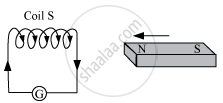
Lenz’s Law states that the direction of the induced electromotive force (EMF) and the current generated in a closed loop will always oppose the change in magnetic flux that produced it. This law encapsulates the core philosophy of conservation of energy, aligning with the idea that systems act to resist changes, thereby maintaining energy equilibrium. For instance, when a magnetic field through a circuit varies, the circuit induces a counteracting voltage, essentially acting against the stimulus of changing magnetic flux. This phenomenon is essential in various electrical applications, such as transformers and inductors, where energy conservation is paramount in maintaining system stability.
The relativity between Lenz’s Law and conservation of energy can be observed by looking at physical systems where energy is transformed. When a conductor moves through a magnetic field, an electric current is induced due to changes in magnetic flux. The energy possessed by the motion of the conductor is transformed into electrical energy, effectively conserving the initial energy while adhering to Lenz’s Law. The system inherently works to prevent excessive energy fluctuations, which could lead to inefficiencies or potential damage. This balance is critical in ensuring that energy facilitates work without loss, showcasing a practical application of conservation principles.
Beyond theoretical physics, these concepts enjoy practical manifestations in the realm of entertainment and engineering, particularly in roller coasters and amusement park rides. The design and operation of these thrilling rides exemplify crucial principles of conservation of energy and its seamless integration with Lenz’s Law.
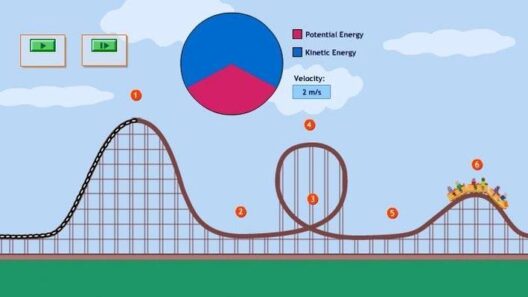
Imagine the initial ascent of a roller coaster. As the cars climb to their zenith, they accumulate gravitational potential energy. The ride operator meticulously ensures that the energy derived from the chain lift mechanism is converted and conserved. At the pinnacle, this energy is at its highest. As the coaster descends, this potential energy converts into kinetic energy, driving the cars swiftly down the track. Here, the principles of conservation of energy are visually and palpably evident. However, the role of Lenz’s Law begins to take center stage in the mechanisms designed to harness and control the energy.
One can observe Lenz’s Law manifesting itself during the rapid turns and loops present in modern roller coasters. The high-speed deceleration of the cars as they navigate through loops and twists creates changes in motion that affect the magnetic fields around them, sometimes found in brakes or magnetic launch systems. As these vehicles slow down, the induced currents generated resist the change, acting to keep the riders firmly secured in their seats. This response not only ensures a thrilling experience but also utilizes energy conservation principles to manage speed safely.
Furthermore, more advanced rides incorporate electromagnetic propulsion systems, which rely heavily on Lenz’s Law. In these systems, the sudden changes in speed and direction are closely monitored, ensuring that energy transitions occur smoothly without abrupt alterations that could jeopardize the ride’s safety. For example, linear synchronous motors (LSM) utilize magnets placed along the track to create magnetic fields that propel the cars forward. As the ride accelerates, Lenz’s Law plays a crucial role by generating opposing magnetic fields that help regulate motion and energy consumption, demonstrating a careful balance between excitement and safety.
As we consider the implications of conservation of energy and Lenz’s Law in amusement rides, it becomes evident that the relationship extends beyond mere physics. It speaks to broader themes of innovation, sustainability, and technological advancement. By harnessing these laws, engineers can design rides that not only thrill but also utilize energy efficiently. This efficiency is pivotal as we continually grapple with the broader implications of energy consumption in today’s world.
As global concern over climate change intensifies, the interconnection of principles like conservation of energy with real-world applications becomes increasingly relevant. The principles guiding amusement park rides can inform greener technologies and energy-saving techniques in other sectors. By understanding and applying Lenz’s Law, engineers and scientists can innovate ways to reduce energy waste across various industries, promoting a more sustainable future.
In conclusion, the intricate relationship between conservation of energy, Lenz’s Law, and exhilarating rides reveals a stimulating intersection of physics and entertainment. As technology evolves, so too does our understanding of these principles, leading to advancements that can enhance not only amusement but also sustainability. The thrill of the ride is a spectacular manifestation of fundamental laws that govern our universe, reminding us that safety, efficiency, and excitement can coexist when we respect the principles of energy conservation.