
Have you ever watched a pendulum in motion, swinging back and forth, and pondered where all that energy goes between its highest and lowest points? It might appear to dance without a care, but beneath its rhythmic sway lies a captivating interplay of forces—an effortless demonstration of the conservation of energy. This principle, foundational to physics, asserts that energy cannot be created or destroyed; it merely changes forms. But how does this apply to a simple pendulum? This timeless energy exchange presents an engaging challenge to understand one of nature’s most beguiling phenomena.
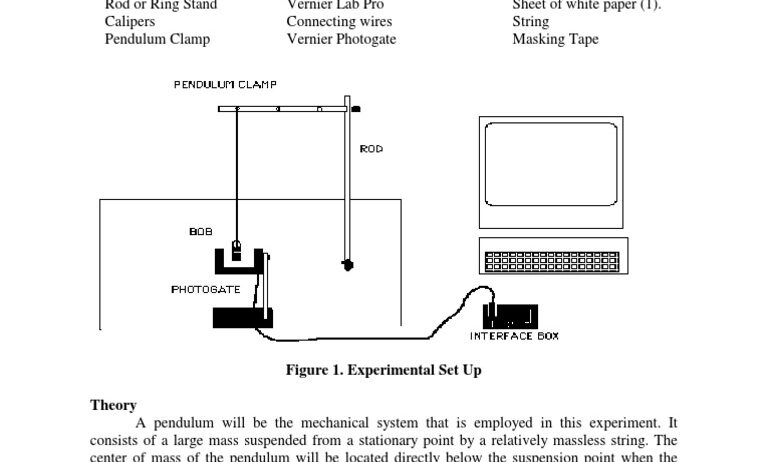
A simple pendulum consists of a weight, or bob, suspended from a pivot by a string or rod, allowing it to swing freely. This system exemplifies harmonic motion, a concept rooted in the meticulous balance of gravitational and kinetic energy. Let’s delve into the pendulum’s fascinating transformation between these two energy forms, illustrating the principle of energy conservation.
At the peak of its arc, the pendulum possesses maximum gravitational potential energy. Here, the bob is at its highest elevation, meaning it has the greatest energy relative to its lowest point. This potential energy is the result of the Earth’s gravitational pull acting on the mass of the bob. The higher the bob, the more potential energy it accumulates. This situation prompts a critical question: What happens when that bob is released? The story unfolds as the pendulum swings downward.
As it descends, the gravitational force accelerates the bob, converting its potential energy into kinetic energy. Kinetic energy, which is the energy of motion, increases as the pendulum accelerates towards its lowest point. At the nadir of this journey, the bob reaches its maximum speed, where kinetic energy is at its zenith, and potential energy approaches nullity. This moment exemplifies the epitome of energy transformation—an elegant ballet of physics.
Yet, as the pendulum continues its path, kinetic energy begins to wane. The bob starts ascending towards the opposite side of its swing, converting kinetic energy back into potential energy. Herein lies the essence of the conservation of energy: the total mechanical energy of the system, the sum of potential and kinetic energy, remains constant throughout this dance of oscillation, assuming negligible friction and air resistance. Thus, the pendulum’s journey illustrates a seamless exchange—energy never vanishes; it transmutes from one form to another.
However, in the real world, a pendulum is seldom a perfect system. Friction at the pivot and air resistance introduce dissipative forces that gradually sap energy from the system. This often results in a gradual dampening of the pendulum’s swing. It prompts an interesting consideration of how energy conservation applies in practical scenarios. What mechanisms could mitigate these energy losses? Could innovation in pendulum design hold the key to prolonging its swing? Exploring such questions may involve technological advancements and novel materials aimed at minimizing frictional forces.
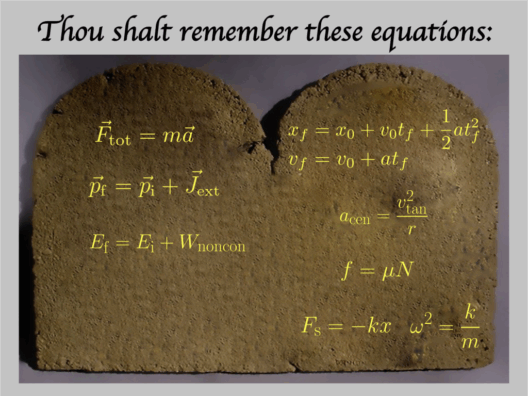
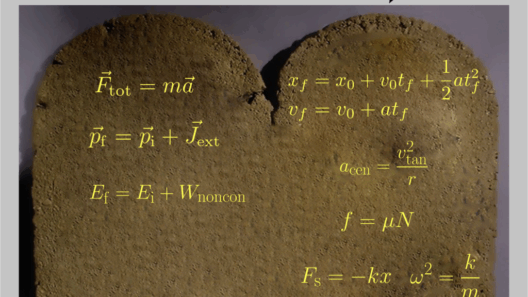
Let’s also digest the mathematical underpinnings governing this phenomenon. The law of conservation of energy can be represented in equations, highlighting the interplay of gravitational potential energy (PE) and kinetic energy (KE). The potential energy (PE) at the highest point is calculated as PE = mgh, where ‘m’ denotes mass, ‘g’ signifies the acceleration due to gravity, and ‘h’ indicates height. Conversely, kinetic energy (KE) is described by KE = 1/2 mv², where ‘v’ represents velocity. At any moment, total mechanical energy remains constant: PE_initial + KE_initial = PE_final + KE_final. This relationship underscores that while forms change, the total energy remains an unaltered constant in an idealized scenario.
As we contemplate these energetic transformations, one cannot help but draw parallels between the pendulum’s cyclical behavior and other systems in our universe. From celestial bodies orbiting in vast expanses of space to the microscopic dance of atoms, energy conservation is an omnipresent principle. This insight fosters a profound appreciation for the universe’s intricate design—its frameworks governed by eternal laws of physics.
Moreover, understanding the conservation of energy through pendulum dynamics extends beyond pure mathematics and physics. It bridges to environmental stewardship, illustrating the importance of energy efficiency and sustainability. Just as a pendulum conserves energy through its motions, society must strive to conserve energy resources in the face of climate change challenges. Innovative technologies that harness and maximize energy efficiency mirror the pendulum’s elegant cycle, reinforcing the significance of sustainable practices.
In summation, the simple pendulum stands as both a scientific curiosity and an emblematic representation of energy conservation. Through its swinging journey, potential energy transforms into kinetic energy and back again, embodying a fundamental tenet of physics. Yet, it also offers us an opportunity to reflect on our own energy practices and the vital role conservation plays in addressing climate issues. Armed with this understanding, we are encouraged to not just observe the pendulum’s motion but to embrace its lessons—acting with intention to protect our planet’s resources for future generations. Will you take this knowledge forward, transforming passive observation into active stewardship?