



In the intricate panorama of cellular metabolism, the production of adenosine triphosphate (ATP) via fermentation presents a fascinating narrative of energy conservation. This biological phenomenon is fundamentally crucial for many organisms that adapt to anaerobic environments where oxygen is scarce. Understanding how energy is conserved in ATP during fermentation offers illuminating insights into cellular respiration, metabolic pathways, and the survival strategies of various life forms, particularly in the face of climate adversity.
Fermentation, by definition, is an anaerobic process wherein cells convert carbohydrates into energy in the absence of oxygen. This biochemical pathway enables organisms like yeast and certain bacteria to produce ATP through substrate-level phosphorylation. Unlike aerobic respiration, which is vastly more efficient due to its electron transport chain, fermentation capitalizes on simpler biochemical routes to generate energy. The primary fermentative processes include alcoholic fermentation and lactic acid fermentation, each exhibiting distinctive metabolic end products.
To appreciate how energy is conserved in ATP during fermentation, one must first comprehend the molecular structure of ATP itself. Composed of adenine, ribose, and three phosphate groups, ATP serves as the cell’s energy currency. When a cell requires energy to perform work, it hydrolyzes ATP, releasing energy as it converts into adenosine diphosphate (ADP) and an inorganic phosphate. The energy released is harnessed for various cellular activities, such as biosynthesis, muscle contraction, and cellular division.
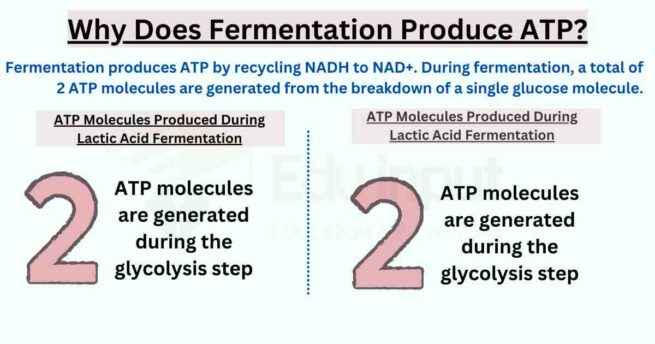
In the context of fermentation, the initial step involves glycolysis, a metabolic pathway that occurs in the cytoplasm of cells. Glycolysis converts glucose into pyruvate, yielding a net gain of two ATP molecules per glucose molecule. This ATP production during glycolysis is an exemplary case of substrate-level phosphorylation, where high-energy phosphate groups are directly transferred to ADP to form ATP. Importantly, glycolysis is an anaerobic process, illustrating how cells can generate energy without relying on oxygen.
Once glycolysis is complete and pyruvate is generated, cells convert pyruvate into various end products depending on their species and environmental conditions. In alcoholic fermentation, prevalent in yeast, pyruvate is transformed into ethanol and carbon dioxide. Conversely, lactic acid fermentation, which occurs in human muscle cells under exertive conditions, entails the reduction of pyruvate to lactic acid. Both fermentation routes regenerate NAD+, which is essential for glycolysis to continue functioning. Thus, the conservation of energy occurs simultaneously with the production of ATP, illustrating an intricate synergy between glucose catabolism and redox reactions.
The efficiency of fermentation, while lower than aerobic respiration, becomes particularly relevant in specific ecological niches. For example, microorganisms thrive in oxygen-depleted environments, such as deep-sea hydrothermal vents or within the intestines of animals. Their metabolic pathways are finely tuned to maximize ATP output even under less favorable conditions. Moreover, the conservation of energy in ATP during fermentation allows these organisms to exploit niches that are inhospitable to aerobic competitors. This adaptability ensures biodiversity sustains itself in various ecosystems.
Energetically, the yield of ATP through fermentation contrasts sharply with that through aerobic respiration. While glycolysis and fermentation produce only two ATP molecules per glucose molecule, aerobic respiration can yield up to 32 ATP molecules under optimal circumstances. However, the ability of fermentation to occur rapidly without oxygen provides a critical advantage during conditions of metabolic stress, such as during intense physical activity or in hypoxic environments.
In clinical settings, understanding the fermentation process can shed light on human physiology and associated disorders. Lactic acid buildup from anaerobic respiration can lead to muscle fatigue and cramping, a phenomenon commonly experienced during strenuous exercise. Conversely, the role of fermentation extends beyond human health; it is integral to various industrial applications, including brewing, baking, and biofuel production. In these contexts, harnessing the principles of fermentation enhances efficiency and sustainability in energy production, presenting a compelling case for embracing fermentation in a world grappling with climate change.
As society strives for renewable energy sources and sustainable practices, studying and applying the principles of fermentation could yield innovative solutions. For example, integrating biofermentation processes into waste management practices can produce biogas and biofertilizers while minimizing greenhouse gas emissions. Moreover, research into engineered microbial strains that optimize fermentation pathways may lead to more efficient bioproduction of biofuels, potentially reducing reliance on fossil fuels.
In conclusion, the conservation of energy in ATP during fermentation is not merely a biological curiosity; it represents a versatile and vital mechanism that underpins life in a myriad of environments. Through substrate-level phosphorylation, glycolysis, and subsequent metabolic transformations, the process of fermentation exemplifies the resourcefulness of life. It offers critical insights into energy conservation, ecological adaptability, and applications in contemporary sustainability efforts. As humanity confronts the pressing realities of climate change, understanding and harnessing these biological processes may be pivotal in paving the way toward a more sustainable future.