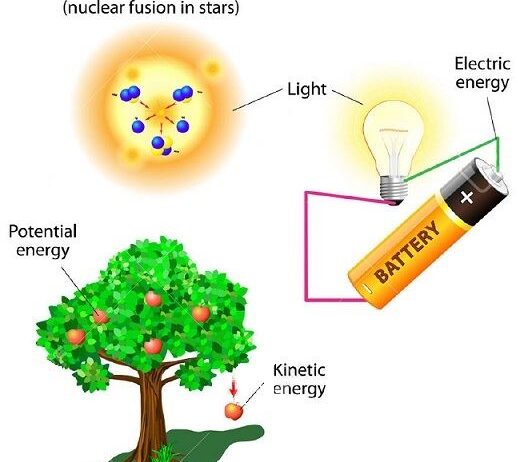

Understanding the principles of physics is essential for unraveling the mysteries of the natural world, particularly when it comes to everyday phenomena, such as the behavior of a ball in motion. The conservation of energy is a fundamental concept that plays a pivotal role in predicting the velocity of a ball as it descends from a height. This principle states that the total energy within an isolated system remains constant, allowing us to derive insightful conclusions based on gravitational potential and kinetic energy. This article will explore how to apply this principle to determine the velocity of a falling ball, using a practical real-life example to elucidate the concepts involved.
The conservation of energy theorem can be succinctly stated: energy cannot be created or destroyed; it can only be transformed from one form to another. In the context of a falling ball, two primary types of energy are of concern: gravitational potential energy and kinetic energy. Gravitational potential energy (PE) is the energy stored in an object as a result of its position in a gravitational field. It is mathematically expressed as:
PE = mgh
where m is mass (in kilograms), g is the acceleration due to gravity (approximately 9.81 m/s² on Earth), and h is the height (in meters) from which the ball is dropped.
As the ball is released from a certain height, it begins to fall under the influence of gravity, converting its gravitational potential energy into kinetic energy (KE), which is the energy of motion:
KE = 1/2 mv²
In this equation, v denotes the velocity (in m/s) of the ball. The conservation of energy principle tells us that the total mechanical energy (the sum of KE and PE) remains constant throughout the fall.
To illustrate this concept, consider a ball with a mass of 0.5 kg, dropped from a height of 20 meters. Initially, as the ball is held at rest at the top, all of its energy is potential. The gravitational potential energy can be calculated:
PE_initial = mgh = 0.5 kg × 9.81 m/s² × 20 m = 98.1 J (joules)
At this point, the kinetic energy is zero since the ball is not in motion. As the ball begins its descent, it accelerates towards the ground, resulting in an increase in kinetic energy and a corresponding decrease in potential energy. Just before the ball hits the ground, all of the potential energy will have converted into kinetic energy.
At ground level, just before impact, the potential energy reaches zero (PE_final = 0), and the total energy has transformed entirely into kinetic energy:
KE_final = PE_initial = 98.1 J
Using the kinetic energy formula, we can solve for the velocity of the ball:
KE = 1/2 mv² -> 98.1 J = 1/2 (0.5 kg) v²
Rearranging the equation gives:
v² = (98.1 J × 2) / (0.5 kg) = 392.4
Taking the square root of both sides, we find:
v = √392.4 ≈ 19.8 m/s
This velocity, approximately 19.8 m/s, indicates how rapidly the ball would move just before it strikes the ground. Such calculations not only validate the conservation of energy principle but also provide a deeper understanding of motion influenced by gravitational forces.
One can easily observe similar principles in action daily, whether watching a basketball arcing toward the hoop or a child’s toy car rolling down a ramp. However, the simplicity of these observations belies the intricate physical laws governing motion. It is this juxtaposition of simplicity and complexity that evokes curiosity among both novice learners and experienced physicists alike.
Moreover, calculating the velocity of falling objects via conservation of energy is a critical concept that reaches far beyond academic exercises. In real-world applications, engineers utilize these principles to design safe systems—such as roller coasters, amusement rides, and even developing technologies for space exploration, where understanding energy dynamics can make a significant difference.
In conclusion, the ability to determine the velocity of a falling ball through the lens of conservation of energy is not merely an academic exercise; it encapsulates a fundamental understanding of the physical world—one that unfolds countless applications in diverse fields. As we endeavor to comprehend the consequences of our interactions with the environment and technological advancements, acknowledging the importance of foundational energy principles can inform more sustainable practices and innovations moving into the future.