

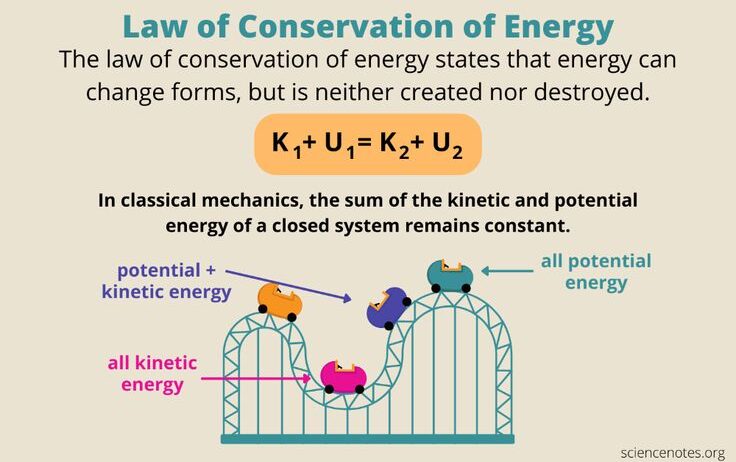

Modeling the conservation of energy is akin to rendering the complex ballet of the universe into a cryptic choreography that encapsulates how energy transcends myriad forms without ever truly disappearing. This beginner’s guide is designed to illuminate the pathways through which one can embark on the fascinating journey of physics simulations, allowing novices to engage with the principles of energy conservation in a structured and imaginative manner.
Understanding the Conservation of Energy
The law of conservation of energy is a fundamental principle in physics. It asserts that energy cannot be created or destroyed; it can only be transformed from one form to another. Imagine a grand tapestry where threads weave together various types of energy—kinetic, potential, thermal, and mechanical. Each thread represents a form of energy, and their intricate interrelations depict a seamless flow. This continuous dynamic ensures that the total energy of an isolated system remains constant.
The Role of Physics Simulations
Physics simulations serve as invaluable tools that translate abstract scientific concepts into tangible, observable phenomena. They open windows into the microscopic interactions of particles, the cascading effects of forces, and the elegant dance of energy transformation. Through simulations, one can visualize the collision of particles in a gas, the trajectory of a projectile, or the oscillation of a pendulum—all while witnessing the conservation of energy in action.
Getting Started with Simulations
As a newcomer, the initial steps toward modeling energy conservation might seem daunting, yet the journey can be as captivating as an unfolding narrative. Begin by selecting the right simulation software. Numerous platforms are available, grounded in both educational and professional realms. Programs such as PhET Interactive Simulations or Algodoo cater well to beginners, providing user-friendly interfaces that encourage exploration and experimentation.
Selecting a Domain of Interest
The universe is a vast expanse of phenomena, and energy conservation manifests uniquely across different contexts. Opt for a specific scenario that piques your curiosity. It could involve mechanical systems—examining a swinging pendulum—or delve into thermal systems by observing how heat transfers between objects. This selection process acts as a compass, guiding your exploration and helping to anchor your understanding.
Setting Up Your Simulation
Once you have determined your focus, the next step is to configure the simulation environment. Most applications provide a customizable workspace where parameters can be manipulated. Let us consider the pendulum—begin by adjusting its initial height and releasing it from varying angles. This trial and error method cultivates an understanding of potential and kinetic energy conversion. The highest point of the pendulum’s swing represents maximum potential energy, while the lowest point embodies maximum kinetic energy. As the pendulum swings back and forth, energy cycles through these forms, reminiscent of the ebb and flow of tides.
Conducting Experiments
Delve deeper into your simulation by conducting experiments. Formulate hypotheses to challenge your understanding. What happens if you increase the mass of the pendulum? Does the period of its swing change? What, if any, implications arise regarding energy conservation? Documenting each experiment helps solidify your observations, enabling you to create a robust portfolio of data to support your learnings.
Interpreting Results and Visualizing Energy Transformation
As results materialize, the next step is interpreting them in the context of conservation principles. Visualization tools embedded within your simulation software can paint a vivid picture of energy transformations. Graphs illustrating energy changes as a function of time, or animated visuals showing real-time conversions between potential and kinetic energy, bear witness to the underlying truths of the physical world. Recognizing patterns in this data will empower you to contribute meaningful insights into the principles of energy conservation.
Expanding Your Knowledge Base
A foundational understanding of energy conservation is merely a stepping stone into the ocean of physics. Progressively expand your knowledge by exploring different types of systems, such as thermodynamics or electromagnetism. Each domain introduces new narratives centered around the conservation of energy, beckoning you to go deeper into the scientific lore. Engage with academic literature, online courses, and workshops that cater to aspiring physicists. Discussions with peers can illuminate fresh perspectives, opening conversations that can enhance your simulation backbone.
Innovation and Real-World Applications
As you cultivate your skills, think about how these simulations apply to real-world scenarios. Energy conservation is pivotal in tackling modern challenges such as climate change, renewable energy, and technological advancements. Consider how your insights could steer innovation in energy-efficient technologies or contribute to understanding quantum mechanics at a subatomic level. This intertwining of theoretical knowledge and practical application lends a unique appeal to your journey, as it infuses purpose into your exploration.
Reflecting on Your Journey
As you reflect on your experience with energy conservation modeling through simulations, acknowledge the transformative journey you embarked upon. Each experiment and each observation becomes a thread woven into the greater tapestry of energy understanding. The simulation experience is not just a tool for learning; it’s a magnifier that illustrates the broader dynamics of the universe. The conservation of energy is not merely a law; it embodies the intricate relationships that govern all forms of existence.
In conclusion, modeling the conservation of energy using physics simulations offers a rich avenue to deepen one’s appreciation for the universe’s complexities. It invites exploration, fosters understanding, and cultivates a sense of responsibility toward the energy resources we harness. Engage with this remarkable journey, and let the insights gleaned propel you into an enlightening odyssey of knowledge and discovery.