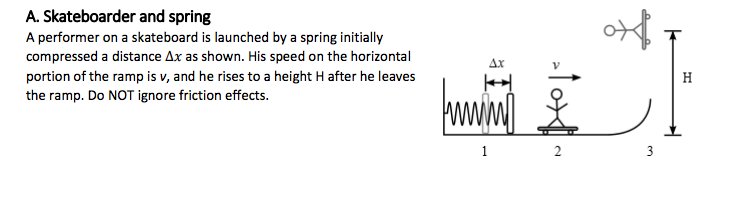

Understanding the principles of conservation of energy is essential in various fields, including physics, engineering, and environmental science. Total mechanical energy is the sum of kinetic and potential energy in a system. When we assert that total mechanical energy is conserved, we imply that it does not change over time, provided no external forces do work on the system. The following sections will elucidate how to determine if total mechanical energy is conserved in your system, exploring various indicators and methods applicable to different scenarios.
1. Defining Total Mechanical Energy
Before delving into conservation, it is imperative to define the components of total mechanical energy. It comprises two principal elements: kinetic energy (KE) and potential energy (PE). Kinetic energy is the energy of motion, mathematically described as KE = 1/2 mv², where m represents mass and v denotes velocity. Potential energy, often associated with gravitational systems, can be represented as PE = mgh, with g being the acceleration due to gravity and h the height above a reference point.
2. Observing the System
The first step to ascertain whether mechanical energy is conserved in a system is thorough observation. Look at the system dynamics: note if it is isolated or if external forces are acting upon it. Isolated systems see minimal interference, such as friction or air resistance, allowing for easier calculations of energy conservation. Conversely, systems influenced by external forces will complicate the conservation analysis. Identifying the net forces acting on your system is crucial in establishing a baseline for conservation.
3. Measurement of Kinetic and Potential Energy
To determine energy conservation, perform quantitative measurements of both kinetic and potential energy at various stages of your system’s evolution. Utilize appropriate instruments to measure mass, velocity, and height accurately. In practical scenarios, this can be accomplished through motion sensors, height gauges, and calibrated mass scales. Once you gather the data, calculate the total mechanical energy for each state observed:
- Total Energy = KE + PE
Multiple measurements can provide insight into whether energy remains constant or fluctuates. If total energy values vary, energy is not conserved, indicating that external work is either being done on or by the system.
4. Analyzing Energy Losses
In many real-world applications, energy loss due to friction or air resistance must be considered. These losses translate energy into non-mechanical forms, typically thermal energy. Utilizing thermal imaging or friction measurement devices can quantify these losses. A fundamental approach involves comparing the mechanical energy before and after an interaction, such as a collision, to evaluate how much energy has “disappeared.” This methodology underscores the importance of accounting for all energy transformation pathways in your system.
5. Conservation during Collisions and Interactions
Examine specific scenarios where particles, bodies, or objects interact. In elastic collisions, both kinetic energy and momentum are conserved. On the other hand, in inelastic collisions, momentum is conserved, while kinetic energy is not. Perform calculations for both energy types before and after collisions or interactions to contrast and analyze conserved quantities. The insights gained will enhance your understanding of system behavior comprehensively.
6. Utilizing Conservation Laws
Employ the laws of conservation of momentum and energy to your advantage. While total mechanical energy can be challenging to maintain in complex systems, applying conservation principles helps simplify analyses. By establishing baseline equations for mechanical energy and momentum, you can formulate relationships among variables during analysis. This systemic approach often provides invaluable insights into energetics and efficiency, especially in mechanical systems.
7. Setting Up Controlled Experiments
For those seeking practical applications, set up controlled experiments to test various conditions systematically. Using pendulums, roller coasters, or springs showcases mechanical energy conservation principles. Record variables meticulously and analyze the energy at different positions. The consistency across trials allows for continued validation of conservation principles in diverse setups.
8. Application in Engineering and Environmental Contexts
In engineering, understanding whether mechanical energy is conserved shapes the design of systems ranging from bridges to vehicles. Effective energy management reduces waste and enhances sustainability. Evaluating mechanical energy conservation in environmental contexts—such as in renewable energy systems—helps assess efficiency, thus promoting ecological stewardship. Understanding the transformation of energy forms contributes towards solutions that harmonize industrial activity with conservation efforts.
9. Conclusion
In summation, determining if total mechanical energy is conserved in your system demands careful scrutiny of system dynamics, robust measurements of kinetic and potential energy, analysis of energy losses, and applying fundamental conservation laws. Rigorous experimentation and applications in engineering and environmental contexts will deepen comprehension and foster a commitment to energy conservation. In our continuous pursuit of sustainability, the adept management and understanding of energy conservation principles stand as indispensable skills.