

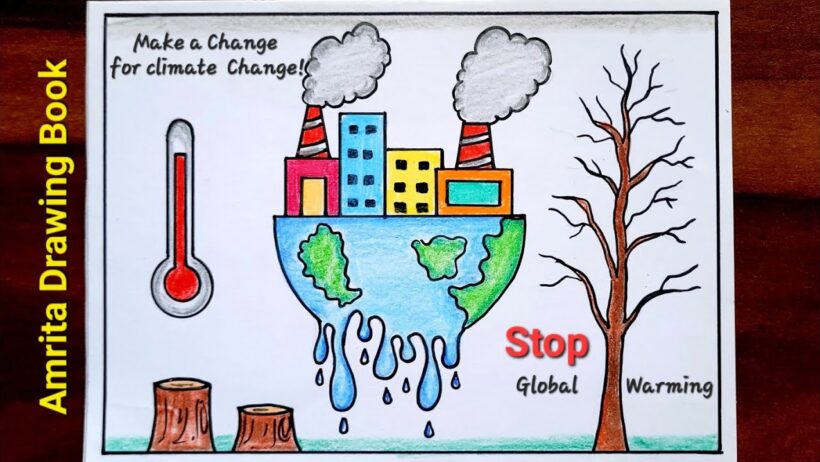

Global warming is no longer a distant worry; it is a pressing issue confronting humanity. As atmospheric temperatures continue to rise, the urgency to address climate change becomes paramount. One might ponder: are we doing enough to combat this existential threat? From artificial intelligence (AI) innovations to the burgeoning field of carbon capture technologies, this exploration delineates the multifaceted approaches taken to mitigate global warming and their efficacy.
The rise of global temperatures is inextricably linked to human activities, particularly the combustion of fossil fuels, deforestation, and industrial processes. Carbon dioxide (CO2) emissions from these actions form a dense blanket around the Earth, trapping heat and disrupting climatic patterns. It is predominantly in this context that diverse strategies are being developed and implemented to curtail carbon emissions.
Artificial intelligence stands at the forefront of transformative climate solutions. AI has the potential to optimize energy systems, improve efficiency, and bolster predictive modeling related to climate phenomena. Machine learning algorithms can analyze massive datasets from climate models, leading to more accurate forecasts. For instance, AI can be utilized in energy management, allowing for the prediction of energy consumption trends, leading to reduced waste and improved sustainability practices.
In smart grids, AI enhances the integration of renewable energy sources, such as solar and wind, by predicting output fluctuations, thus facilitating smooth energy distribution. These grids rely on real-time data to make adjustments, allowing for a more resilient energy mix. The deployment of AI in these scenarios can have a profound impact on reducing reliance on fossil fuels and, consequently, lower emissions.
Furthermore, AI-driven urban planning is vital. Urban centers are significant contributors to greenhouse gas emissions, so rethinking their infrastructure is crucial. By using AI algorithms, city planners can simulate different urban layouts to determine what configurations would reduce emissions while enhancing livability. This data-driven approach can help mitigate traffic congestion, optimize public transport, and create greener spaces, all of which contribute to a decline in urban pollution levels.
Carbon capture and storage (CCS) technologies represent another pillar in the fight against climate change. These innovations aim to capture CO2 emissions directly from industrial processes or the atmosphere and store it underground. Despite criticisms regarding scalability and cost-effectiveness, several projects worldwide are demonstrating promising outcomes. For example, direct air capture facilities are being constructed in locations where geological conditions allow for the safe storage of captured carbon.
The potential of CCS to significantly reduce CO2 concentrations is profound. It essentially allows us to continue utilizing fossil fuels while managing their environmental impact. However, critics contend that reliance on these technologies could diminish the urgency for transitioning to renewable energy sources. The paradox of pursuing CCS while simultaneously reducing fossil fuel dependency requires a delicate balance, prioritizing sustainability while leveraging available technology.
Both AI and CCS represent innovative approaches to mitigating global warming. Nevertheless, they must be integrated into a broader strategy that includes societal changes and governmental policies that promote sustainability. Behavior change at the individual and community levels plays an essential role in addressing climate change. Public campaigns educating individuals about reducing their carbon footprint through lifestyle adjustments can have a far-reaching impact.
Reforestation and afforestation serve as natural carbon sinks, with trees absorbing CO2. The urgency of preserving existing forests cannot be overstated; deforestation exacerbates climate change while unsettling ecosystems and biodiversity. Community-led initiatives aimed at planting trees and restoring natural habitats illustrate grassroots actions complementing technological solutions. Such initiatives remind us that every small effort counts and collective action can yield significant outcomes.
On a policy level, governmental action is vital to create frameworks that facilitate a swift transition towards sustainable practices. Legislation on emissions reductions, carbon pricing, and financial incentives for green technology all contribute to an environment conducive to innovation. International agreements, such as the Paris Agreement, establish collective benchmarks to encourage nations to commit to reducing greenhouse gas emissions. Following through on those commitments is crucial; accountability and transparency must accompany these agreements to ensure that progress is not just aspirational.
Empowerment through education is equally important. Understanding climate science, the impacts of global warming, and the choices available for mitigation can help individuals and communities drive reform. Educational curricula focusing on sustainability and climate awareness offer future generations the tools necessary to engage in climate action effectively.
Cross-cutting collaborations present an excellent opportunity to address climate change holistically. Researchers, policymakers, business leaders, and communities must work in concert, blending scientific expertise with practical implementation. Initiatives combining environmental justice with climate action ensure that vulnerable populations receive attention and resources, making the movement towards climate solutions equitable.
In conclusion, the question of whether we are doing enough to stop global warming is both complex and urgent. The amalgamation of AI, carbon capture technology, community action, and robust government policies presents a multifaceted approach to combating climate change. Although notable progress is being made, the scale of the challenge necessitates unprecedented levels of commitment and action. Ultimately, the path toward a sustainable future hinges on collective will and innovation. If individuals, organizations, and governments join forces—each playing their part—we can foster a world that not only mitigates the impacts of global warming but also thrives in the face of adversity.