
As the world grapples with the profound implications of climate change, the intersection of market economics and environmental sustainability emerges as a pivotal discourse. Can market economics, often perceived as the relentless engine of consumption, transcend its conventional role to mitigate global warming? Like a double-edged sword, market dynamics can either exacerbate the climate crisis or serve as a catalyst for transformative solutions.
To unravel this intricate conundrum, we must first acknowledge the underlying principles of market economics. Traditionally, market economics operate on the premise of supply and demand. When applied to environmental issues, these principles warrant examination not just in terms of financial transactions, but in how they can tangentially influence ecological stewardship. The fundamental question remains: Can prices reflect the true cost of environmental degradation?
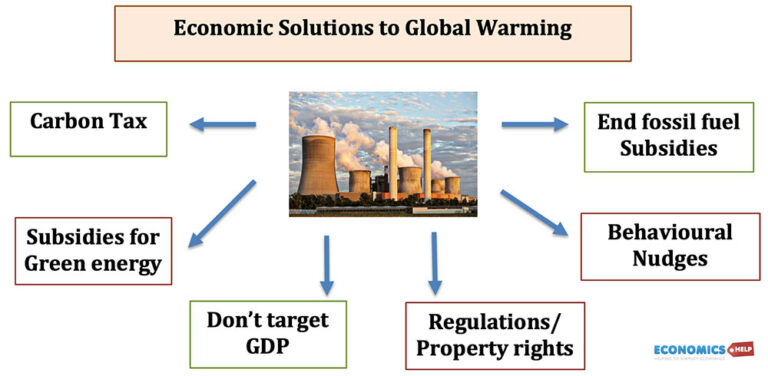
Imagine a world where the price of carbon emissions accurately encapsulates their environmental impact. When businesses and consumers face the reality of a carbon price that mirrors the detrimental effects of their choices, the proverbial light bulb flickers on. As companies are incentivized to innovate their practices, green technologies might flourish like wildflowers after a rainstorm. With the right economic stimuli, market forces can indeed pave the way for comprehensive solutions.
While carbon pricing offers a promising avenue, its implementation is laden with challenges. For instance, cap-and-trade systems exemplify a method through which market economics can curtail emissions. By capping an industry’s total emissions and allowing companies to buy or sell allowances, it engenders competition. This market-driven approach compels companies to invest in cleaner technologies, thus fostering a culture where sustainability is no longer a secondary consideration, but a core business strategy.
However, the efficacy of such systems often hinges on rigorous regulatory frameworks. Without robust policies backing these economic mechanisms, they risk becoming little more than a façade for continued environmental degradation. An economic approach unaccompanied by stringent regulations resembles a ship without a rudder—directionless and vulnerable to the tides of corporate greed.
In addition to carbon pricing, the market’s influence can extend to renewable energy sources, challenging the hegemony of fossil fuels. Government incentives play a crucial role here. Subsidies for wind, solar, and other renewables can mimic the evolutionary pressure that has driven species to adapt in the wild. As these technologies achieve parity with their fossil counterparts, consumers may find themselves naturally gravitating toward greener alternatives, thereby reshaping the energy landscape.
Moreover, the appeal of market-based solutions lies in their ability to engage the private sector in the climate crisis. Businesses, armed with the tools of market economics, have the potential to cultivate sustainable practices that align with consumer preferences. The burgeoning trend of corporate social responsibility underscores this transition. Companies that commit to sustainability are not just mitigating their impact; they are also enhancing their brand appeal and securing their market position in an increasingly environmentally conscious world.
The intricate relationship between consumers and businesses forms the bedrock of market economics. One must ponder how consumer behavior can be harnessed to combat global warming. As awareness of climate issues burgeons, individuals wield unprecedented power as informed consumers. The phenomenon of ethically-minded purchasing exemplifies how even the simplest choices can precipitate significant change. When consumers flock to sustainable brands, they send ripples through the market fabric, encouraging companies to prioritize ecological integrity.
However, it is paramount to recognize the disparities that exist within this framework. Market economics, by its nature, can perpetuate inequalities—particularly in the accessibility of sustainable options. High-quality, eco-friendly products are often priced at a premium, leaving low-income individuals at a disadvantage. Addressing this inequity necessitates a multifaceted approach, blending economic strategies with social equity initiatives. It is vital to ensure that the transition towards a sustainable economy is equitable and just, rather than a privilege for the affluent.
Transitioning towards circular economies further exemplifies how market mechanics can underpin sustainability. In a circular economy, waste is minimized, and resources are repurposed and reused. This model stands in stark contrast to the linear “take-make-dispose” paradigm that has dominated industrial practices. By fostering an ethos of reusability, businesses can enhance their profitability while simultaneously reducing environmental impact. Such transformations are not merely advantageous for the planet; they resonate with consumers who increasingly value sustainable practices. This represents a symbiotic relationship where market economics can harmonize profitability with environmental consciousness.
In conclusion, while market economics possess the potential to combat global warming, their success hinges on a delicate interplay of policy, consumer behavior, and corporate responsibility. Just as the ecosystem thrives on diversity, a multifaceted approach that incorporates various stakeholders is essential. By aligning the principles of market economics with robust environmental stewardship, we can forge pathways toward a sustainable future. The urgency of climate action cannot be overstated; it beckons us to rethink our economic paradigms and harness the latent powers of the market as instruments of change. As we navigate this turbulent terrain, let us remember that the stakes extend far beyond economic gains—they encompass the very essence of our planet’s future.