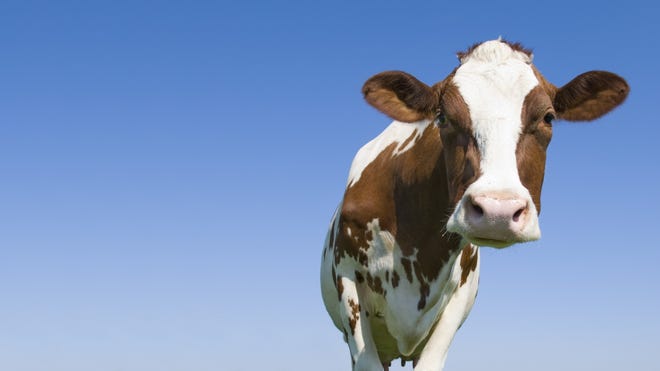

As we explore the intricate nexus between agriculture and climate change, one playful question emerges: Could those innocent-looking cows, grazers of green pastures, actually be playing a significant role in fueling global warming? When we ponder the future of our planet, the mention of methane gas—and more specifically, methane emissions from livestock—inevitably arises. It’s a challenge that demands our attention as scientists unravel the complexities surrounding greenhouse gases.
Methane (CH₄) is a potent greenhouse gas, with a global warming potential many times greater than that of carbon dioxide (CO₂) over a short-term horizon. The atmospheric concentrations of methane have surged dramatically, contributing to more than 25% of the total forcing of climate change since the industrial revolution. Primarily, methane is emitted through various anthropogenic sources, including agriculture, landfills, and fossil fuel extraction, with livestock—particularly cattle—being one of the most significant contributors.
The methane produced by cows is a byproduct of enteric fermentation, a natural digestive process that occurs in ruminants. As these animals ferment their food, they release gases that escape into the atmosphere primarily through belching. This seemingly innocuous act has garnered a great deal of scientific attention. Cows emit approximately 100 to 200 kg of methane per animal annually, which, considering the global cattle population, culminates in an alarming statistic: livestock farming accounts for roughly 14.5% of all greenhouse gas emissions.
To fully grasp the ramifications of cow methane emissions on global warming, we must delve into the science behind its potency. Methane, while less prevalent in the atmosphere compared to CO₂, is far more effective at trapping heat. It has a global warming potential that is 28 to 36 times greater than CO₂ over a span of 100 years. In a mere decade, this number shoots up to an eye-watering 84 to 87 times. Thus, the challenge lies in both the volume of methane emitted and its efficiency as a greenhouse gas.
One must consider the interaction between methane and atmospheric chemistry. Methane has a relatively short atmospheric lifespan—about a decade—after which it is broken down into CO₂ and water vapor. However, this transition does not diminish its immediate impact; it only underscores the urgency of addressing methane emissions. By curbing methane now, we can yield significant benefits for our climate in the near-term.
Proponents of sustainable agriculture argue for a transition toward practices that diminish methane emissions from livestock, such as improving feed efficiency, employing methane inhibitors, and adopting rotational grazing techniques. Such practices not only mitigate emissions but can also enhance soil health, increase biodiversity, and elevate the overall sustainability of agricultural practices. This presents a potential pathway towards rectifying the balance between agricultural productivity and environmental stewardship.
A dilemma arises, however, in the context of global food security. As the earth’s population continues to swell, demand for animal protein is projected to soar. The challenge, then, is formidable—how do we feed billions while simultaneously addressing climate change? Innovations in agricultural technologies, such as precision farming and alternative protein sources, might offer solutions to this quandary. These practices can reduce dependence on traditional livestock-based agriculture by enhancing plant-based diets or sourcing alternative proteins from insects or lab-grown meats.
The phenomenon of methane emissions extends beyond the agricultural sphere. It is essential to account for other sectors contributing to methane release, such as oil and gas production, coal mining, and waste management industries. Addressing methane emissions in these areas could align effectively with agricultural improvements, creating a more holistic approach to climate action.
International platforms have begun to recognize the significance of targeting methane in their climate commitments. The Global Methane Pledge is a prime example, with countries advocating for a collective goal of reducing methane emissions by at least 30% from 2020 levels by 2030. Such initiatives underscore the urgency of actionable commitments in mitigating climate change. What is key is fostering collaboration amongst nations, industries, and researchers to realize the potential impacts of reducing methane.
As we tread further into the realms of climate science, it is imperative to remain vigilant and proactive. The trajectory of methane emissions from livestock and other sources presents an opportunity for transformational change. It is crucial to couple education with action, raising awareness about the considerable role of methane in global warming. The casual observer may regard methane as simply a biological occurrence in our agricultural systems, but the ramifications echo throughout the fabric of our climate.
In conclusion, the question posed earlier—Do cows contribute to global warming through methane emissions?—cuts to the heart of a broader dialogue about climate resilience. As our planet faces unprecedented challenges, it is our responsibility to scrutinize agricultural practices, embrace innovation, and pursue sustainable approaches that reconcile economic and environmental priorities. Ultimately, by embracing strategic changes, the food systems that have sustained us can evolve to become allies in the fight against climate change rather than adversaries. The answer lies not only in understanding the science but also in the actions we choose to embrace moving forward.