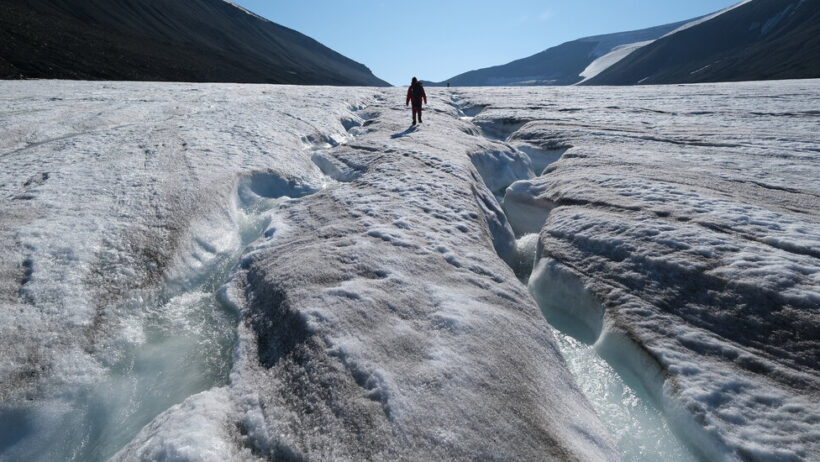

As temperatures rise and our planet’s climate system undergoes unprecedented changes, a pressing question looms large: does melting sea ice accelerate global warming? This inquiry ventures beyond mere curiosity; it presents a challenge requiring a comprehensive examination of the delicate interplay between our atmosphere and the cryosphere—the frozen areas of Earth.
To tackle this complex issue, it is essential to define what melting sea ice entails. Arctic and Antarctic regions are home to vast expanses of sea ice, which play a pivotal role in regulating Earth’s temperature. Sea ice reflects sunlight back into space, a phenomenon known as the albedo effect. This reflective capability significantly impacts global climatic conditions. However, as polar temperatures rise and ice begins to melt, the reflective surfaces diminish, exposing darker ocean waters that absorb more solar radiation. This change is where the crux of the issue lies.
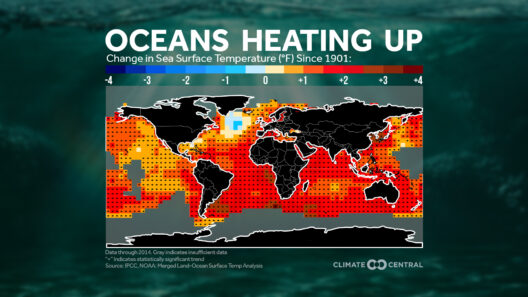
One might wonder: if sea ice is melting, does that mean warmer waters are contributing to further global warming? The answer is resoundingly affirmative. With less ice cover, more solar energy is absorbed by the ocean, leading to increased water temperatures. This thermal energy can exacerbate atmospheric warming, as warmer oceans release more water vapor—a potent greenhouse gas—into the atmosphere. Thus, in a sense, melting sea ice acts not merely as a passive observer of climate dynamics but rather as an active participant, intensifying the feedback loop of warming.
Beyond simple thermodynamic principles, the ramifications of melting sea ice extend far into the ecological domain. Marine ecosystems that depend on stable ice conditions face distressing alterations. Species such as polar bears, seals, and certain fish populations rely on predictable ice formation for breeding and hunting. As these animals adapt to changing habitats, their survival hinges on the pace of environmental shifts. The ripple effects of their decline threaten to destabilize intricate food webs that sustain countless marine species and human communities alike.
This ecological interdependence begs the next inquiry: what happens when key species experience disruptions to their life cycles? The repercussions can be drastic. For instance, as fish populations decline due to changes in their habitat, local fishing economies suffer. Communities reliant on these resources may face food insecurity, as well as economic instability. This creates a dual challenge: how do we address the immediate needs of affected communities while simultaneously tackling the larger issue of global warming?
In contemplating these challenges, it becomes clear that the melting of sea ice is not a singular event but a multifaceted phenomenon. One must also consider the role of the Arctic in broader atmospheric dynamics. As climate patterns shift, Arctic amplification—a phenomenon where the Arctic warms faster than the global average—contributes to more erratic weather patterns far beyond the polar regions. It leads to a cascade of anomalous weather events, including extreme temperatures and altered precipitation patterns, affecting agriculture, water supply, and human health across the globe.
The interaction between melting sea ice and climate variability exemplifies the Many-Worlds Interpretation of physics: one event can set off numerous cascading consequences, proliferating risks and unpredictabilities throughout various systems. So, how do we navigate this labyrinth of uncertainties? One might propose an avenue forward: the implementation of strategic and sustainable policy measures aimed at reducing greenhouse gas emissions.
The prospect of emissions cuts is promising. Research indicates that substantial reductions in emissions can indeed mitigate the adverse impacts of melting ice. Enhancing energy efficiency, investing in renewable resources, and promoting sustainable agriculture can significantly curb global warming. It begs the question: are we collectively ready to embrace such transformations? Political will and societal engagement are crucial in this endeavor. A society that prioritizes ecological integrity can foster innovative solutions to combat climate change.
However, the road ahead is fraught with potential setbacks. As nations grapple with economic pressures and immediate challenges, prioritizing long-term environmental initiatives can sometimes take a backseat. It is crucial to remind global citizens that climate action isn’t merely an option; it’s an imperative. The challenges we face today present an opportunity to educate ourselves and each other about sustainable practices while advocating for comprehensive climate policies.
In addition to individual actions, embracing scientific advancement is paramount. Climate scientists and environmentalists alike advocate for more robust research initiatives aimed at understanding the complex relationship between melting sea ice and climate change. Continued study is vital for predicting future changes and for formulating effective responses. Through innovation and the integration of technology, society can unlock new strategies to address both mitigation and adaptation challenges posed by a warming planet.
Ultimately, the question of whether melting sea ice speeds up global warming encapsulates a broader narrative: one of interconnectedness and responsibility. From the vulnerable polar ecosystem to the bustling urban centers reliant on stable climates, the journey toward sustainability compels us to acknowledge our role in this unfolding story. As we ponder the myriad ways in which our actions intersect with planetary health, one undeniable truth emerges: our choices today will define the Earth’s climate tomorrow. Let’s ensure those choices reflect a commitment to a more sustainable and resilient future for all.