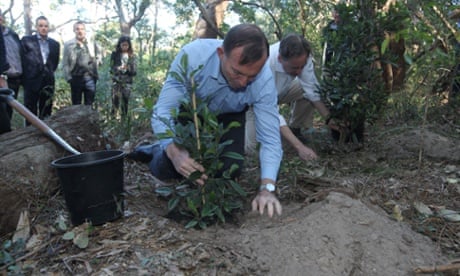

In the tumultuous arena of environmental discourse, few figures evoke as much discord as Tony Abbott, the former Prime Minister of Australia. His stance on global warming and climate policy often resembles a walk in a minefield—seemingly indifferent to the catastrophic ramifications that loom like storm clouds on the horizon. This exploration delves into what Abbott genuinely believes about global warming and confronts the implications of his rhetoric and policies.
Abbott’s position on climate change can be likened to a shadow play, where the substance of his beliefs often obscures the harsh realities of scientific consensus. He has historically expressed skepticism regarding the anthropogenic origins of climate change, framing it within a narrative that questions the validity of climate science. This perspective is not merely a personal belief but serves as a reflecting pool for larger political ideologies, where market forces are favored over environmental stewardship. Amidst legislative efforts to limit carbon emissions, Abbott’s rhetoric suggests he subscribes to a worldview where economic growth is inexorably intertwined with fossil fuel reliance, advocacy that mirrors the objections raised by many within the coal industry.
To comprehend Abbott’s stance, it is essential to examine the broader context of his political ideology. He presents climate skepticism as a battle cry for individual liberty and economic prosperity. This ideology posits that regulatory measures intended to ameliorate climate change impose constraints on personal and corporate freedoms—an echo of libertarian values that prioritize markets over moral imperatives. Such beliefs craft a dichotomy: the perceived tension between economic vitality and environmental sustainability. Abbott’s perspective often underscores the refrain, “We should not sacrifice jobs for the sake of a theory,” implying that economic imperatives should supersede climatic considerations.
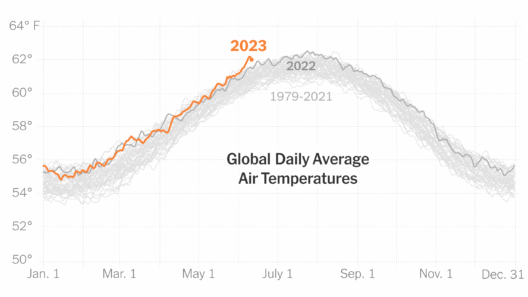
Abbott’s arguments against global warming often employ a sort of rhetorical sleight of hand. Dismissive of climate change, he draws upon anecdotes and selective data—passing off localized weather patterns as indicators of a non-existent crisis. This approach can obscure the intricate and multifaceted nature of climate change, reducing a complex issue to trivial dismissals. Acknowledging climate trends requires an understanding that local weather variations do not negate the trajectory of global phenomena; yet, Abbott seems to thrive on these simplistic interpretations, favoring a narrative that resonates with certain constituency fears and desires.
Furthermore, Abbott’s resistance to renewable energy initiatives exemplifies a broader ideological battle regarding the energy transition. His administration’s relentless pursuit of fossil fuel development, alongside opposition to renewable alternatives, draws criticism from both environmentalists and forward-thinking economic strategists. When he categorically labeled wind power as “unreliable” and “inefficient,” it was a statement reflective of a reluctance to embrace necessary technological evolution. Abbott’s worldview encapsulates a fixation on the status quo, favoring entrenched energy frameworks over the vibrant potential of innovation in the energy sector.
Yet, it is crucial to highlight that Abbott’s rhetoric is not merely academic; it has tangible consequences. The ecological footprint of continued fossil fuel dependency and the ramifications of climate neglect affect the very landscapes Abbott purports to protect. This dichotomy invokes an unnerving metaphor: the canary in the coal mine for future generations, who will inherit the environmental degradation resulting from leaders who prioritize short-term gains over long-term viability. When the chorus of climate scientists warns of impending catastrophes, those who dismiss these warnings risk perpetuating a cycle of ecological decline.
Despite Abbott’s dismissive rhetoric, a burgeoning movement advocating climate action continues to gain momentum, challenging his narrative. The resurgence of climate activism, especially among young people, introduces a compelling counterpoint to Abbott’s position. The juxtaposition of their fervent demand for accountability and Abbott’s subdued climate strategy underscores a profound generational divide. This shift emphasizes a burgeoning recognition that the environment is not a negotiable asset but a shared legacy that demands immediate attention.
Moreover, Abbott’s ideological affinity for fossil fuels does not merely stem from economic motivations, but it also reflects a deeper philosophical underpinning. His beliefs resonate with notions of progress rooted in industrialization, portraying environmentalism as a paradoxical impediment to human achievement. This perception frames climate action as an unnecessary burden—an ideological battle that pits human ambition against the planet’s limits. In this discourse, environmentalists are often cast as hawkish critics of development, while Abbott champions growth as a noble pursuit. Such narratives can obfuscate the pressing need for sustainable development that harmonizes human advancement with ecological integrity.
Ultimately, unraveling what Tony Abbott truly thinks about global warming reveals a complex interplay of ideology, science, and economic interests. His approach exemplifies the perils of climate nihilism, where dismissing climate change propagates a cycle of inaction that reverberates across economic and ecological spheres. As climate activists leverage grassroots movements to challenge such perspectives, the dialogue surrounding climate change continues to evolve, fostering a more nuanced understanding of the urgency that accompanies environmental stewardship. In this unfolding narrative, the hope for progressive environmental policies stands resilient, ensuring that the voice of climate science cannot be silenced by the whims of political rhetoric.