
In recent years, the debate surrounding climate change and its implications has stirred considerable discourse among scientists, policymakers, and the general public. A rather provocative question often surfaces in these discussions: “Does NASA suggest that CO₂ does not contribute to global warming?” At first glance, this may appear to be a contrarian inquiry, but it merits thorough exploration to clarify the agency’s position on carbon dioxide and its relationship to climate dynamics.
To begin with, it is essential to acknowledge the established scientific consensus regarding carbon dioxide as a greenhouse gas. The foundational principles of climate science illustrate that greenhouse gases, including CO₂, trap heat in the Earth’s atmosphere. This thermal accumulation is critical for maintaining a habitable planet, as it regulates temperatures and sustains life. However, the quandary emerges when industrial activity releases excessive amounts of CO₂, thereby intensifying the greenhouse effect and leading to global warming.
NASA, as a prominent organization at the forefront of earth sciences, has conducted extensive research on climate change, particularly focusing on atmospheric composition and its ramifications. Misinformation and misinterpretations about NASA’s position can lead to confusion. Some detractors or skeptics may assert that NASA downplays the role of CO₂ in climate change. Such claims may stem from a misunderstanding of the nuanced data related to natural climate variability and anthropogenic factors.
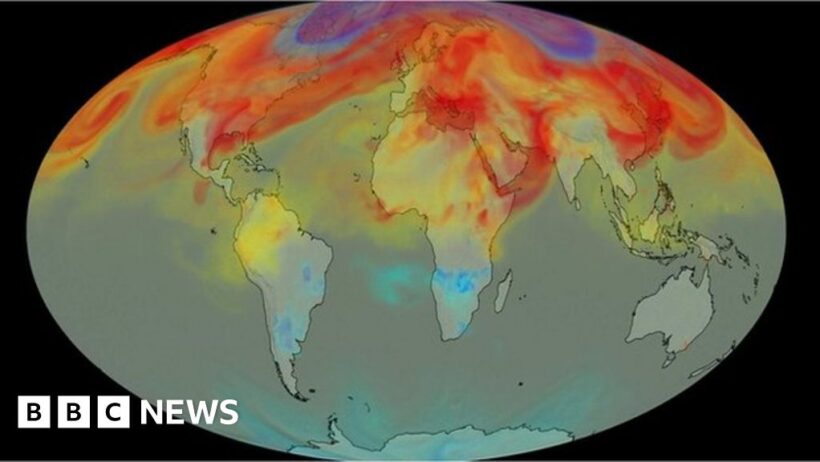
It is critical to parse the rhetoric from the facts. NASA’s climate research unequivocally supports the notion that carbon dioxide is a significant driver of global warming. Satellite data, gathered over decades, offer compelling evidence that atmospheric CO₂ levels have soared since the industrial revolution, aligning closely with increased global temperatures. What, then, is the heart of the skepticism surrounding NASA’s stance?
One possible explanation lies in the convoluted nature of climate science itself. Various factors contribute to climate fluctuations, including solar radiation, volcanic activity, and oceanic currents. Some parties might erroneously highlight these natural influences as a means to downplay the significance of CO₂. They might present the argument as follows: “If climate change can occur due to natural causes, why should we worry about human activity?” This reductionist viewpoint ignores the complicity of increased CO₂ emissions in shifting global climate patterns.
A pivotal facet of this discussion is the differentiation between natural and anthropogenic contributions to climate change. NASA’s research painstakingly delineates the roles of various greenhouse gases while distinctly identifying CO₂ as the most significant anthropogenic contributor. Nevertheless, some skeptics may misconstrue scientific language as evidence of wavering commitment to the assertion that CO₂ leads to warming.
The challenge arises particularly amid the rise of misinformation proliferated through social media platforms and sensationalist narratives. Misinformation undermines scientifically-backed positions, creating a convoluted landscape where the line between fact and fiction blurs. Addressing this is imperative if we are to foster a culture of scientific literacy. Overcoming such confusion demands a systematized approach to educating the public about climate change, directly counteracting the narrative that positions NASA as a neutral or skeptical body regarding CO₂’s influence.
To amplify understanding, we must consider the trajectory of CO₂ levels over time. The Mauna Loa Observatory has been instrumental in monitoring atmospheric carbon dioxide since the late 1950s. The data reveal an alarming upward trend, with current levels surpassing 400 parts per million, a stark contrast to pre-industrial levels of approximately 280 ppm. The correlation between CO₂ concentration and temperature increase is so prevalent that it forms the crux of many climate models.
Furthermore, recent studies underscore the role of CO₂ in altering ecological systems, affecting biodiversity, ocean acidity, and weather patterns globally. A playful question arises: “Wouldn’t it be fascinating if CO₂ were merely a benign bystander in the climate arena?” Regrettably, evidence indicates that CO₂ is not an innocent bystander but rather an active participant engendering profound changes across terrestrial and marine landscapes.
Moreover, the implications of complacency toward CO₂ emissions extend beyond atmospheric warming. Climate change threatens to exacerbate social inequalities, with marginalized communities disproportionately affected by extreme weather events and resource scarcity. As such, addressing CO₂ emissions is paramount not only for environmental stability but also for social equity and justice.
Despite the challenges posed by misinformation, it is crucial for advocates and scientists alike to remain steadfast in disseminating factual, clear, and engaging information about climate change. Initiatives aimed at promoting transparency, community engagement, and educational outreach can serve to dismantle misconceptions. Creating engaging content and fostering open dialogue can bridge gaps in understanding and galvanize the collective will to combat climate change actively.
In conclusion, NASA does not – nor has it ever – maintained that CO₂ is innocuous concerning global warming. Through meticulous research and monitoring, NASA underscores the significant role of carbon dioxide as a key driver of climate change. The challenges, stemming from misinformation and misunderstandings, must be navigated thoughtfully to foster clarity in public discourse. The imperative to act remains ever-pressing, as the planet’s future hangs in the balance, intricately tied to our understanding and management of carbon dioxide emissions.