
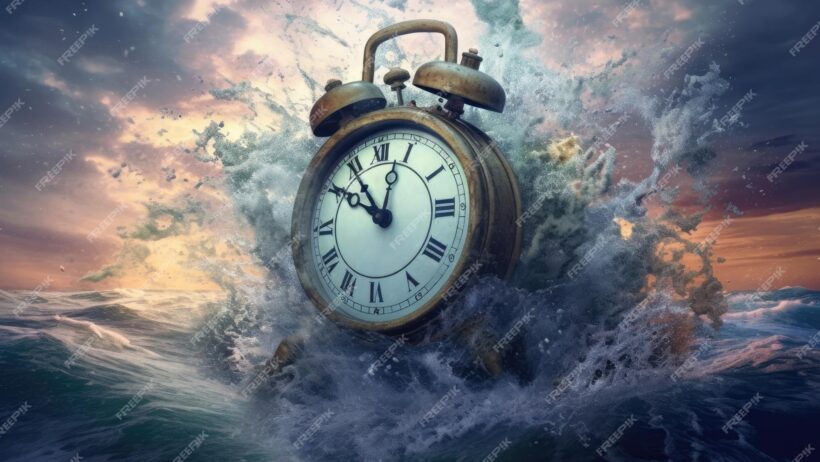

As the world grapples with the ramifications of climate change, few phenomena epitomize the grave reality of a warming planet more poignantly than rising sea levels. The metaphor of “sinking futures” vividly illustrates the precariousness of our existence amidst the relentless encroachment of water on once-fertile land. This article delves into the multifaceted intricacies of rising waters, revealing the precarious balance between ecological stability and human livelihoods.
The notion of sea levels rising is not just a scientific measurement; it embodies a plethora of consequences that reverberate through our ecosystems, economies, and communities. The ongoing phenomenon is primarily attributable to two factors: the thermal expansion of seawater as global temperatures ascend and the accelerated melting of glaciers and polar ice sheets. Collectively, these elements constitute an unyielding tide threatening to inundate coastal habitats and displace millions.
Much like a ticking clock, the rise in sea levels serves as a stark reminder of humanity’s finite timeline to address climate change vigorously. Each new increment of water signals not only a loss of territory but also an erosion of cultural identities deeply intertwined with coastal landscapes. For communities who have thrived in these regions for generations, the encroaching waters symbolize not merely a physical threat but also a profound existential crisis.
In 2021, the Intergovernmental Panel on Climate Change (IPCC) provided alarming projections, forecasting that global sea levels could rise by as much as 1.1 meters by the year 2100 under high-emission scenarios. Such an increase would have devastating implications for cities like Miami, New Orleans, and Jakarta, where the population densities are staggering, and the infrastructure vulnerable. The metaphor of a “sinking clock” encapsulates the urgency; we are pressed against the limits of time, facing a moment where inaction may render our cities uninhabitable.
The coastal erosion stemming from rising waters is exacerbated by anthropogenic activities. Urban development, deforestation, and unsustainable agricultural practices have cleared natural barriers, allowing ocean waters to infiltrate what was once solid ground. This diminishes the resilience of coastal ecosystems, which serve as crucial buffers against storm surges and floods. Mangroves, which provide sanctuary for diverse marine life, are dwindling, and coral reefs, often referred to as the “rainforests of the sea,” are experiencing unprecedented bleaching events. Each one of these losses diminishes the natural defenses we depend on, creating a feedback loop of vulnerability.
The socio-economic dimensions of rising sea levels cannot be overstated. Economic disparities are magnified in the face of environmental degradation. Developing nations, with limited resources and infrastructure to combat rising waters, face catastrophic losses as agricultural productivity plummets and freshwater systems become salinated. Conversely, wealthier nations often resort to costly engineering solutions to shield their urban centers, emphasizing a grim truth: the capacity to respond to climate change is unevenly distributed.
In addition, climate-induced migration is an emerging crisis. As communities become uninhabitable, entire populations are forced to seek refuge elsewhere, leading to what some scholars term “climate refugees.” This phenomenon raises complex questions of international law, human rights, and ethical responsibilities. How do we navigate the reality of families fleeing their homes, torn from the fabric of their communities, as oceans rise and land sinks away?
The emotional weight of these realities resonates intimately, compelling individuals to engage in this conversation. While scientific projections provide a stark backdrop, the stories of those affected render these statistics profoundly human. Art and literature frequently reflect these emotions, as the metaphor of sinking futures resonates deeply within cultural expressions. As artists illustrate the anguish of flooded homes or writers agonize over the loss of ancestral lands, these narratives exemplify the visceral sense of loss that transcends numbers on a page.
To confront rising sea levels and mitigate their cascading effects, collective action is paramount. Policies must coalesce around sustainable practices that emphasize climate resilience, transitioning towards renewable energy sources, and enhancing conservation efforts to restore natural ecosystems. Investing in green infrastructure, such as restoring wetlands, rebuilding mangroves, and enhancing urban green spaces, can underscore a proactive rather than reactive stance against rising waters.
Furthermore, public awareness and education are integral to mobilizing communities. The dialogue surrounding climate change must be inclusive, promoting grassroots movements that empower marginalized voices. Each person has a role to play in this narrative; from advocating for policy reforms to participating in local conservation efforts, the urgency to act is palpable and immediate.
Perhaps one of the most powerful aspects of this global movement against climate change is its capacity to foster unity. As diverse communities rally under the shared banner of environmentalism, they forge connections founded on mutual understanding and respect for our planet. Rising waters may threaten to divide us, but they also possess the potential to unite humanity in the pursuit of a sustainable future.
In conclusion, the metaphor of “Rising Waters Sinking Futures” serves as a compelling call to action. As we continue to navigate the tumultuous climate crisis, it is essential to recognize that the battle against rising sea levels is not merely an environmental concern but a moral imperative. The clock is ticking, and with each passing day, the urgency surrounding this issue crystallizes. The oceans may rise, but so too must our resolve to combat this existential threat, ensuring a livable planet for generations to come.