
The ocean, a vast expanse of water covering over 70% of our planet, plays a critical yet often underappreciated role in our fight against climate change. While many focus on carbon capture technologies and terrestrial solutions, the ocean’s potential to contribute to climate mitigation extends far beyond merely absorbing carbon dioxide. Have you ever wondered how the ocean might actively contribute to cooling our planet and supporting biodiversity, akin to nature’s very own climate control system? The multifaceted interactions within marine ecosystems hold an answer that may challenge conventional wisdom about carbon sinks.
The ocean serves as a colossal carbon sink, absorbing an estimated 30% of the carbon dioxide emitted into the atmosphere. As the carbon dioxide levels rise, ocean waters become more acidic, a phenomenon known as ocean acidification. This change poses a severe threat to marine life, particularly calcifying organisms like corals and shellfish. However, the ocean’s role in climate mitigation is not limited to carbon absorption; it also involves intricate biological processes that contribute to the regulation of Earth’s climate system.
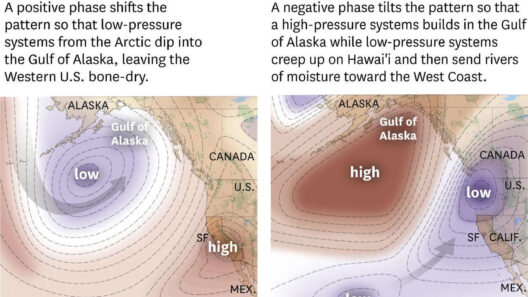
One such system is the ocean’s ability to influence weather patterns and heat distribution. Ocean currents, which are driven by wind, temperature differences, and salinity variations, transport warm water from the equator toward the poles and cold water back towards the equator. This movement helps regulate global temperatures, distributing heat more evenly across the planet. Consequently, the health of these currents is essential to maintain climate stability. Changes to these currents, whether due to melting glaciers or human activities, could lead to chaotic disruptions in weather patterns, making the ocean’s role in climate stability critically important.
Moreover, the ocean is intimately tied to the biogeochemical cycles that underpin life on Earth. Phytoplankton, tiny plants that thrive in the sunlit upper layers of the ocean, play an outsized role in the global carbon cycle. These organisms perform photosynthesis, absorbing carbon dioxide and releasing oxygen, while also supporting marine food webs. Strikingly, phytoplankton are responsible for producing more than half of the oxygen in our atmosphere. Their growth is typically limited by nutrient availability. Thus, a decrease in nutrient levels, often caused by pollution or climate change, can drastically affect their populations and, consequently, their ability to sequester carbon.
Furthermore, deeper waters of the ocean act as a thermal reservoir that absorbs excess heat from the atmosphere. This process, while beneficial in the short term, is not without its consequences. As the ocean absorbs more heat, it experiences phenomena such as thermal stratification—where warmer surface waters sit atop cooler, deeper layers. This stratification can inhibit mixing, reducing the ocean’s capacity to distribute nutrients and support marine life. Thus, while the ocean initially acts as a buffer against rising temperatures, prolonged warming may lead to long-term ecological imbalances.
An often-overlooked aspect of the ocean’s contribution to climate mitigation is its biodiversity. Ecosystems such as mangroves, seagrasses, and saltmarshes, which are found along coastlines, function as significant carbon sinks. These habitats capture carbon in their biomass and sediment, locking it away for extended periods, which is sometimes referred to as “blue carbon.” Protecting and restoring these ecosystems could enhance their ability to sequester carbon, mitigating climate change effects while also providing other essential services, such as protecting coastlines from storm surges and supporting diverse marine species.
However, with climate change posing unprecedented challenges, there is an urgent need to actively engage in restoring ocean health. Marine Protected Areas (MPAs) serve as potential sanctuaries for biodiversity and can also enhance the resilience of marine ecosystems to climate stressors. By strategically implementing MPAs, we create refuges for fish populations, corals, and other marine organisms, enabling them to thrive even in changing conditions. This preservation not only safeguards marine life but also bolsters the ocean’s ability to contribute to climate regulation more effectively.
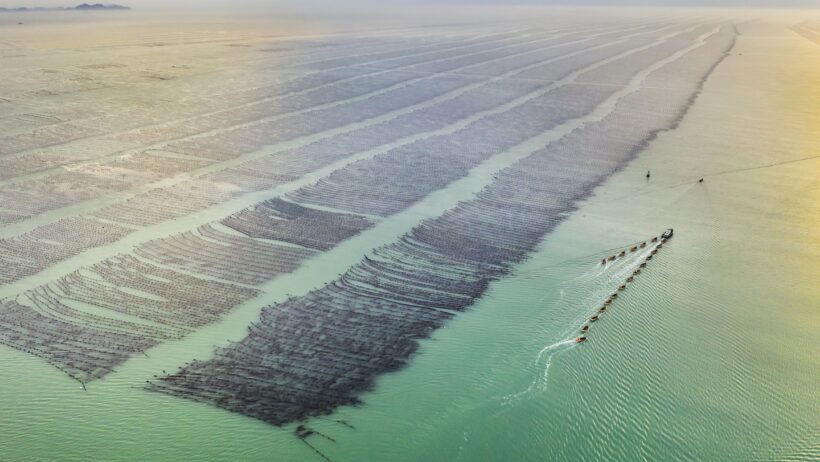
Seaweeds, particularly kelp forests, emerge as extraordinary allies against climate change. They capture carbon at staggering rates, with some estimates suggesting that large kelp beds can sequester carbon up to five times more efficiently than terrestrial forests. Kelp forests also provide essential habitats for many marine species and contribute to ocean biodiversity. As kelp harvesting becomes more common, harnessing their carbon-sequestering potential while ensuring sustainable practices will be pivotal in safeguarding both marine life and climate health.
Despite the crucial roles oceans play, they continue to face dire pressures from pollution, overfishing, and climate change itself. The challenge lies in striking a balance between utilizing ocean resources and preserving the intricate ecosystems that support them. A playful yet pressing query arises: can we become stewards of the ocean in a manner that not only sustains our needs but invigorates its natural capabilities to combat climate change?
In response to this challenge, collaborative global efforts must be initiated to prioritize ocean health. Integrating scientific research with traditional environmental stewardship practices can lead to innovative solutions. For instance, supporting regenerative ocean farming practices can yield both food and environmental services, ultimately contributing to a healthier ocean and a more resilient climate. This paradigm shift towards sustainability requires us to reevaluate our relationship with marine ecosystems, fostering a mindset that recognizes their intrinsic value beyond mere resources.
The ocean’s hidden role in moderating global temperatures reaches far beyond the simplistic narrative of carbon capture. By understanding and supporting the complex biological, chemical, and physical processes at play, humanity can unlock the full potential of oceans as pivotal players in climate change mitigation. They encapsulate a world of possibilities, yet they also demand our stewardship. As we embark on this journey, let us embrace the challenge of working in harmony with the ocean and recognize its irreplaceable contribution to the health of our planet.