
Rising sea levels represent one of the most alarming consequences of climate change, affecting ecosystems, human settlements, and global weather patterns. While the relationship between sea-level rise and global warming is a complex, multifaceted issue, understanding the distinction between cause and effect is paramount for developing effective strategies to combat climate change. This discourse aims to disentangle the interdependent phenomena of rising sea levels and global warming by elucidating their respective roles and exploring various content themes related to this critical topic.
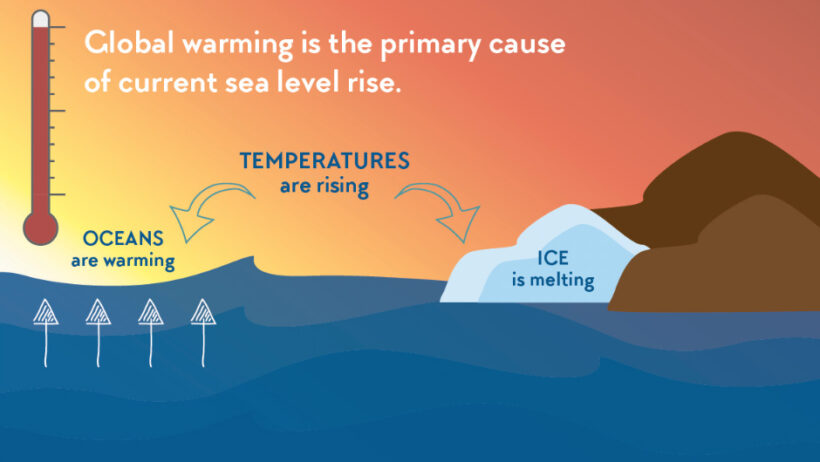
At its core, rising sea levels are primarily driven by two phenomena: thermal expansion of seawater and the melting of land-based ice sheets and glaciers. As global temperatures increase, the oceans absorb heat, leading to thermal expansion. This results in higher sea levels, which can inundate coastal communities and habitats. On the other hand, the acceleration of ice melt—particularly in Greenland and Antarctica—adds significant amounts of freshwater to the oceans, compounding the issue of sea-level rise.
Conversely, rising sea levels can also exacerbate the effects of global warming, creating a feedback loop that amplifies climate change. For instance, as coastal areas become submerged, they can release stored carbon and greenhouse gases from peatlands and coastal wetlands. These emissions contribute to warming temperatures, thus further accelerating the processes that lead to further sea-level rise. A deeper understanding of this cyclical relationship underscores the importance of addressing both factors in climate policies.
To explore these dynamics, one must consider how climate change mitigation and adaptation strategies can be informed by the interplay of rising sea levels and global warming.
1. The Scientific Foundations of Sea-Level Rise
The scientific underpinnings of sea-level rise encompass a range of disciplines, including oceanography, climatology, and geography. Understanding the geophysical processes at work is crucial. The Intergovernmental Panel on Climate Change (IPCC) projects continued sea-level rise throughout the 21st century, necessitating robust scientific inquiry into its predicted outcomes.
The two predominant contributors to rising sea levels are:
- Thermal Expansion: As water warms, it occupies more space, leading to a rise in ocean levels. This process accounts for approximately half of the observed sea-level rise.
- Melting Glaciers and Ice Sheets: The melting of polar ice and glaciers contributes additional water to the oceans, significantly impacting sea levels. The rate at which these ice reserves diminish is a critical focus of modern climate studies.
2. Global Warming: A Catalyst for Change
The relationship between rising sea levels and global warming is reciprocal. As greenhouse gas emissions increase, global temperatures surge, leading not only to warmer seas but also to significant climatic shifts worldwide. These include altered weather patterns, more severe storms, and even shifts in ocean currents. Each of these factors plays a role in exacerbating the conditions conducive to rising sea levels.
One notable consequence of higher temperatures is the destabilization of marine ecosystems, which can lead to a chain reaction of ecological impacts. Coral bleaching, for instance, is a direct result of elevated water temperatures, compromising the integrity of marine biodiversity and its capacity to thrive in their environments.
3. Consequences of Rising Sea Levels
As sea levels continue to rise, the implications for global populations are dire. Coastal cities such as Miami, New Orleans, and Shanghai are already experiencing increased flooding, erosion, and salinity intrusion into freshwater resources, which jeopardizes drinking water supplies. The economic ramifications are equally considerable, with estimates from various studies indicating potential losses in the trillions of dollars due to property damage, infrastructure failure, and necessary adaptations.
Additionally, rising sea levels lead to the loss of habitat for various species. Coastal wetlands, vital for biodiversity and as protective buffers against storm surges, are becoming increasingly submerged, diminishing their effectiveness and leading to significant ecological degradation. The loss of these critical habitats not only threatens wildlife but also undermines the ecosystem services they provide, such as carbon sequestration and water filtration.
4. Mitigation and Adaptation Strategies
In response to these challenges, both mitigation and adaptation strategies must be prioritized. Mitigation involves reducing greenhouse gas emissions through renewable energy transitions and energy efficiency improvements, which can help slow global warming and consequently curb sea-level rise. Transitioning to sustainable agriculture practices and enhancing carbon sinks, such as forests and wetlands, are effective approaches to achieve this goal.
Adaptation strategies, on the other hand, involve modifying infrastructures, such as the construction of sea walls, restoration of wetlands, and intelligent urban planning to ensure that communities are resilient to ongoing and projected impacts of rising seas. Effective management practices must also be implemented to address the specific needs of affected populations, especially vulnerable communities facing the brunt of these environmental changes.
5. Public Awareness and Global Collaboration
Raising public awareness about the intricacies of rising sea levels and global warming is crucial. An informed populace is better positioned to advocate for policy changes and support initiatives aimed at environmental sustainability. Educational campaigns, workshops, and community engagement are essential avenues for promoting understanding and mobilizing action.
Moreover, international collaboration is pivotal. Climate change is a global challenge that knows no borders; thus, countries must work collectively to share knowledge, technologies, and resources. The Paris Agreement serves as a framework for this cooperation, aiming to limit global warming and enhance resilience to climate change impacts.
In summary, the relationship between rising sea levels and global warming is a fundamental aspect of the climate crisis. By disentangling cause from effect and fostering a comprehensive understanding of these phenomena, society can better equip itself to confront the unprecedented challenges posed by climate change. Addressing these issues through rigorous scientific inquiry, effective policy-making, and public engagement will be essential to safeguard future generations and preserve fragile ecosystems.