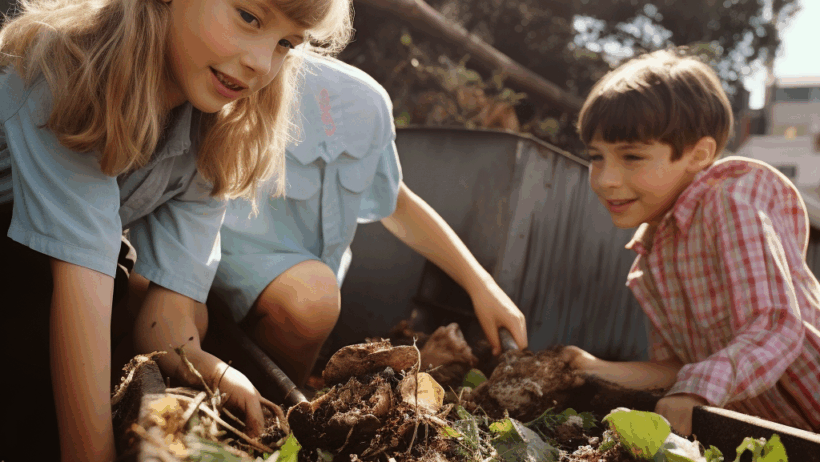

In an age where the specter of climate change looms ominously over our planet, the phrase “Waste Not, Want Not” takes on a profound significance. Our food scraps, often seen as nothing more than detritus, can instead blossom into a fervent ally in the battle against global warming. Composting, a process that transforms organic waste into a nutrient-rich amendment for soil, is an ecological boon that resonates well beyond the confines of our kitchens.
Composting food scraps is akin to a phoenix rising from the ashes. It takes what society often discards—a myriad of peels, cores, and leftovers—and turns them into something vital: fertile soil. This action captures carbon that would otherwise have been emitted into the atmosphere, making it a powerful strategy in our climate change arsenal. By keeping organic waste out of landfills, composting mitigates the release of methane, a greenhouse gas that is significantly more detrimental than carbon dioxide in terms of its global warming potential.
What lies at the heart of composting is a symbiotic relationship with nature. Organic matter, whether it’s vegetable scraps, fruit peels, or even coffee grounds, undergoes a transformation facilitated by microorganisms that break down the material. This biological dance creates humus, which enriches soil and helps to store carbon. A healthy soil ecosystem enhances the earth’s resilience, enabling crops to flourish with less reliance on chemical fertilizers and water.
Moreover, composting exudes an unmistakable allure. It invites us into a realm of transformation, celebrating decay as a precursor to new life. The art of composting cultivates mindfulness, urging individuals to reevaluate their relationship with food and waste. Each banana peel tossed into the compost bin serves as a mantra of sustainability, conjuring a narrative that defies consumerism and wastefulness. It inspires a profound connection with the cycles of nature, where every element has a role to play in the grand tapestry of life.
But beyond personal mindfulness, the impact of composting extends into broader ecological implications. Communities adopting composting initiatives witness a remarkable shift in waste management practices. Local governments and institutions, such as schools, have commenced innovative composting programs. They serve as both educators and stewards of sustainability, enhancing community awareness around organic waste while contributing to soil regeneration. Such initiatives foster a collective consciousness about food waste as a resource rather than a burden, cultivating resilience in local food systems.
Interestingly, composting also embodies social equity. Many urban areas lack access to professional composting services, leaving low-income neighborhoods disproportionately burdened by waste. Community-led composting initiatives help bridge this gap, allowing marginalized voices to engage in sustainability practices. As these communities reclaim their relationship with food, they empower themselves to create a more sustainable future for generations to come.
Composting at home is an accessible practice that requires minimal investment, yet yields substantial returns. The process can be as simple as dedicating a corner of the garden to a compost bin or investing in a stylish kitchen compost collector. What you will harvest from these efforts far outweighs the effort put in. You create rich organic material that boosts your garden’s soil structure, improves moisture retention, and encourages microbial diversity. In essence, you become a steward of the land, promoting its health for future generations.
Furthermore, the act of composting beckons individuals to embrace a zero-waste philosophy. With the global population skyrocketing, food waste generated in households contributes significantly to landfills. According to estimations, nearly 30-40% of the entire food supply is wasted, costing consumers billions while exacerbating global warming. By fermenting the notion that wasted food constitutes lost resources, composting channels personal responsibility into collective action.
As we advocate for composting, it’s essential to consider the landscape of food production itself. By closing the loop on organic waste, we not only reduce the carbon emissions associated with waste transport and disposal but also provide essential nutrients back to the earth. This regenerative approach challenges conventional agricultural narratives that prioritize high chemical inputs and monoculture farming methods. Composting urges us to reconnect with the provenance of our food, fostering resilience in agricultural systems and enhancing biodiversity.
For those who may find the technical aspects overwhelming, a vast array of resources is available. From workshops to online courses, learning how to compost effectively is becoming intrinsic to the sustainability movement. There is a wealth of information on different composting methods, including vermicomposting, bokashi, and hot composting. Each has its own unique advantages and can suit various lifestyles and living conditions.
In summary, composting food scraps embodies the essence of a circular economy, turning waste into wealth in the form of nutrient-rich soil. It presents a resolute stance against the adverse effects of climate change by reducing greenhouse gas emissions, enhancing soil health, and promoting community empowerment. As individuals and communities harness this technique, they cultivate not only fertile ground but also sustainable relationships with the environment. In this intricate dance between decay and renewal, we rediscover the age-old wisdom of “Waste Not, Want Not,” igniting a collective movement towards a greener future.
In the grand theater of ecological stewardship, composting stands as a pivotal scene. It beckons involvement and initiative while illustrating that even the most unassuming scraps can summon change from the ground up. Embrace the metaphor of transformation within your own lives; what was once seen as waste can become the cornerstone of a new environmental ethos.