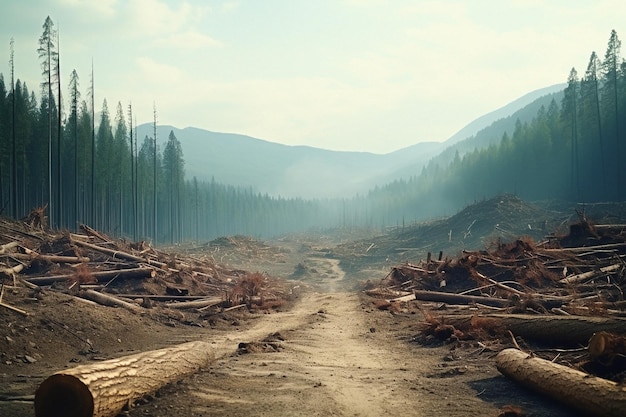

Forests have long been regarded as the lungs of the Earth, vital ecosystems teeming with life, and crucial in the fight against climate change. However, this sanctified image can obscure a more insidious reality: the complex interplay between deforestation and rising global temperatures. To understand this relationship, it is essential to delve into the multifaceted roles that forests play within the climate system and the repercussions of their widespread destruction.
The first point of consideration is the intricate process of carbon sequestration. Trees and forests absorb carbon dioxide (CO2), one of the primary greenhouse gases contributing to global warming. Through photosynthesis, flora converts sunlight, water, and carbon dioxide into energy, releasing oxygen as a byproduct. This natural process effectively acts as a carbon sink, sequestering vast amounts of CO2 from the atmosphere. However, as deforestation accelerates, mainly through agricultural expansion, urban development, and logging, the capacity of these ecosystems to absorb CO2 diminishes dramatically. The resulting imbalance exacerbates greenhouse gas concentrations in the atmosphere, contributing directly to global warming.
Moreover, the act of deforestation itself releases significant quantities of stored carbon back into the atmosphere. When trees are felled, burned, or decay, they emit CO2—a process often underestimated in its climatic implications. The Intergovernmental Panel on Climate Change (IPCC) estimates that deforestation accounts for nearly 10% of global carbon emissions. This statistic highlights how the harvesting of forests not only diminishes their utility as carbon sinks but also directly contributes to the atmospheric build-up of greenhouse gases.
Additionally, the loss of forests diminishes biodiversity. Healthy forests are rich with flora and fauna, each species playing a specific role within its ecosystem. The intricate web of life is not merely an aesthetic marvel; it is critical for the stability and resilience of ecosystems. When deforestation occurs, habitats are destroyed, and species are displaced or driven to extinction. The loss of biodiversity can lead to weakened ecosystems, which are less capable of adapting to changes—such as temperature fluctuations or extreme weather events—precipitated by climate change. Such disruptions can lead to a variety of cascading effects, including increased vulnerability to pests, diseases, and a decrease in ecosystem services such as pollination and fertile soil maintenance.
In addition to carbon sequestration and biodiversity loss, deforestation disrupts local and global water cycles. Forests play a pivotal role in maintaining hydrological balance through the process of transpiration, where trees release moisture into the atmosphere. This natural mechanism helps in forming clouds and ultimately, precipitation. As forests disappear, the processes of humidity regulation and rainfall generation become compromised, leading to altered weather patterns, reduced soil moisture, and prolonged drought in many areas. Such changes can incite severe ecological and socioeconomic ramifications, particularly in regions already struggling with water scarcity.
The socio-economic dimensions of deforestation further complicate this narrative. In many cases, deforestation is driven by the pressing economic needs of communities, often framed as a necessity for development. The global demand for agricultural products, timber, and minerals incentivizes the clearance of forests, leading to short-term economic gains. However, this myopic focus often overlooks the long-term costs associated with such practices—namely, climate change, loss of ecosystem services, and degradation of the environment that communities depend on for their livelihoods. Consequently, while deforestation might alleviate immediate economic pressures, it engenders a cycle of vulnerability that can perpetuate poverty and exacerbate climate-related challenges.
However, in the face of such dire realities, there is a glimmer of hope in the form of reforestation and sustainable forest management practices. Initiatives that prioritize the restoration of forest ecosystems can significantly contribute to the mitigation of climate change. By enhancing afforestation efforts and improving the management of existing forests, it is possible to reverse some of the detrimental impacts of deforestation. Such measures not only help in sequestering carbon but also restore biodiversity and bolster local water cycles. These strategies must be integrated into broader climate policies, ensuring that forest conservation becomes a central tenet of global climate action.
Furthermore, public awareness campaigns reflecting the vital role of forests can galvanize support for pro-forestry policies and initiatives. Education plays a crucial role in driving societal shifts toward sustainability, and by emphasizing the interconnectedness of forests, climate change, and human well-being, communities can be encouraged to adopt practices that prioritize ecological preservation. Grassroots movements have proven effective in advocating for environmentally conscious policies, urging both governments and corporate entities to reconsider their approach to land use and resource exploitation.
In conclusion, forests undeniably find themselves on the front lines of the climate crisis. The widespread deforestation occurring globally has far-reaching implications, extending beyond the immediate loss of trees and entering the realm of global warming exacerbation. Although deforestation contributes to carbon emissions, diminishes biodiversity, disrupts water cycles, and fosters socio-economic inequalities, there exists a pathway forward through reforestation, sustainable practices, and proactive community engagement. Mitigating climate change requires a concerted effort to recognize forests not merely as resources to be exploited but as indispensable allies in achieving environmental sustainability and resilience against climate impacts. The future of our planet hinges on acknowledging this truth and acting decisively to protect our forests.