



Agriculture is not merely a livelihood; it stands as the backbone of our civilization. Yet, as global temperatures rise, this cornerstone of human sustenance is increasingly threatened by the far-reaching consequences of climate change. From altered rainfall patterns to the emergence of new pests, the repercussions of global warming extend profoundly into our food systems. Understanding these shifts is paramount as we navigate the precarious landscape of agricultural production.
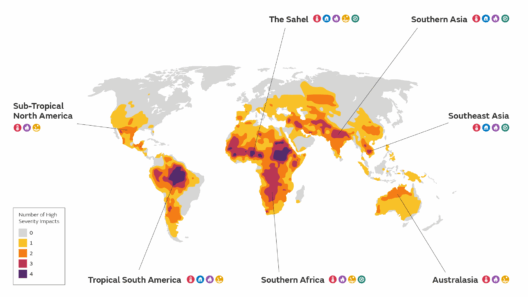
One of the most overt manifestations of climate change on agriculture is the alteration of temperature and precipitation patterns. Regions that once thrived due to predictable weather are becoming erratic. Increasingly severe droughts are ravaging farms across varied terrains, while other areas are deluged by torrential rains. This volatility not only unsettles traditional planting and harvesting schedules but also compromises the very viability of crops. For instance, staple foods like wheat, rice, and corn are experiencing reduced yields in many parts of the world due to these climatic extremes.
As temperatures soar, the agrarian calendar becomes unrecognizable. Optimal growing conditions for crops are shifting northward, and farmers must reconsider their planting strategies. This geographic shift could potentially lead to a scramble for fertile land as agronomy experts emphasize adapting crop varieties to new environments. However, this approach raises the specter of food insecurity, particularly in vulnerable regions dependent on specific climate conditions that may no longer be reliable. The potential for significant disruptions looms large, threatening the fragile equilibrium of global food supply chains.
Furthermore, invasive species may flourish due to the warming climate, introducing new challenges for food production. Warmer temperatures facilitate the survival of pests and diseases previously curtailed by cooler climates. Farmers are already witnessing unprecedented outbreaks of crop diseases that flourish under these new conditions. The increased prevalence of pests can decimate yields, forcing farmers to rely heavily on chemical pesticides, which may further exacerbate environmental degradation and biodiversity loss.
An often-overlooked aspect of climate change is its impact on soil health. Soil acts as the arbiter of agricultural productivity, but climate change is jeopardizing its integrity. Erosion rates increase with heavy rainfall, while drought leads to desertification and nutrient depletion. As nutrients leach away, the resultant decline in soil fertility hampers crop productivity and necessitates greater chemical input, creating a vicious cycle. Sustainable practices such as cover cropping or crop rotation can be beneficial, yet their adoption remains hindered in many farming communities.
While the challenges are daunting, opportunities for innovation also arise in the face of adversity. Precision agriculture, utilizing advanced technology to optimize resource use, is gaining traction as a pragmatic response to climate change. Drones, sensors, and satellite imagery can revolutionize how we monitor crop health and resource allocation. Employing these technologies can enhance yields while minimizing waste—a critical balance as experts predict the global population will reach nearly 10 billion by 2050.
Moreover, agroecological practices that emphasize biodiversity and ecological balance may mitigate some impacts of climate change. Permaculture, for instance, can foster resilience by designing agricultural landscapes that mimic natural ecosystems. These practices not only bolster biodiversity but also enhance soil health, improve water retention, and reduce dependency on chemical inputs. By encouraging a polyculture approach, farmers can create adaptive systems that can withstand the unpredictability of future climatic conditions.
Water scarcity emerges as an additional crisis intertwined with agricultural productivity. As glaciers recede and precipitation patterns alter, the availability of freshwater for irrigation dwindles. Innovations in water management, such as rainwater harvesting and improved irrigation techniques, offer some solace. Integrated approaches combining local knowledge with technological advancements can foster resilience in water-stressed areas, ensuring that agriculture remains viable in the face of changing climate scenarios.
Meat and dairy production are also on the precipice of change, as livestock farming is implicated in greenhouse gas emissions. The demand for alternative proteins is surging, spurred by environmental concerns and health consciousness. Innovations in plant-based and lab-grown meats signal a seismic shift in dietary habits, which could alleviate the pressure on land and water resources traditionally allocated for animal husbandry. Transitioning towards more sustainable protein sources will be vital for curbing the environmental impact of food systems.
Community engagement and education will play pivotal roles in the transition of food systems. Recognizing and empowering local farmers to adopt sustainable practices not only fosters resilience but can also enhance food sovereignty. Consumers are becoming increasingly aware of their food choices and their impact on the environment. The rise of local food movements and transparency in supply chains encourages a more conscientious approach to consumption, promoting a shift toward eco-friendly agricultural products.
Collaboration among stakeholders—governments, NGOs, scientists, and farmers—will be essential in developing adaptive strategies. Policy frameworks must be established to incentivize sustainable practices and research into climate-resilient crops. Investments in education and training for farmers will equip them to face the challenges of a changing climate, fostering innovation from the ground up.
In conclusion, the ramifications of global warming on agriculture are profound and multifaceted, presenting a unique array of challenges and opportunities. As we stand at this critical juncture, it is imperative to adopt a multifaceted approach that embraces adaptation and innovation. By reimagining our food systems and emphasizing sustainability, the agricultural community can not only safeguard our food sources but also contribute to the broader fight against climate change.