
As the sun rises over the horizon, the promise of a new day is overshadowed by an intensifying reality: Texas, a state known for its sprawling landscapes and diverse ecosystems, is grappling with the devastating consequences of climate change. The palpable heat that envelops the Lone Star State is not merely a seasonal occurrence; it is an emblematic representation of a larger, relentless phenomenon — global warming. The state’s resilience is being tested, illuminating an urgent need for collective action and a paradigm shift in how we think about our environment.
From the rolling hills of the Hill Country to the arid plains of West Texas, the landscapes tell a story of change. Rising temperatures have exacerbated drought conditions, leading to parched earth where once bountiful fields thrived. The annual summer heatwaves that used to be a predictable cycle have morphed into unprecedented scorchers, leaving much of the state vulnerable to wildfires. These infernos do not discriminate; they ravage homes, obliterate wildlife habitats, and contribute to an ever-increasing carbon footprint that sees no respite. This tumultuous reality begs the question: how did we arrive at this precipice?
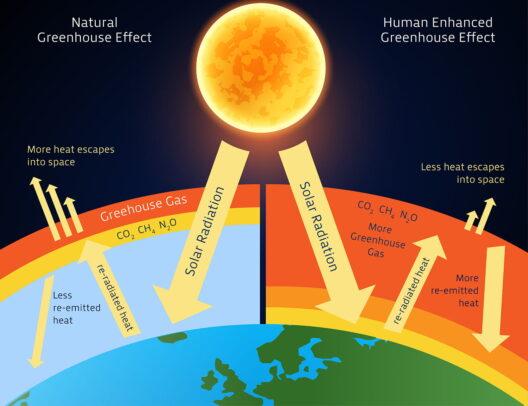
Scientific consensus illustrates a stark, irrefutable connection between human activities and climate change. Fossil fuel extraction, an economic mainstay for Texas, contributes to elevated greenhouse gas emissions. The irony is poignant: a state that boasts an abundance of natural resources is simultaneously a player in accelerating climate shifts. The oil and gas industry provides economic stability, yet it is also at the heart of ecological degradation. The juxtaposition between economic dependability and environmental consequence creates a complicated narrative, one that requires rigorous scrutiny and decisive action.
Furthermore, the ecological ramifications of climate change are not limited to temperature increases. The extreme weather patterns that now punctuate Texas’s climate come in more ferocious forms: hurricanes, floods, and droughts. In 2020, for instance, Hurricane Harvey’s onslaught revealed the vulnerability of urban settings when torrential rains inundated Houston, causing unimaginable destruction. These catastrophic events are harbingers of a changing climate, manifesting in costly economic losses and human suffering. As Texan cities grow and infrastructure expands, adaptability becomes an imperative rather than an option.
The narrative of Texas on fire is not just metaphorical; it is becoming a painful reality. Wildfire incidence has surged in recent years, fueled by dry conditions and excessive heat. Such fires devastate ecosystems that take centuries to mature, displacing wildlife and endangering many species. The charred remains of once-thriving landscapes serve as grim reminders of the fragility of nature in the face of accelerating climate change. These events implore us to reconsider our relationship with nature and acknowledge that our actions have severe repercussions.
Community resilience and engagement are essential in combating the overarching threat of climate change. Texans are displaying an unwavering resolve to adapt and mitigate these extreme conditions. Grassroots movements advocating for renewable energy and sustainability are gaining traction. Programs focused on reforestation, conservation, and environmental education are proliferating. Local farmers are adopting innovative techniques, utilizing drought-resistant crops and regenerative practices to foster soil health. This cultural shift signals an awakening; a recognition that environmental stewardship is crucial for both the economy and the ecosystem.
Conversing about climate change can be a daunting task, yet it is imperative to understand that we are all stakeholders in this unfolding drama. From policymakers to everyday citizens, every action counts. Transitioning to renewable energy sources, such as wind and solar, has gained momentum in Texas, a state that leads the nation in both wind energy production and solar capacity potential. Investing in homegrown clean energy not only fortifies energy independence but also paves the way for a sustainable future. This proactive engagement offers a glimmer of hope amidst a landscape marred by challenges.
Moreover, it is vital to ensure that the discourse surrounding climate change is inclusive and equitable. Vulnerable communities often bear the brunt of environmental degradation, facing disproportionate health risks and fewer resources to combat climate impacts. Integrating a social justice perspective into climate action is essential for achieving holistic solutions. By amplifying marginalized voices and prioritizing equity, Texas can craft resilience strategies that are not only comprehensive but also fair.
As scientists continue to study the ever-widening impact of climate change, predictions pose a daunting future. If trends continue unchecked, Texas will face more frequent and severe droughts, flooding, and wildfires in the decades to come. However, engaging in this knowledge equips us with the understanding and tools necessary for mitigation. The time has come to confront these challenges head-on, not merely as isolated incidents but as part of a broader global crisis.
The challenges may seem insurmountable, but history has shown that human ingenuity knows no bounds. The trial of climate change beckons innovation and collaboration across industries, governments, and communities. The journey toward a sustainable and resilient Texas is fraught with challenges but also rife with opportunities. Texas, often regarded as a land of big dreams, has the chance to lead by example and embrace a future that harmonizes economic progress with environmental integrity.
In conclusion, the scorching reality faced by Texas is a clarion call — a demand for immediacy in our responses to climate change. The path forward must be paved with resilience, adaptation, and most crucially, unity. As Texas stands at the crossroads of opportunity and crisis, a collective shift in perspective will illuminate our way. Allow the Lone Star State to become a beacon of hope, championing the fight against global warming for generations to come.