
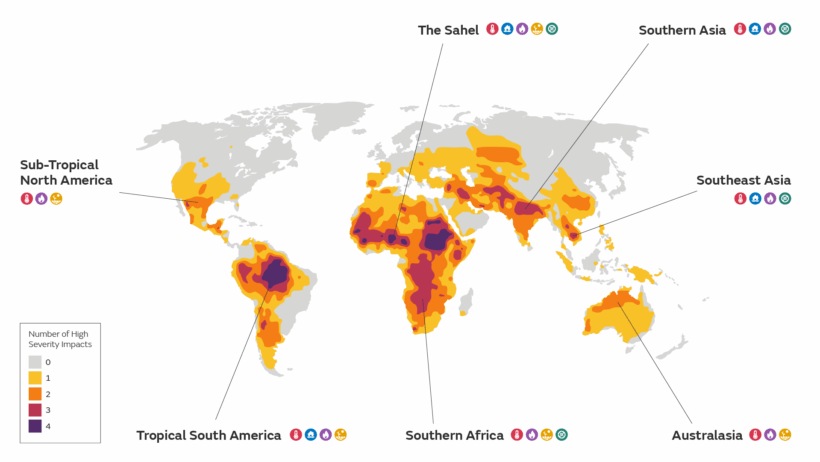

South Africa stands at a pivotal juncture in its environmental narrative. As climate change intensifies, the nation faces a multitude of challenges that span ecosystems, economies, and social structures. The question beckons: How can South Africa strategically navigate the profound impacts of global warming while promoting sustainable development? This inquiry is more than rhetorical; it beckons introspection into a future that may be shaped by resilience or vulnerability.
Firstly, it is crucial to delineate the tangible effects of climate change that South Africa is grappling with. The reality is stark. Rising temperatures, erratic rainfall patterns, and increasing frequency of extreme weather events fundamentally alter agricultural productivity. Agriculture, a cornerstone of South Africa’s economy, is particularly susceptible to these climatic variations. As farmers face the specter of droughts and floods, food security becomes an acute concern. What does this mean for the average South African? Put simply, it could mean increased food prices, loss of livelihood, and heightened inequality as rural communities bear the brunt of these shifts.
Moreover, South Africa’s ecosystems are in jeopardy. Biodiversity loss threatens not only the natural heritage but also tourism—a significant revenue stream. Iconic species such as the African elephant and the Southern white rhinoceros face mounting pressures from habitat loss and climate-induced changes. These species are not merely focal points for wildlife enthusiasts; they are integral to maintaining ecological balance and attracting global tourism investments. The interplay between climate change and biodiversity loss presents a dual challenge: How to conserve vulnerable species while simultaneously adapting to the unfolding climate crisis?
In the urban context, the climate crisis manifests through increasing temperatures and unpredictable weather patterns, wreaking havoc on infrastructure and public services. Many South African cities, particularly coastal ones like Cape Town, are grappling with water scarcity exacerbated by climate change. The question then becomes: How do municipalities craft effective water management strategies amidst dwindling supplies? The challenges are exacerbated by socio-economic inequalities, where the most vulnerable populations often lack access to adequate resources or infrastructure to cope with these changes.
Energy generation is another arena ripe for discussion. South Africa, heavily reliant on coal, finds itself at a crossroads of energy transition. The nation is grappling with the urgent need to shift toward renewable energy sources, yet the path is fraught with complexities. Economic dependencies on coal mining cannot be overstated, as it forms the backbone of many local economies. How does one balance the necessity for sustainable energy production while ensuring economic stability for communities reliant on coal? This juxtaposition of environmental necessity against socio-economic realities presents a formidable challenge.
However, there is hope amid the uncertainty. Initiatives aimed at sustainable development are being implemented, showcasing innovative practices that could serve as blueprints for the future. Community-driven conservation projects, such as the initiatives in the Cape Floristic Region, illustrate how collaboration between local inhabitants and governmental bodies can ameliorate biodiversity loss while promoting ecotourism and sustainable agriculture. Recognizing the intrinsic value of these ecosystems is essential, as they buffer against climate impacts and enhance resilience.
Investments in climate adaptation and mitigation are paramount. The government’s commitment to the Paris Agreement signals a willingness to engage with the global community on climate action, but this need not be a solitary endeavor. Collaborative efforts among private sectors, civil society, and international partners can amplify resources and knowledge sharing. Pioneering research and development in climate-smart practices hold the potential to bolster South Africa’s climate resilience. The focus on agritech, for instance, presents opportunities to improve crop yields amid changing climatic conditions.
Furthermore, education plays a linchpin role in fostering a culture of sustainability and environmental stewardship. Climate literacy initiatives could educate citizens about the impacts of climate change and inspire grassroots movements for change. Engaging youth in sustainability efforts creates a generation that is informed and equipped to tackle climate issues as they arise. In this context, one might wonder: What role can South African youth play in shaping the climate discourse and influencing policy?
Nevertheless, while the potential solutions are abundant, the challenge lies in the urgency and scale of action required. With the Intergovernmental Panel on Climate Change (IPCC) outlining dire consequences if global warming exceeds 1.5°C, it is imperative that South Africa accelerates its climate action framework. The integration of climate considerations into national development plans is critical. Decisions made today will reverberate through generations, influencing environmental stability and socio-economic progress.
Ultimately, the pathway to navigating global warming’s impacts is fraught with complexity but also rich with potential. South Africa’s position as a developing nation presents unique challenges but also avenues for innovation. The delicate balance between economic development and environmental sustainability can yield benefits that extend beyond borders. It poses a foundational question for leaders, policymakers, and citizens alike: Will South Africa seize this climate crossroads as an opportunity to forge a sustainable legacy for future generations?
In conclusion, as the nation engages in crafting solutions to mitigate the impending impacts of global warming, the synthesis of ecological stewardship, proactive governance, and community engagement will be indispensable. South Africa’s journey towards climate resilience is not merely a local endeavor; it is intertwined with global climate narratives. As every action reverberates across the globe, the time for decisive action is now. The world will be watching.