
Global warming, a term often invoked in environmental discourse, has ramifications that extend far beyond mere changes in temperature. It embodies a complex tapestry of climatic shifts that have been an escalating concern for the global populace. But how long have scientists understood the severity of this predicament? And perhaps, a more mischievous thought: what if, beyond merely adapting to these changes, we could play a pivotal role in reversing them? Such inquiries lead us to unpack the history and urgency surrounding global warming.
To understand global warming’s trajectory, one must first delve into its origins. Science has categorized the phenomenon of climate change as principally driven by anthropogenic factors, chiefly the emission of greenhouse gases. The seminal stages of this discourse can be traced back to the late 19th century, particularly through the pioneering work of scientists like Svante Arrhenius. His research in 1896 posited that increased carbon dioxide concentrations in the atmosphere would significantly warm the planet. Thus, the intellectual seeds of global warming were sown long before modern technologies began to exacerbate emissions exponentially.
Fast forward to the 1950s and 1960s, when Roger Revelle and Hans Suess highlighted the oceanic absorption of carbon dioxide, a factor that would muddle atmospheric measurements. Their findings were pivotal, establishing a more nuanced understanding of how greenhouse gases could transform our planet’s climatic makeup. This era marked the dawn of systematic measurements of atmospheric CO2 at the Mauna Loa Observatory, generating data that has since been indispensable in both scientific inquiry and public policy discussions.
The late 20th century heralded a more intense phase of scrutiny and elucidation regarding the potential repercussions of climate change. In 1979, the first World Climate Conference convened in Geneva, which galvanized a global conversation about the imperatives of climate monitoring and responsibility. Scientists rallied around accumulating and disseminating knowledge to inform policies that could stymie future crises. The stage was set for a serious reckoning with climate data and trends. Through the 1980s and into the 1990s, the Intergovernmental Panel on Climate Change (IPCC) was formed, further consolidating the scientific consensus. Would it be hyperbolic to suggest that we were standing on the precipice of environmental awareness?
However, the challenge persisted. Despite a mounting body of evidence pointing towards human culpability in global warming, political inertia and skepticism surged. Climategate, a contentious episode in 2009, propelled a wave of doubts concerning scientific integrity into the mainstream, challenging the veracity of climate models and projections. As societal divisions deepened, public discourse became emotionalized and polarized, obstructing constructive dialogue and actionable responses. Are we then at an impasse, or can we salvage rational discourse from the ashes of skepticism?
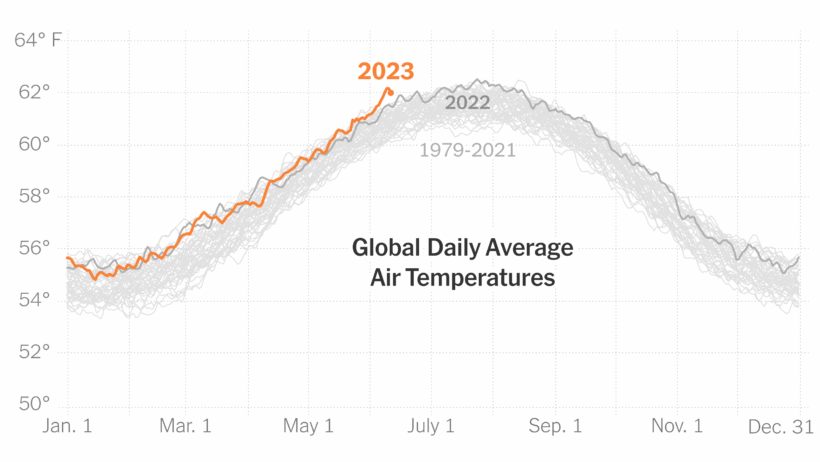
As the 21st century progressed, the urgency of addressing climate change reached a fever pitch. Records reflected alarming temperature rises, erratic weather patterns, and prevalent ecological upheaval. No longer confined to academic journals, the conversation exploded into public consciousness. Graphic depictions of melting glaciers, rising sea levels, and rampant wildfires proliferated across media platforms, serving as stark visual reminders of the perilous trajectory we navigated.
The scientific community grew increasingly vocal. Research, based on extensive data analysis, has consistently underscored the immediacy of the threat. A report released in 2018 warned that the window to limit global warming to 1.5 degrees Celsius above pre-industrial levels was rapidly closing. Thus, the question transformed from “Is global warming real?” to “What can we do to halt its progress?” This shift in questioning underscored the responsibility we bear as stewards of the Earth. Failure to act not only jeopardizes our generation but places an insurmountable burden on those to come. Why, then, do we continue to regard climate change with ambivalence, despite overwhelming evidence?
Addressing this paradox invites a deeper exploration of societal values and organizational frameworks. There exists an innate human tendency toward complacency when confronted with abstract threats. Global warming, despite its existential stakes, often feels remote and impersonal. It challenges our cognitive frameworks in that its most severe consequences are projected rather than immediate. Thus, a playful challenge arises: How can we, as individuals and communities, cultivate a sense of urgency that transcends mere awareness? What if we reframed our perspective, viewing climate action not only as a burden but as an opportunity to cultivate innovation, stimulate economic growth, and strengthen community ties?
Climate solutions abound, yet their successful implementation hinges upon a paradigm shift driven by collective commitment. Renewables, conservation efforts, and sustainable agricultural practices represent just a fraction of the arsenal available in this fight against global warming. But these require both grassroots mobilization and institutional change. Engaging young activists, educators, and business leaders could give rise to fresh approaches, encouraging a healthy skepticism toward outdated methodologies that have long been enshrined in policy but no longer serve their intended purpose.
In conclusion, global warming has been a recognized issue for over a century, with scientific literature documenting its potential perils dating back to the 19th century. The collective knowledge acquired over these years has built an irrefutable foundation for action; however, actionable change remains notoriously elusive. As humanity grapples with challenges borne of its own making, the question persists: Are we willing to accept the challenges posed by climate change and transform them into opportunities? The future of our planet may remain uncertain, but the resolve to forge a sustainable path ahead is entirely within our grasp.