
The rainforests of the world are often described as the lungs of the Earth, teeming with diverse flora and fauna. Among the myriad creatures that inhabit these vibrant ecosystems, the jaguar stands out remarkably due to its extraordinary adaptations. These felids, known for their elusive nature and potent predation skills, embody a unique marriage of power and finesse that speaks to the intricate balance of tropical life. Understanding the adaptations of jaguars in tropical rainforests unearths profound insights into their existence and broader ecological interactions.
At the outset, consider the jaguar’s physical form. The first adaptation that captures attention is their robust musculature, coupled with a stout build. This powerful physique is elemental for surviving in dense underbrush and climbing amidst towering trees. Jaguars possess an unusually powerful jaw structure, equipped with one of the strongest bites relative to body size among all big cats. This trait enables them to pierce through the thick hides of caimans or the tough shells of turtles, allowing them access to a diverse diet. The necessity of versatility in prey is further highlighted; jaguars are opportunistic hunters, consuming anything from deer and peccaries to various bird species, thereby maintaining ecological equilibrium.
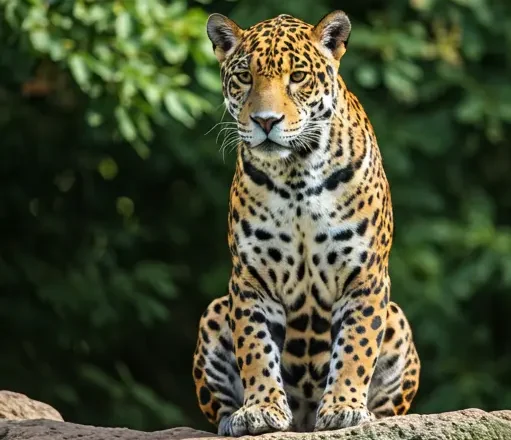
Moreover, the coat of the jaguar is a masterpiece of adaptation, serving both camouflage and temperature regulation. Their yellow and black rosettes, a mesmerizing pattern, facilitate stealth as they prowl through sun-dappled undergrowth. Each jaguar’s spots are as unique as human fingerprints, enhancing their ability to disappear into the dappled light of the forest. This cryptic coloration is particularly advantageous in the multi-layered environment of the rainforest, where sunlight filters through thick canopies, creating patches of shade and light. As a consequence, this camouflage not only aids in ambushing prey but also provides a means of evading larger predators, including rival jaguars.
Another salient adaptation is their exceptional swimming ability. Unlike other big cats, jaguars are proficient swimmers, often traversing waterways with ease. In the intricacies of tropical rainforests, rivers and streams are common, serving as both barriers and hunting grounds. Jaguars are not merely able to swim; they are also adept at hunting aquatic animals such as fish and even caimans. This adaptability to aquatic environments allows them to exploit a rich food source that many terrestrial-based predators would overlook.
Behaviorally, the jaguar exhibits fascinating adaptations as well. Primarily solitary, these felids establish vast territories that are marked by scent and physical signs, such as scratch marks on trees. The size and location of these territories are critical in managing their survival, as competition for resources such as prey and mates is intense within the lush, yet resource-competing environment of the rainforest. This solitary lifestyle enhances their hunting success and reduces direct confrontations with other jaguars, thus ensuring their dominance in the ecological hierarchy.
Furthermore, jaguars demonstrate a remarkable adaptability in their hunting techniques, which vary across different habitats and prey availability. In the dense heart of the rainforest, they may employ a stealthy, ambush approach, utilizing their keen senses to detect movement and differentiate potential prey from the surrounding stimuli. In contrast, in more open areas, they might engage in cursorial hunting, showcasing agility and speed. The adaptability of their hunting strategies underscores an evolutionary flexibility that is paramount for their survival amid changing environmental conditions.
Socially, the jaguar’s furtive nature allows them to remain elusive, minimizing interactions with other species that may threaten their survival. They are proficient in vocal communication, utilizing a range of sounds from growls to meows to communicate with potential mates and assert territorial dominance. Their solitary existence, however, does not preclude the need for reproductive interaction; mating occurs during the rainy season when food is more abundant, highlighting a synchrony with the ecological calendar of the rainforest.
The role of jaguars in the tropical rainforest transcends their solitary life of hunting; they are apex predators and play a vital role in ecological balance. By controlling the population of herbivores, they indirectly influence the vegetation structure of the rainforest, promoting a diverse and healthy ecosystem. This integral role emphasizes the need for conservation efforts, as the decline of jaguar populations can lead to cascading effects throughout their habitat, demonstrating how interconnected life truly is in this complex biome.
As the threats of deforestation loom ominously over tropical rainforests, understanding the adaptations of jaguars becomes imperative. These adaptations, honed over millennia, reflect a reliance on a specific habitat and its resources. Conservation strategies must consider preserving the intricate tapestry of the rainforest, as losing the jaguar equates to losing an invaluable piece of that ecological puzzle. By championing the cause of the jaguar, we advocate for the protection of an entire ecosystem, preserving not only the feline itself but the biodiversity that thrives alongside it.
In conclusion, the adaptations of jaguars in the tropical rainforest reveal a rich narrative of survival, illustrating the significance of resilience in a complex and ever-changing environment. From their powerful physique and covert hunting skills to their vital ecological role, jaguars encapsulate the essence of tropical biodiversity. Their tale is a clarion call to recognize and protect the wonderment of the rainforest, reinforcing the notion that every creature, no matter how elusive, plays an essential role in maintaining the vibrancy of our planet’s ecosystems.