

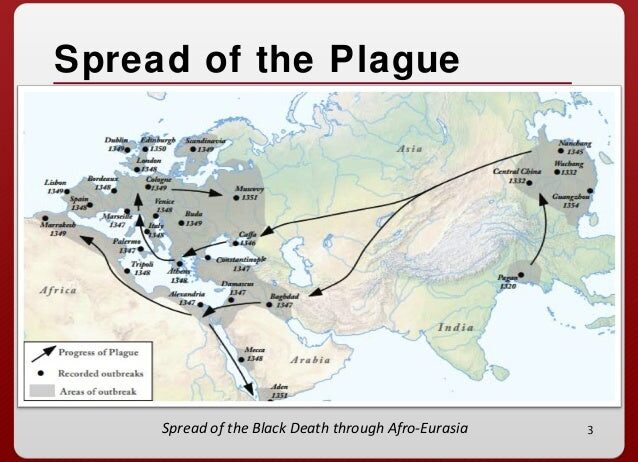

The Black Plague, also known as the Black Death, remains one of the most devastating pandemics in human history. Spanning the 14th century, this plague swept through Europe, Asia, and even parts of Africa, leading to the death of millions. Understanding the geographical spread of the Black Plague provides insight into its catastrophic impact on civilization. This article will explore the regions affected by the plague, the mechanisms of its transmission, and the societal repercussions that ensued.
From its origins in Asia, the Black Plague traversed various landscapes before reaching Europe. Its initial outbreak in the mid-14th century can be traced back to the trading routes established along the Silk Road, where merchants carried not only goods but also the bacterium Yersinia pestis, the pathogen responsible for the plague. Major cities such as the Mongolian city of Caffa, modern-day Feodosia, were among the first to experience the plague’s wrath. It is believed that the contagion was transmitted via fleas residing on rats, which thrived on the cargo ships of the era.
As the Black Plague disseminated through various regions, it left an indelible mark on the populations in its wake. In Central Asia, cities experienced swift and severe declines in their populations as the plague consumed countless lives. Historical accounts suggest that entire communities vanished, their streets echoing with silence. This initial spread was rapid and catastrophic, serving as a precursor to the devastation that would soon envelop Europe.
Upon reaching Europe in 1347, the plague spread like wildfire. Major trade ports such as Genoa, Venice, and Marseille quickly became contaminated, facilitating the plague’s grim march across the continent. Within a few years, almost every corner of Europe was afflicted. Notably impacted regions included Italy, France, England, and Spain. Each of these areas experienced varying degrees of mortality, with death tolls reaching as high as 60% in some locales. Urban centers were particularly hard-hit due to the crowded living conditions, which allowed the disease to proliferate unchecked.
Italy, particularly the city of Florence, stood out for its catastrophic losses. A city renowned for its vibrant arts and culture rapidly descended into chaos as the plague claimed life after life. Social fabric unraveled, and fear permeated every stratum of society. The narrative of the Black Death was not merely one of loss; it was also a transformative period that revealed the vulnerabilities of human civilization in the face of an unrelenting calamity.
Moving up north to England, the plague’s impact was no less devastating. Starting in 1348, it traversed through the country, hitting cities such as London and York with relentless ferocity. The mortality rate was staggering, drastically affecting the workforce, leading to labor shortages that reshaped the socio-economic landscape. Numerous rural communities were left desolate, as farmers perished, impacting food production and distribution systems.
Not to be overlooked, the Scandinavian regions also felt the plague’s icy grip. In Norway and Sweden, communities were ravaged, with similar mortality rates as observed in other parts of Europe. Islands and coastal towns experienced isolation, leading to an interesting paradox: while the plague brought death, it also allowed for the rejuvenation of some ecosystems, as human pressures diminished momentarily.
The Black Plague was not merely a disease; it was a harbinger of change. Across the regions affected, various societal responses emerged. In the wake of overwhelming loss, religious fervor surged as communities turned toward faith for solace and answers. This religious ardor, however, was often coupled with scapegoating, leading to tragic events such as the persecution of Jewish communities who were wrongly blamed for the plague’s spread.
Additionally, the impact of the Black Plague extended beyond immediate health crises. The significant depopulation led to myriad changes in labor dynamics, resulting in shifts toward more equitable labor practices in some regions. A diminished workforce prompted landowners to negotiate better terms with the surviving laborers, thereby sowing the seeds for a gradual decline in feudalistic practices.
In examining the map of the Black Plague’s spread, one can discern the patterns of its relentless advance. Regions that were once thriving metropolises experienced drastic transformation. What was once vibrant turned barren, and the specter of the plague intricately wove itself into the fabric of history. As cities sought to rebuild, they emerged from the shadows of the pandemic culminating in the Renaissance, a period marked by recovery, reflection, and a resurgence of innovation.
In conclusion, the geographical mapping of the Black Plague reveals not only the pathways of a malevolent disease but also details the profound impact it had on human civilization. From its origins in Asia to its catastrophic sweep through Europe and beyond, its influence was far-reaching and multifaceted. The legacy of the Black Plague remains a lesson in humility, resilience, and the intricate dance between humanity and nature in all its unpredictable splendor.