

Florida, with its sun-drenched coastlines and lush wetlands, attracts thousands of visitors each year. Yet beneath its allure lies a treacherous ecosystem teeming with dangerous wildlife. These creatures, while awe-inspiring, pose real threats to unsuspecting adventurers and residents alike. Understanding how to identify and mitigate these dangers is crucial for anyone who ventures into the state’s diverse habitats.
In order to foster a deeper appreciation for Florida’s fauna, this article will delve into the most dangerous wild animals found within its borders, providing essential information on identification, behavior, and safety precautions.
1. Alligators: The Kings of the Swamp
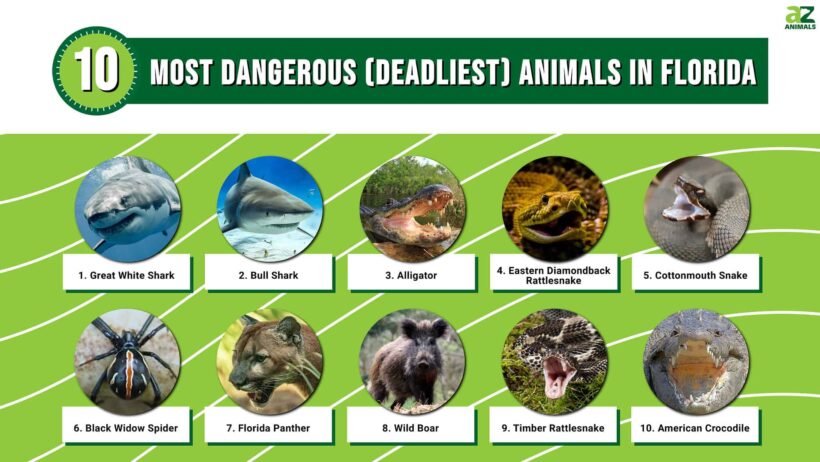
Florida is synonymous with alligators, which thrive in its myriad wetlands, rivers, and lakes. These formidable reptiles can grow over 13 feet long and weigh upwards of 1,000 pounds. Their mottled green skin provides excellent camouflage in murky waters. Identification is straightforward: look for their prominent eyes and snouts just above the water’s surface, often exposing their powerful jaws.
While alligators are generally reclusive, they can become aggressive if provoked or when they perceive a threat to their territory. Visitors should avoid swimming in waters known to harbor alligators, especially during dusk or dawn when they are most active. If an alligator is encountered, back away slowly; sudden movements might provoke a response. Remember, their speed in water is unparalleled, and they can lunge with startling quickness.
2. Eastern Diamondback Rattlesnake: The Venomous Sentinel
The Eastern Diamondback Rattlesnake, the largest venomous snake in North America, is another resident of Florida’s wild spaces. Easily identifiable by the distinctive diamond patterns on its back and the rattle at the end of its tail, this snake can reach lengths of over six feet. It often inhabits sandy pine forests and scrub areas.
Although their bites are rarely fatal with prompt medical attention, the venom can cause severe pain and swelling. To stay safe, hikers should remain vigilant on trails, keep an eye on the ground ahead, and use a walking stick to probe the underbrush. If bitten, it is vital to remain calm and seek medical help immediately, avoiding any attempts to suck out the venom.
3. Black Bears: The Solitary Forager
Florida hosts a small population of Black Bears, primarily found in the state’s forests and swamps. Although they appear cute at a distance, these creatures can be unpredictable and dangerous, especially if they feel cornered or if their cubs are threatened. Bears can weigh between 100 to 600 pounds and possess a surprising turn of speed.
Identifying a Black Bear typically involves observing its rounded ears, stocky build, and short legs. To avoid bear encounters, food should never be left unattended in campsites. If a bear approaches, do not run. Instead, stand your ground, make yourself appear larger, and speak firmly until the bear loses interest.
4. Cuban Tegus: The Intrusive Invader
Among the most unusual yet dangerous species in Florida is the Cuban Tegu, a large lizard that can grow up to four feet in length. Although not native to Florida, this invasive species poses significant threats to local ecosystems due to its predatory habits, which include consuming local wildlife and bird eggs.
Its sleek, glossy black and white scales make the Cuban Tegu easy to identify. As these lizards become more prevalent in populated areas, conserving native species is paramount. Ensure that gardens and garbage are secure to deter Tegus from foraging nearby.
5. Bull Sharks: The Coastal Predators
When contemplating dangers in the aquatic realm, the Bull Shark deserves attention. Frequently found in rivers, estuaries, and nearshore sea waters, these sharks can be aggressive and territorial. They are identifiable by their stout bodies and blunt snouts, and they have a reputation for venturing into freshwater systems.
Swimmers should be aware of their surroundings, especially in murky waters. Avoiding splashing and keeping swimming areas free of baitfish can reduce the risk of an encounter. If a shark is spotted, calmly back away and avoid erratic movements. Most importantly, heed local advisories regarding shark sightings in swimming areas.
6. Poisonous Plants: The Silent Threat
Danger in Florida isn’t exclusively animal-based; poisonous plants thrive in this region. The likes of Poison Ivy, Poison Sumac, and the highly toxic Rosary Pea can inflict serious harm upon contact. They often grow near popular trails and waterways, masquerading as benign foliage.
Identifying Poison Ivy involves recognizing its distinctive three-leaf clusters. When engaging in outdoor activities, proper clothing and knowledge of plant species are important safeguards against allergic reactions. If contact occurs, the affected area should be washed with soap and water as soon as possible.
Conclusion: Respect and Caution in Florida’s Wilderness
Florida’s natural beauty is matched only by its ecological diversity, which includes a plethora of dangerous wildlife. By understanding the identification, behavior, and potential threats from creatures like alligators and rattlesnakes and recognizing the silent dangers posed by plants, individuals can enjoy the rich tapestry of Florida’s environments while minimizing risk. Awareness, respect, and caution should always be at the forefront of exploration. Remember, knowledge is not just power—it is a vital tool for ensuring a safe and enjoyable experience in the great outdoors.