


In the realm of physics, the concepts of forces and energy are foundational elements that shape our understanding of the natural world. Among the myriad of forces that exist, conservative forces stand out for their unique capacity to store energy in a manner that is not only fundamental but also crucial for various applications across scientific disciplines. This exploration will delve into conservative forces and the potential energy they harbor, illuminating the intrinsic value of these phenomena in our understanding of mechanics, thermodynamics, and the intricate dance of energy transformations in the universe.
To embark on this discourse, it is imperative to define what constitutes a conservative force. A conservative force is characterized by its path independence—meaning that the work done by the force on an object moving from one point to another solely depends on the initial and final positions, rather than the specific trajectory taken. This attribute allows for the definition of potential energy, a concept that elucidates how energy is stored within a system. Gravitational force and elastic spring force exemplify conservative forces, serving as foundational examples in the study of mechanics.
When contemplating gravitational force, one can visualize how it influences objects within a gravitational field. The potential energy associated with an object raised to a height h within this field is given by the formula:
PE = mgh
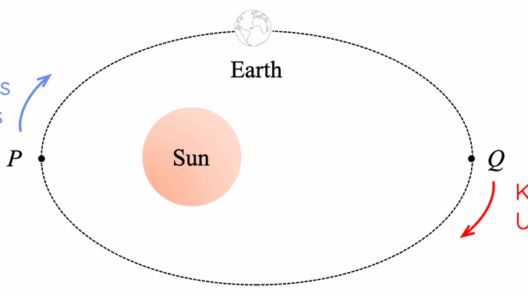
where PE denotes potential energy, m represents mass, g is the acceleration due to gravity, and h is the height relative to a reference point. The implications of this equation stretch far beyond mere calculations; they extend into the realms of energy conservation and gravitational interactions in celestial bodies. Understanding gravitational potential energy allows us to appreciate phenomena ranging from the motion of planets in orbit to the engineering of roller coasters.
Yet energy conservation is not limited to gravitational interactions alone. The elasticity of materials introduces another layer through elastic potential energy. When a spring is compressed or extended, the force exerted by the spring is also a conservative force, described by Hooke’s Law:
F = -kx
In this equation, F is the force exerted by the spring, k is the spring constant, and x is the displacement from the equilibrium position. The potential energy stored in an elastic spring can be quantified via the formula:
PE = 1/2 kx²
The implications of elastic potential energy are readily observed in various applications—from the simple mechanics of toys to the sophisticated designs of machinery and structures that rely on the principles of elasticity for stability and performance.
As we delve deeper, the significance of conservative forces becomes evident in their role in energy conservation principles. The law of conservation of mechanical energy states that in a closed system, the total mechanical energy—comprising both kinetic and potential energy—remains constant as long as only conservative forces are doing work. This principle becomes critical in fields such as engineering, where the efficient design of systems can minimize energy losses and enhance overall performance.
The concept of potential energy transcends basic mechanics and permeates various scientific domains. In thermodynamics, for example, potential energy transitions into kinetic energy during phase changes, such as the conversion of ice to water. In biological systems, the potential energy stored in chemical bonds is harnessed during metabolic processes to power cellular functions and sustain life. Energy transformations highlight the interconnectedness of conservative forces, potential energy, and the broader energies that define both physical phenomena and living organisms.
Furthermore, conservation of energy principles guide innovations in renewable energy technologies. Understanding how to harness and transform stored potential energy—be it through hydroelectric dams converting gravitational potential energy into electrical power, or wind turbines translating kinetic energy into usable electricity—demonstrates the practical implications of conservative forces. This underscores a vital momentum toward sustainability that transforms how we view energy use, from finite fossil fuels towards renewable sources with minimized environmental impact.
It is crucial to recognize that the conceptualization of conservative forces and potential energy is not merely academic; it holds profound implications for future societal progress. The shift towards sustainable practices, including energy conservation and reduction of waste, is intrinsically connected to our understanding and application of these physical principles. The ability to predict and manipulate energy exchanges fosters advancements in technology, while simultaneously encouraging responsible stewardship of the planet’s resources.
As modern societies grapple with the implications of energy consumption on the environment, the ethos of conservation must resonate at the core of our actions. By acknowledging the potentials within various forms of energy—be it gravitational, elastic, or chemical—society can forge a path toward a greener future. In essence, conservative forces elevate our understanding of energy dynamics, illustrating the profound relationship between forces, energy storage, and the potential for a sustainable world.
In conclusion, conservative forces play a pivotal role in the realm of physics, allowing for the efficient storage and transfer of energy. By understanding these forces and their associated potential energy, we can begin to appreciate the intricacies of both the natural world and the technologies we build. This knowledge is not just a theoretical exercise; it is a call to action, emphasizing the necessity for conservation as we move forward into an era increasingly shaped by our choices regarding energy and the environment.