
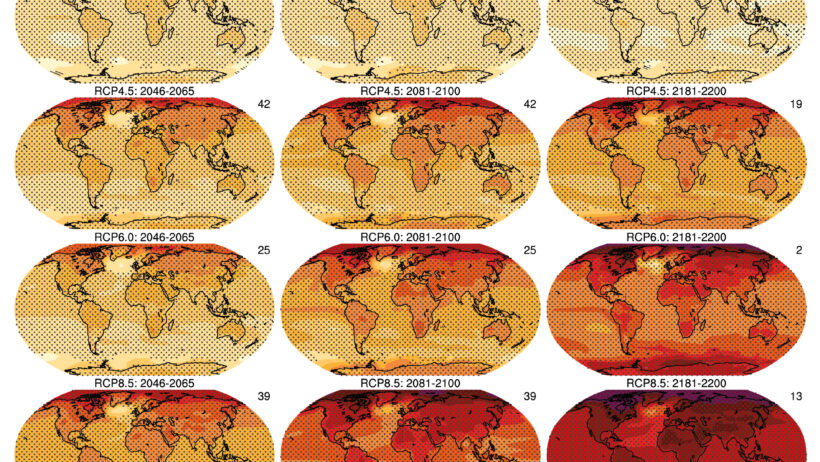

Climate change, an inexorable phenomenon reshaping our planet, presents a complex tapestry of interconnected consequences that reverberate across ecosystems and human societies alike. Its manifestations are not merely anecdotal; they bear witness to a profound transformation driven predominantly by anthropogenic forces. In examining how a warming world has altered the globe, one encounters a stark reality—the climate crisis we face today is unparalleled in human history.
The common observation that temperatures are rising and weather patterns are becoming increasingly erratic is familiar to many. However, this observation merely scratches the surface of a multifaceted issue. As average global temperatures rise, the implications are sweeping and multifarious. From the delicate balance of marine biodiversity to the agricultural livelihoods of countless communities, climate change has far-reaching impacts that merit closer scrutiny.
One of the most alarming consequences of climate change is the ascension of sea levels. As polar ice melts and glaciers recede, vast volumes of freshwater flow into the oceans, contributing to rising sea levels. This phenomenon poses an existential threat to coastal cities and island nations. It is estimated that by 2050, millions of people will be displaced due to flooding and erosion caused by higher tides. Cities like Miami, New Orleans, and Jakarta are already experiencing the repercussions, with increasing incidences of flooding and saltwater intrusion into freshwater aquifers disrupting local ecosystems and communities.
Moreover, the warming climate exacerbates extreme weather events, giving rise to more frequent and more severe storms, droughts, and heatwaves. The amplification of these events can be traced back to the basic principles of physics; warmer air holds more moisture, leading to intense rainfall and consequent flooding. Conversely, regions experiencing heightened temperatures may find themselves enduring prolonged droughts, decimating crops and triggering food shortages. The droughts plaguing parts of sub-Saharan Africa, for example, are increasingly linked to changing climatic patterns, which poses dire consequences for food security and economic stability in the region.
The ecological implications of a warming world are equally dire. Biodiversity, which underpins the health of our planet, is under siege as species struggle to adapt to rapidly changing conditions. Coral reefs, often referred to as the “rainforests of the sea,” are particularly vulnerable. Rising sea temperatures are causing widespread coral bleaching, a phenomenon that compromises the symbiotic relationships between corals and their algal partners, ultimately leading to the degradation of these critical marine ecosystems. The loss of biodiversity not only affects marine habitats but has cascading effects on food systems and livelihoods reliant on healthy fish stocks.
In addition to the direct impacts on natural habitats, climate change also incites socio-economic upheaval. Vulnerable populations—often those least responsible for greenhouse gas emissions—bear the brunt of the adverse effects. Inequalities are exacerbated as marginalized communities struggle with the dual challenges of economic hardship and environmental degradation. Climate change acts as a threat multiplier, intensifying existing social vulnerabilities—this is evident in regions experiencing conflict over dwindling resources, such as water and arable land. The Syrian Civil War, for instance, has been partially attributed to severe droughts that decimated agricultural livelihoods, forcing rural populations into urban areas and exacerbating tensions.
One might wonder why, despite the overwhelming evidence of climate change, collective action remains elusive. This is largely due to a myriad of factors—including but not limited to political inertia, corporate interests, and the psychological ramifications of acknowledging such a daunting crisis. Human beings often exhibit a cognitive dissonance when confronted with evidence of existential threats. The “distance” of climate change—both temporally and spatially—leads to a sense of complacency. Many individuals may recognize the implications of climate change, yet not perceive them as immediate challenges; this disconnect hinders proactive responses.
Consequently, a robust framework for meaningful action must be predicated upon fostering a sense of urgency and communal responsibility. It requires concerted efforts to educate and engage diverse communities about the ramifications of climate change and the significance of sustainable practices. The intersectionality of climate change with various domains—from health to economic equity—provides a powerful narrative that can galvanize action. Furthermore, promoting renewable energy, sustainable agriculture, and conservation efforts can yield tangible benefits for both the environment and human well-being.
Mitigating climate change necessitates an integrative approach, one that acknowledges interdependencies among ecosystems, economies, and cultures. Policymakers must champion initiatives that prioritize environmental stewardship and sustainability, aligning with the global goals to limit global warming to well below 2 degrees Celsius. The transition to cleaner energy, investment in green technologies, and fostering local resilience against climate impacts are vital steps towards safeguarding our collective future.
In conclusion, the warming world presents an intricate mosaic of challenges and opportunities. As climate change reshapes our planet, it is incumbent upon each of us to understand its implications deeply and commit to taking action. The urgency of the situation cannot be overstated; it demands awareness, empathy, and a collective response to ensure that future generations inherit a world that is livable, equitable, and resilient. The climate crisis, while formidable, also offers a chance for humanity to unify in the face of adversity, fostering innovation towards a sustainable and just future for all.