


Throughout the annals of Earth’s history, climate has undergone transformative shifts, oscillating between warming and cooling phases. In contemporary discourse, the phenomenon of global warming is frequently attributed to anthropogenic factors—emissions of greenhouse gases from industrial activities, deforestation, and rampant consumption. However, it is essential to delve deeper into the intricate web of climatic influences to uncover the less-discussed natural causes of global warming. This exploration not only sheds light on the complexities of our climate system but also challenges assumptions about human culpability alone.
To understand the natural causes of global warming, we must first consider the Earth’s intricate climate system. This system is influenced by a multitude of factors, many of which are beyond our immediate control. One of the primary natural culprits is solar radiation. The Sun, as the principal energy source for our planet, experiences variations in energy output due to phenomena such as solar cycles. These cycles, typically lasting around 11 years, can contribute to subtle changes in Earth’s climate. Periods of heightened solar activity can lead to increased warming, while solar minimums might have the opposite effect.
Next, we turn our gaze to volcanic activity. Volcanoes are potent forces of nature, capable of releasing vast amounts of carbon dioxide and other greenhouse gases during eruptions. Beyond their immediate impacts, volcanic eruptions can also inject aerosols into the stratosphere, leading to a phenomenon known as “volcanic winter,” which can temporarily cool the climate. However, the long-term effects of volcanism can contribute to warming, particularly during periods of extensive activity. One noteworthy example is the eruption of Mount Pinatubo in 1991, which expelled significant quantities of sulfur dioxide. Although the eruption initially led to a cooling effect, the subsequent years showed a slow but measurable warming, as the atmospheric conditions adjusted.
In addition to solar and volcanic activities, oceanic patterns play a crucial role in regulating global temperatures. The El Niño-Southern Oscillation (ENSO) is a prime example of how ocean currents can influence climate. During El Niño events, warm water shifts across the Pacific, leading to increased atmospheric temperatures and altered weather patterns. Conversely, La Niña events can have a cooling effect. These oscillations demonstrate the interconnectedness of oceanic and atmospheric systems, highlighting how natural processes can induce temperature variations on a global scale.
Another natural driver of climate change is the movement of tectonic plates. Over millennia, the shifting and colliding of these massive slabs of the Earth’s crust can lead to the formation of mountain ranges and other geological features, subsequently impacting atmospheric circulation patterns and climate. This tectonic activity occasionally releases significant amounts of greenhouse gases—both carbon dioxide and methane—via processes such as metamorphism and volcanic eruptions. Thus, the slow but relentless movements of the Earth below our feet have profound implications for our planet’s climate.
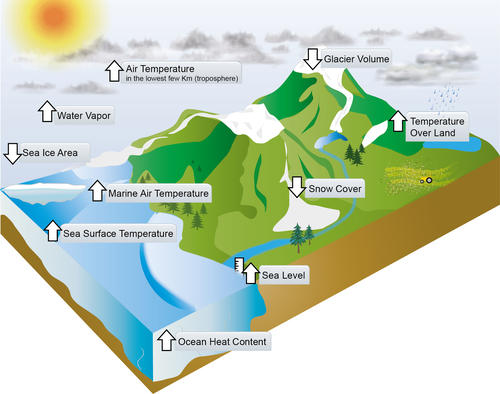
Moreover, feedback loops within the climate system can exacerbate warming effects initiated by natural causes. One such loop involves the melting of polar ice caps. As temperatures rise, ice melts, reducing the Earth’s albedo effect—the reflective capability of its surface. Darker ocean waters, exposed land, and vegetation absorb more solar radiation, compounding the warming trend. Similarly, thawing permafrost releases trapped greenhouse gases, primarily methane, which is notably more effective at trapping heat than carbon dioxide in the short term. These feedback mechanisms can amplify initial changes, propelling the climate system towards a tipping point.
While it is crucial to acknowledge natural causes of climate change, it is equally important to appreciate their relative impact in the context of modern observations. The current trajectory of global warming is predominantly driven by human activities, particularly since the Industrial Revolution. The acceleration of greenhouse gas emissions from fossil fuel combustion vastly outstrips the natural variability observed over millennia. It is a sobering thought that while natural causes can influence climate patterns, the unprecedented rate of change observed today is primarily a consequence of human interference.
This perspective shift prompts an intriguing inquiry into our role and responsibility. If nature can cause warming, does this absolve humans from the moral imperative to mitigate our impact? Such a question invites thoughtful discussion. Understanding that our actions exacerbate natural climate variability can foster a sense of stewardship rather than resignation to fate. Rather than attributing climate anomalies solely to natural forces, recognizing the interplay between human actions and natural phenomena becomes essential in crafting effective responses.
In conclusion, when one contemplates the question, “Are there natural causes of global warming too?” the answer reveals a tapestry of interactions between solar activity, volcanic eruptions, ocean currents, tectonic shifts, and feedback mechanisms. This complexity illustrates that while natural factors undeniably impact Earth’s climate, the anthropogenic factors have emerged as the dominant force driving current changes. Recognizing this duality not only enriches our understanding but also galvanizes efforts towards sustainability and climate resilience. The dialogue around climate change must include both the natural rhythms of our planet and the significant alterations wrought by human hands. It is through this comprehensive understanding that we can foster a sustainable future for generations to come.