
Global warming is an increasingly pressing issue, akin to an ever-thickening fog that obscures the horizon of socioeconomic stability. As temperature rises and weather patterns become more erratic, the delicate balance of social equity is disrupted. The interaction between climate change and socioeconomic status is profound and multifaceted, affecting communities at every level, from the ever-looming specter of resource scarcity to the uneven distribution of adaptive capacity.
As humanity stands at this precarious crossroads, it is crucial to understand that climate change extends far beyond mere fluctuations in temperature or meteorological patterns. Like a maestro conducting an orchestra, it manipulates various socio-economic instruments, often amplifying the strains of inequality. The wealthy might wade through rising tides with their yachts, while the underprivileged may find themselves drowning in the swells of disruption. This disparity is a clarion call for awareness and advocacy—a quest that acknowledges how deeply intertwined our fates are with the unfurling consequences of climate change.
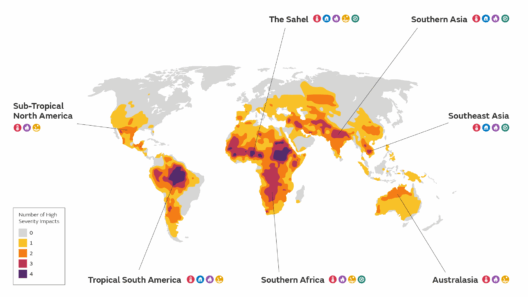
One of the most glaring manifestations of global warming’s impact on socioeconomic status is the growing divide in access to resources. Wealthier communities often have the capital necessary to invest in protective infrastructure, such as flood barriers or advanced irrigation systems. Conversely, marginalized neighborhoods frequently lack the financial means to secure such enhancements. This disparity is especially pronounced in developing nations, where the effects of climate change can devastate entire sectors—most notably agriculture, which is a lifeline for countless families. Droughts and unpredictable rainfall patterns jeopardize food security and economic stability, exacerbating poverty and compelling families to make impossible choices.
As we plunge deeper into the implications of global warming, the interconnected webs of health and education emerge as critical components of the socioeconomic ecosystem. Climate change affects air and water quality, leading to increased incidences of illness, particularly among vulnerable populations. Children exposed to environmental hazards miss school, resulting in educational setbacks. Their prospects for future employment dwindle like summer flowers under a frost. When education falters, the cycle of poverty becomes perpetually entrenched, binding generations in a seemingly inescapable chain reactions akin to an ouroboros consuming its own tail.
Another dimension to this discussion is the concept of climate migration. As certain regions become uninhabitable due to extreme weather events, rising sea levels, or desertification, people are compelled to leave their homes in search of a husk of normalcy. However, this migration predominantly favors those who can afford to relocate. Poorly resourced groups often find themselves stranded in unsafe environments or pushed into overcrowded cities where opportunities are scant. Thus, migration, which should be a pathway to improvement, can instead lead to exacerbated inequality.
Furthermore, the psychological impacts of climate change must not be overlooked. The chronic stress experienced by those living in precarious situations can impair mental health, limiting the ability to pursue educational or economic opportunities. Anxiety over future weather events, loss of livelihood, or inadequate healthcare can result in a malaise that diminishes the resolve to adapt or innovate. This psychological toll perpetuates a cycle of dependency on social services, which, in turn, drains public resources and fosters stigma against those affected.
Sustainability must occupy a central role in the conversation about mitigating global warming’s socioeconomic ramifications. Transitioning toward renewable energy solutions not only addresses environmental needs but also sparks economic opportunities. For example, investing in solar or wind energy can stimulate job creation in regions historically reliant on fossil fuels. This places power back into the hands of local communities, where socio-economic revitalization can burgeon. By prioritizing sustainable development, societies can craft a landscape where dignity is restored and a collective responsibility towards the environment is instilled.
In the grand tableau of climate action, policymakers and individuals alike are encouraged to recognize their potential as agents of change. As stewards of the Earth, we must advocate for equitable solutions that ensure vulnerable populations share in both the burdens and benefits of climate adaptability. Collaborative efforts must embrace innovative approaches that elevate voices from disenfranchised communities. Ultimately, climate resilience can only be achieved through inclusive practices that recognize the intrinsic worth of all individuals, irrespective of their socioeconomic standing.
In conclusion, the consequences of global warming paint a stark picture of humanity’s interdependence and vulnerability. As paths diverge due to climate change, it is paramount that we collectively strive toward a future where equitable opportunities abound, regardless of economic standing. A synergistic approach, combining environmental stewardship with social justice, can illuminate the journey forward. We stand to gain not only in the battle against climate change but also in the earnest pursuit of a more just world. By acknowledging and addressing the intricate relationship between global warming and socioeconomic status, we pave the way for a brighter, more sustainable tomorrow.