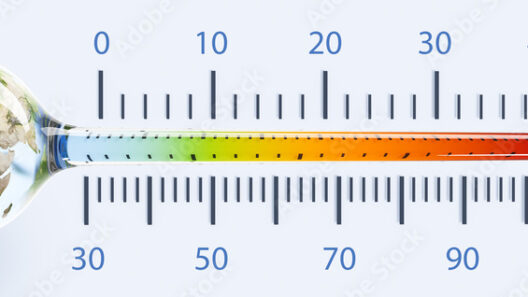




Global warming is not merely a trending topic; it represents a profound transformation reshaping our planet’s climate system. The incalculable consequences of rising temperatures are intricate, warranting a comprehensive exploration of the science behind this phenomenon. As emissions continue to escalate, fueled by industrialization and deforestation, we stand on the precipice of irreversible changes. To appreciate the severity of global warming, one must delve deeper than sensationalist headlines and grasp the underlying science.
At its core, global warming refers to the long-term increase in Earth’s average surface temperature due to human activities, predominantly the burning of fossil fuels. This process releases greenhouse gases, particularly carbon dioxide (CO2) and methane (CH4), into the atmosphere. These gases form a protective layer around the Earth, trapping heat and creating what is known as the greenhouse effect. While this effect is crucial for maintaining the planet’s temperature, the excessive accumulation of these gases has led to an alarming rise in temperatures.
Statistics speak volumes: the global average temperature has risen by approximately 1.2 degrees Celsius since the late 19th century. This seemingly modest increment conceals a plethora of catastrophic implications. For instance, as temperatures rise, polar ice caps and glaciers melt, leading to rising sea levels. Since 1900, average global sea levels have risen by about 20 centimeters, endangering coastal communities and ecosystems. Moreover, as freshwater sources diminish, the strain on agriculture exacerbates food security crises worldwide.
Inextricably linked to temperature rise is the phenomenon of extreme weather. Increased heat leads to intensified storms, droughts, and floods, transforming regional climates and wreaking havoc on natural habitats. The Intergovernmental Panel on Climate Change (IPCC) warns that as global temperatures continue to rise, weather patterns will become increasingly erratic, ushering in centuries of unpredictable extremes. This shift not only endangers biodiversity but also threatens human health and safety.
Beyond weather and temperature averages lies the science of feedback loops, mechanisms which amplify warming. One prominent example is the thawing of permafrost in Arctic regions. As temperatures rise, frozen organic matter decomposes, releasing additional CO2 and CH4 into the atmosphere—exacerbating the very problem that instigated the thaw. This multifaceted interaction of climate variables creates a daunting web of interdependence; each strand critical to unraveling the complexities of climate change.
It’s essential to recognize that global warming does not affect all regions uniformly. The differential impact illustrates the concept of climate justice. Vulnerable populations—often the least responsible for emissions—bear the brunt of climate-related disasters. Disproportionate impacts manifest in developing countries, where lack of resources exacerbates poverty and limits adaptive capacity. Addressing this inequity emerges as a pressing moral imperative alongside technical solutions.
Alternatively, an encouraging facet of scientific discovery lies in the pursuit of solutions. Renewable energy technologies, such as solar, wind, and hydropower, emerged as promising alternatives to fossil fuels. Transitioning to clean energy could significantly mitigate greenhouse gas emissions while simultaneously stimulating economic growth and job creation. The cost of solar panels, for example, has plummeted over the past decade, making them increasingly accessible to both consumers and industries. Embracing a green economy necessitates investment, innovation, and policy reform to ensure a sustainable future.
Equally crucial is the role of reforestation and sustainable land management practices. Forests serve as vital carbon sinks, absorbing CO2 from the atmosphere. Initiatives aimed at restoring degraded lands and pursuing agroecological practices can enhance carbon sequestration while also promoting biodiversity. Engaging local communities in stewardship of these natural resources is pivotal, harnessing shared knowledge and fostering a connection to the land that sustains them.
The importance of education and awareness cannot be overstated. A well-informed populace is critical to driving change. Schools, universities, and organizations must cultivate an understanding of climate science, encouraging critical thinking regarding our collective responsibility. Integrating climate education into curricula empowers future generations to confront environmental challenges with creativity and determination. Moreover, fostering dialogue across disparate sectors engenders collaborative strategies to address climate change more effectively.
While articulating a solution-oriented discourse, it is also paramount to acknowledge the complexities and uncertainties tied to climate projections. Climate models are sophisticated yet inherently imperfect; they offer insights based on existing data and assumptions about future emissions. As variables continuously shift, the challenge remains: predicting scenarios with precision. Hence, adaptive management strategies become pivotal in navigating these uncertainties, allowing for flexible responses to emerging conditions.
As a society, fostering a sustainable future hinges on systemic change at both individual and collective levels. Consumer choices, like reducing meat consumption or opting for public transportation, poignantly intersect with larger market forces. Voting for leaders committed to environmental policies amplifies voices for urgent climate action. In essence, democratizing climate solutions invites diverse perspectives into the fold, enriching the discourse while nurturing a shared vision for a sustainable future.
In summary, to comprehend global warming in its entirety, one must transcend headlines and explore the intricate interplay of science, policy, and human behavior. The human narrative is interwoven with ecological realities, emphasizing the need for concerted action. As we grapple with the urgent implications of climate change, the call to action echoes louder than ever: collectively, we possess the power to transform our trajectory. The time to act is now—our planet’s future depends on it.