

The Black Death, one of the most harrowing pandemics in human history, spread across Europe in the 14th century like a fierce wildfire. It is crucial to understand how its tentacles reached far and wide, taking a toll not only on the population but on the social, economic, and cultural landscapes of the time. What if we could pinpoint the very routes that led to catastrophe? Imagine tracing the steps of this deadly contagion across a historical map, revealing the interconnectedness of trade, travel, and public health responses that characterized the era.
In assessing the timeline and the various key routes of the Black Death, we must break down the timeline into distinct phases, each marked by significant events that contributed to its spread. How did this calamity leapfrog from continent to continent, interacting with the people and the environment along the way? The answers lie in historical evidence, chronicled accounts, and recent scholarly interpretations.
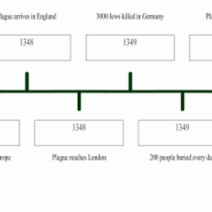
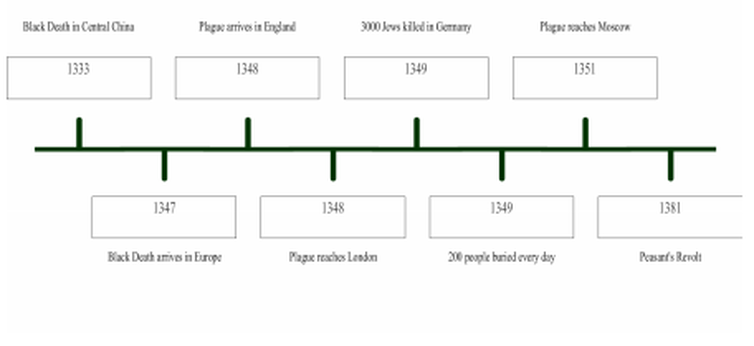
In October 1347, the first chapter begins when plague-infested ships arrived in the Sicilian port of Messina. The crowded and unsanitary conditions aboard these vessels created a breeding ground for the bacterium Yersinia pestis, which was responsible for the plague. When sailors disembarked, the townsfolk were met not with joyous tidings but with something far more sinister. A tragedy unfurled—several crew members died swiftly, and soon, the people of Messina began to fall ill. Within a mere fortnight, the city was engulfed in chaos.
By 1348, the disease had taken root on the Italian mainland, reaching cities like Naples and Florence. The flourishing trade routes facilitated rapid dissemination, allowing the contagion to hitch a ride along with merchants and travelers. The critical question arises: could a better understanding of public health protocols have mitigated the disaster? The absence of such wisdom meant that households bore the brunt, with families ravaged as they witnessed loved ones perish before their eyes.
But Europe was not a passive audience to this unfolding calamity. It was a time of vibrant commerce, and that very pulse facilitated the spread of the plague to the densely populated regions. As one might expect, the disease did not discriminate; it swept through both highborn and lowborn alike, decimating lives irrespective of social status. In just a year’s time, the plague made its way to Paris, London, and beyond, effectively altering the societal fabric of these thriving metropolises.
By 1349, the northern passage of the disease can be observed as it trickled from England to Scotland and into the Nordic countries. Port cities stood as gateways to further outbreaks. Ports like Bristol and Dover saw increased maritime activity as traders transported goods, and often, themselves became unwitting vectors of disease. Imagine how each vessel that docked carried not just spices and textiles but also lurking bacteria, waiting to unleash its devastation.
The timeline continued to accelerate, leading to the horrors of 1350 when wave after wave of the plague struck. The concept of “quarantine” emerged, albeit reluctantly, as authorities grappling with the magnitudes of loss—an ironic twist where isolation became a necessary strategy to combat the very act of social engagement that had allowed the disease to flourish. The term ‘quarantine’ (derived from the Italian ‘quaranta giorni’ meaning ‘forty days’) became synonymous with survival and loss—a dual reality. Could familial bonds have been preserved if only the societal mindset had embraced separation sooner?
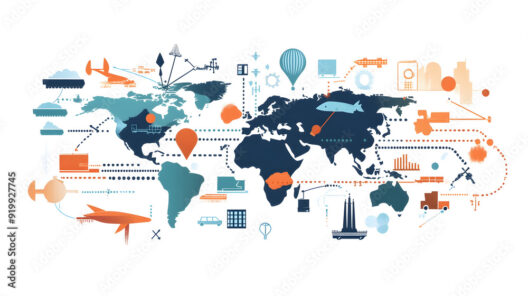
Now, let us delve into the routes that were instrumental in this grim geographical narrative. One primary artery of contagion was the Silk Road, an ancient trade pathway that connected Asia with Europe. Here, merchants transported not only wares but also diseases, creating an intricate interplay of commerce and catastrophe. The shift from the East to the West along these routes can be visualized as a sinister dance, each pirouette a trade agreement sealed with the risk of potential exposure. It serves as a reminder that even in times of exchange and affluence, shadows of mortality lingered close behind.
An equally pivotal route appeared via maritime channels, where merchant ships crossed the Mediterranean Seas anew, bringing with them both life and death. These vessels became synonymous with contagion, and every port city they graced added another chapter to the grim saga of the plague’s journey. What remains pivotal is this assertion: that the interconnectedness of cities spurred on the virulence of the Black Death. A single ship’s arrival would ignite a fresh outbreak, echoing the deluge of despair that had swept the continent.
As the calamity wore on into the early 1350s, the plague began to wane but not before leaving an indelible mark on Europe. The estimated death toll ranged from one-third to nearly half of the continent’s population, irrevocably altering demographic patterns. Societies grappled with the aftermath, as labor shortages prompted shifts in economic power dynamics.
Today, the legacy of the Black Death serves as a cautionary tale, echoing fervently through the annals of public health discourse. The echoes of its spread reveal lessons that resonate still—how interconnectedness, while fostering growth and trade, can also amplify vulnerabilities. As we reflect on the timeline of the Black Death and its key routes, we must also consider our current realities: Are we prepared for the diseases of tomorrow that could arise from our own globalized networks? Can history repeat itself if we ignore its wisdom? The playful question remains a challenge for contemporary society, reminding us that in unity, there exists both strength and peril.