


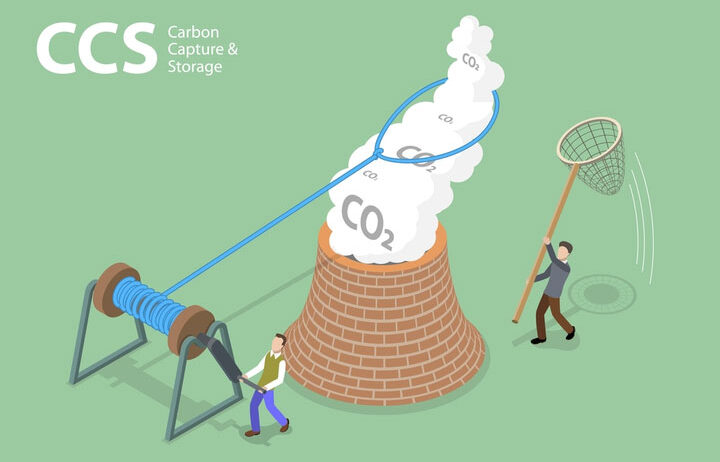

As the climate crisis escalates, a growing focus on innovative technologies emerges, raising a pivotal question: Can carbon capture save the planet? This query is not merely rhetorical; it demands a thorough analysis of carbon capture, utilization, and storage (CCUS) technologies, their potential to mitigate climate change, the challenges they face, and the broader implications for environmental policy and societal behavior.
At its core, carbon capture technology offers a glimmer of hope amidst a cacophony of dire prognostications regarding global warming. The fundamental mechanics behind CCUS involve capturing carbon dioxide (CO2) emissions at their source—be it from power plants, industrial sites, or even the atmosphere—before this greenhouse gas permeates the atmosphere, contributing to climatic disruption. Once captured, the CO2 can be either repurposed for various applications or sequestered deep underground, where it cannot contribute to atmospheric concentrations. The promise of this technology lies not only in its potential to reduce emissions but also in its possible contribution to a circular economy, wherein captured CO2 is transformed into useful products.
However, the technological framework of carbon capture is fraught with complexities and ramifications. The arsenal of CCUS includes several methodologies such as direct air capture (DAC), bioenergy with carbon capture and storage (BECCS), and once-through carbon capture utilized in fossil fuel power plants. Each variation boasts distinct benefits but also hurdles that need rigorous examination. Direct air capture, for instance, can theoretically produce negative emissions by extracting carbon from already-rich atmospheric concentrations. Yet, the energy requirements for these processes are substantial, posing questions about efficiency and sustainability. Moreover, not all carbon capture processes lead to net-positive environmental outcomes; thus, a discerning evaluation of their holistic impacts is necessary.
The scalability of these technologies has also incited skepticism. Currently, facilities employing CCUS are relatively scant across the globe, with notable examples like the Petra Nova project in Texas which successfully captures a substantial amount of CO2 from a coal-fueled power plant, repurposing it for enhanced oil recovery. However, the remaining footprint of CCUS is dwarfed compared to the enormous scale of potential emissions from global energy production and industrial processes. The stark reality is that existing CCUS initiatives function at a fraction of the magnitude needed to effectuate meaningful climate stabilization within critical timeframes. Further, the deployment of such technologies is intrinsically intertwined with public policy, economic incentives, and societal readiness to embrace a transition away from fossil fuel dependency.
That leads to another poignant factor: the financial ramifications of implementing carbon capture technology. The infrastructure investments required are immense, and the long-term implications of large-scale deployment remain unclear. Governments worldwide must ask themselves how to allocate resources optimally—between advancing renewable energy technologies and investing in carbon capture—which could inadvertently create an opportunity for the fossil fuel industry to prolong its viability under the guise of environmental stewardship. The essential question of whether society can afford to bank on technologies yet to be proven at scale looms over discourse surrounding carbon capture.
Nevertheless, dismissing carbon capture outright as a panacea for climate change is equally short-sighted. While it is essential not to conflate optimism around carbon capture with complacency regarding emissions reductions, there is a valid argument to be made for its place in a multi-faceted climate strategy. Acknowledging the complex interplay between technology and necessity can shift perspectives significantly. Farmers can employ BECCS to generate carbon-negative bioenergy while enriching soils. Industries can initiate transitions to greener production methods with the aid of captured CO2 that can serve as a feedstock for creating high-demand products, such as plastics and concrete.
Moreover, the integration of carbon capture technologies can serve as a bridge toward innovation in energy systems. As global industries grapple with decarbonization mandates, CCUS can synergistically elevate renewable energy sources by providing a vital response solution to energy reliability and intermittency issues. It could catalyze transformations within sectors struggling with their emissions profiles—cement production and metallurgical processes, among others—potentially paving the way for broader acceptance and faster transitions to cleaner technologies.
However, to hinge the future of climate action on carbon capture technology alone undermines the urgency of reducing emissions at source through comprehensive policy enactment. The dire warnings from the scientific community cannot be overstated: curtailing emissions is critical in the immediate term, and a delay in decisive action can yield irreversible consequences. Implementing an array of solutions encapsulating aggressive emissions reductions, augmented by carbon capture, holds the most promise for sustainable climate resilience.
In conclusion, while carbon capture technology harbors the potential to complement broader climate strategies, it is imperative to approach its implementation with both enthusiasm and a critical mindset. The intersection of CCUS with energy transformation, economic viability, and environmental integrity requires thorough scrutiny. To frame carbon capture merely as a savior could lead to missed opportunities for genuine change. Thus, as we engage with these technologies, the sincerity of our climate agenda will be revealed not just in the metrics of captured carbon but in the audacity of collective action towards reducing our carbon footprint consistently and irreversibly.