


In the grand narrative of our planet’s existence, trees emerge as sentinels of life, breathing guardians that whisper the secrets of sustaining ecological balance. Their lush canopies stretch skyward, filtering sunlight to nourish lower life forms, while their vast root systems delve deep into the earth, anchoring our soil against erosion and stabilizing ecosystems. Yet the question looms large: can planting trees significantly ameliorate the harrowing effects of climate change? To ponder this inquiry is to embark on a journey through the labyrinth of ecological interdependencies, measurements, and the philosophical quandaries of nature’s role in mitigating human folly.
The archetype of trees as climate changers isn’t merely poetic; it is rooted in scientific legitimacy. These remarkable organisms participate in the intricate dance of photosynthesis, a transformative process wherein carbon dioxide—a principal greenhouse gas—enters their leaves and is transmuted into oxygen, all while sequestering carbon in their trunks, branches, and roots. It’s as if trees are nature’s carbon catchers, absorbing the very gas that threatens to smother our globe. As reported, one mature tree can absorb approximately 48 pounds of carbon dioxide annually, an impressive feat when multiplied across entire forests.
However, the question remains whether tree planting should stand as a panacea for the climate crisis or be viewed as a cog within a larger regenerative machine. The allure of afforestation projects is compelling; they promise not only to capture carbon but also offer a suite of ecosystem services—from enhancing biodiversity and improving water quality to providing habitats for countless species. Yet therein lies a paradox. In exuberantly promoting tree planting as a silver bullet, we risk oversimplifying the complexities of global warming while overshadowing other, equally necessary solutions. Trees alone cannot absorb enough carbon to dismantle the accumulation of anthropogenic emissions, which grow exponentially every year.
Intriguingly, not all tree planting endeavors yield the same results. Addressing climate change with afforestation is akin to selecting the right ingredients for a dish: the quality, type, and location of the trees matter immensely. ForeStation initiatives that introduce indigenous species into degraded lands can restore ecosystems to their former glory and invite a resurgence of native fauna. In contrast, monoculture plantations with non-native species might capture carbon quickly but can lead to biodiversity loss, soil degradation, and water scarcity. It becomes evident that if we desire to harness the powers of trees sustainably, we must operate with an acute awareness and an ecological lens that observes the broader landscape.
This leads us to the notion of “carbon offsetting,” where tree planting is positioned as a carbon credit mechanism. While this concept presents a method for companies to offset their carbon footprints, it raises ethical concerns. Should planting trees become a convenient exit strategy for industries that perpetuate emissions? The very idea poses moral complexities: is it acceptable to continue polluting while throwing money at tree-planting schemes, effectively paying for absolution? Instead of solely focusing on offsets, a holistic approach demands a commitment to reducing emissions at the source, making tree planting a complementary effort rather than a compensatory one.
The very act of planting trees symbolizes hope—hope for regeneration, sustainability, and resilience. Nurseries sprout forth, engaged citizens gather shovels in hand, and communities unite in green endeavors. Such grassroots movements not only enhance the aesthetic allure of urban environments but also foster social cohesion. The act of planting trees can become a narrative thread uniting disparate demographics against a common foe: climate change. Yet, while engagement in these activities proves vital to societal dynamics, the quantifiable effectiveness of these planted trees must be appraised through rigorous scientific metrics, ensuring that genuine progress is being attained.
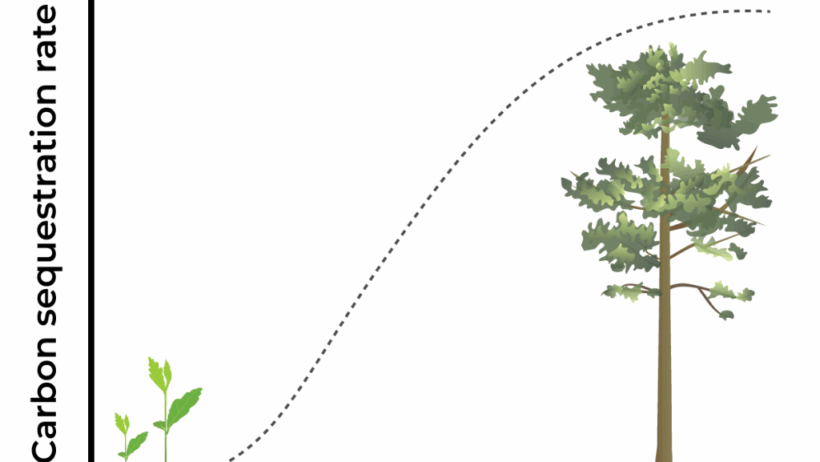
Furthermore, understanding the temporal aspect of tree growth is fundamental. When we plant a sapling, we are investing in the future. Young trees require decades to reach maturity, at which point their net carbon capture is maximized. Thus, immediate advocacy for tree planting must be tempered with patience, comprehension of the temporal ecology, and the insistence that instant gratification should never confound long-term ecological health. In the end, a comprehensive climate strategy demands a blend of immediate solutions—such as renewables, energy efficiency, and carbon capture technologies—coupled with the steadfast commitment to tree planting as part of a grand ecological restoration vision.
As the narrative about climate change evolves, the role of trees in our ecosystems must also be redefined. They should be cherished not merely as carbon sequestration machines but as vital components of ecological networks—facilitators of biodiversity, protectors of soil, and vital participants in the water cycle. Their unique appeal lies in their ability to weave together a tapestry of life: from the microflora teeming within their bark to the majestic animals that graze beneath their branches.
In conclusion, while planting trees is an essential part of addressing climate change, it is not the sole solution. They can be both a balm and a burden. To be deluded into believing we can solely rely on afforestation is to ignore the multifaceted nature of our climate crisis. The real power lies in combination—an integrative approach where tree planting acts in tandem with other climate solutions. Let this intricate relation inspire collective action, guiding humanity toward a resilient and verdant future, where trees serve as the enduring symbols of not just survival, but a thriving, interconnected world.