


The dual crises of ocean acidification and global warming present a formidable challenge to our planet. This predicament captivates scientists and environmentalists alike, not only due to its immediate ecological repercussions but also because of its far-reaching implications for human civilization. The intricate relationship between these two phenomena is a subject of profound interest, raising critical questions about the potential for synergistic solutions. Can we reverse ocean acidification and global warming together? This question compels us to dive deeper into the scientific understanding of both issues, their interconnections, and the strategies available to mitigate them.
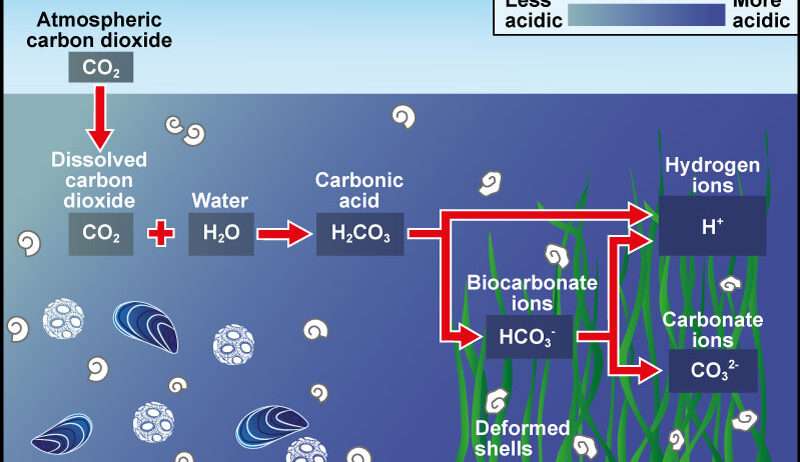
Ocean acidification results primarily from the increased absorption of atmospheric carbon dioxide (CO2) by the oceans. When CO2 dissolves in seawater, it forms carbonic acid, which subsequently lowers the pH of ocean waters. This chemical alteration has dire consequences for marine ecosystems, particularly calcifying organisms like corals, mollusks, and certain plankton species, which struggle to maintain their calcium carbonate structures in more acidic environments. These organisms form the foundation of marine food webs, and their decline can have cascading effects throughout the ecosystem.
Simultaneously, global warming, driven by anthropogenic greenhouse gas emissions, exacerbates the situation. The rising temperatures not only melt polar ice and elevate sea levels but also contribute to reduced oceanic oxygen levels and altered current systems. These changes, in concert with acidification, create a hostile habitat for marine life. The notion that these two phenomena are intricately linked underscores the urgency with which we must approach the problem. It is not merely an academic concern; it is a clarion call for concerted action.
Understanding the interplay between ocean acidification and climate change reveals a pathway toward solutions. Effective mitigation strategies must inevitably address both issues simultaneously. For instance, enhancing carbon dioxide uptake through afforestation and reforestation initiatives can serve a dual purpose. By increasing the number of trees and restoring damaged ecosystems, we can sequester atmospheric CO2 while simultaneously providing more habitats conducive to carbon storage in oceans through improved coastal and marine ecosystem health.
Moreover, this dual approach underscores the importance of ecological resilience. Healthy coral reefs and seagrass meadows are crucial for supporting biodiversity and mitigating the impact of ocean acidification. Restoration programs that focus on these ecosystems not only enhance their ability to recover from the stressors imposed by acidification but also contribute to carbon sequestration. Protecting these habitats, therefore, emerges as a critical strategy in the overarching battle against climate change.
Another compelling avenue lies in the realm of ocean-based climate interventions, often referred to as “blue carbon” strategies. These initiatives capitalize on the natural processes of carbon sequestration present in coastal ecosystems. Mangroves, salt marshes, and seagrasses are highly efficient at capturing carbon both in their biomass and the surrounding sediment. Enhancing these habitats can yield dual dividends: combating ocean acidification by promoting biodiversity and offering a resilient barrier to climate-induced disturbances.
Technological innovations also offer promising pathways. Carbon capture and storage (CCS) techniques could potentially reduce CO2 emissions from fossil fuel sources before they reach the atmosphere. By capturing CO2 at the source, injecting it underground, or even mineralizing it, we may curtail the levels of CO2 that ultimately contribute to both ocean acidification and global warming. Furthermore, research into ocean alkalinity enhancement—an experimental method that involves adding minerals to seawater to increase its capacity to absorb CO2—provides a further potential solution that addresses both issues concurrently.
Nonetheless, while these solutions exhibit promise, they are not without challenges. Implementing such strategies at the scale necessary to make a significant impact requires robust political will, substantial funding, and widespread public awareness. Governments must prioritize funding for both research and restoration initiatives. Collaborative efforts among nations, especially those most vulnerable to the impacts of climate change, are integral to fostering a unified approach. International regulatory frameworks must be established to monitor and mitigate carbon emissions, while also financing extensive restoration projects.
Social engagement and education are equally critical. The general public must be made aware of the intertwined nature of ocean health and climate stability. Programs that raise awareness, foster collective action, and encourage individual responsibility can drive change at the grassroots level. Community involvement in local restoration projects and carbon reduction strategies cultivates a sense of ownership and fosters resilience, ensuring that long-term sustainability goals are met.
While reversing ocean acidification and mitigating global warming can seem like a daunting endeavor, progress is achievable through an integrated approach. By employing a combination of natural and technological solutions, combined with robust policy and community-driven efforts, we can combat these existential threats. The synergy found in addressing both problems concurrently is not only practical but essential for ensuring a thriving planet for future generations.
In conclusion, the interrelationship between ocean acidification and global warming demands urgent and unified action. By embracing a multifaceted approach that combines ecological health, technological innovation, and social engagement, we can aspire to reverse these alarming trends. The ocean, as a vital component of Earth’s systems, holds the key to mitigating some of the most pressing challenges of our time. It is within our collective grasp to safeguard and restore this invaluable resource, ensuring a sustainable future for all life on our planet.