

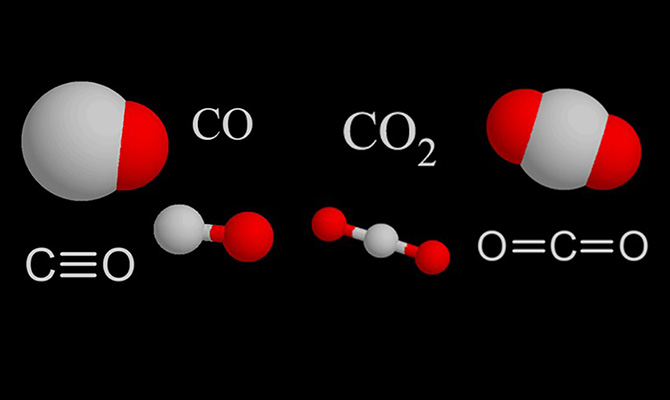

In the grand theatre of atmospheric phenomena, two actors often vying for our attention are carbon monoxide (CO) and carbon dioxide (CO2). While they may share a similar nomenclature, these substances vary dramatically in their roles, impacts, and implications for both human health and the environment. To navigate the intricacies of their existence, one must dive deep into their characteristics, origin, detection methods, and the consequences of their presence. Let us embark on an enlightening journey to decipher these two gaseous entities—one, a silent predator, and the other, a companion to life itself.
Origins and Composition: The Fabric of Life and Death
Carbon monoxide is often dubbed the “silent killer,” a colorless, odorless, and tasteless gas that sneaks into our environments under the radar. This insidious gas is produced primarily from incomplete combustion of fossil fuels. It is prevalent in urban settings, emerging from vehicles, generators, and poorly ventilated heating systems. It can be likened to a mysterious thief in the night, stealing away life unnoticed until it is too late.
In stark contrast, carbon dioxide is a vital player in the grand orchestration of life. This greenhouse gas, while also colorless, carries with it a trace of sweetness—a metaphorical embrace of life. It is a byproduct of respiration in animals and a crucial reactant in photosynthesis for plants. While carbon dioxide can become an environmental villain when present in excess, it simultaneously sustains existence in the natural world. Picture a double-edged sword: one edge is essential for life, while the other poses significant environmental threats.
Health Implications: The Silent Predator and the Necessary Evil
The implications of exposure to these gases are polar opposites. Carbon monoxide, with a propensity to bind with hemoglobin in red blood cells exponentially more efficiently than oxygen, manifests its lethality swiftly. Symptoms such as headaches, dizziness, and confusion can escalate to unconsciousness or even death. This fate can befall unsuspecting individuals in homes, where faulty appliances release this insidious gas.
Conversely, carbon dioxide, though not directly toxic at lower concentrations, can still present health risks in confined spaces. An increased concentration of CO2 can lead to respiratory issues, impaired cognitive function, and ultimately asphyxiation in extreme cases. It whispers its danger quietly, often masquerading under the guise of increased respiration and lethargy.
Environmental Impact: The Two Sides of the Coin
Delving further into their environmental narrative, carbon dioxide emerges as a key contributor to climate change. As a significant greenhouse gas, it traps heat in the atmosphere, leading to global warming and ensuing climatic chaos. This gas, once celebrated for its role in sustaining life, has morphed into a formidable enemy, driving erratic weather patterns and the melting of polar ice caps.
On the flip side, carbon monoxide plays a different role in environmental degradation. While not a greenhouse gas per se, it contributes to the formation of ground-level ozone, a component of smog that affects air quality. Furthermore, CO can induce the formation of fine particulate matter and other hazardous pollutants, impacting both health and ecosystems. Here, the predator morphs into a destroyer of the very fabric of our environment.
Detection and Mitigation: Illuminating the Shadows
Given their contrasting dangers, the methods of detection for carbon monoxide and carbon dioxide warrant careful discussion. Carbon monoxide detection hinges on the use of specialized sensors that offer an audible alarm when concentrations exceed safe levels. These sensors are crucial allies, protecting families from the hidden perils lurking in appliances and vehicles. Much like a sentinel guarding the fort, they provide a first line of defense against this unseen threat.
In contrast, monitoring carbon dioxide involves various methods, including infrared sensors and chemical tests. While these technologies are invaluable in industrial settings, they are less ubiquitous in residential areas. Awareness surrounding CO2 levels is often overshadowed by the urgency of carbon monoxide detection, leaving households vulnerable to the less evident perils of this gas.
Regulatory Actions: A Call to Arms
Governments and environmental agencies around the world recognize the need to manage the risks associated with both gases. Regulations for carbon monoxide emissions are stringent, particularly for vehicles and industrial emissions. Standards are established to limit the concentration of CO in ambient air, aiming to protect public health and preserve environmental integrity.
Carbon dioxide regulations, however, are often more complicated due to its role as a natural component of our atmosphere. International agreements, such as the Paris Agreement, aim to curb CO2 emissions on a global scale, incentivizing the switch to renewable energy and sustainable practices. Thus, the battle against carbon emissions evolves continuously, driven by the dual narratives of necessity and peril.
Conclusion: Distinct Yet Intertwined
As we reflect on the disparate yet interconnected fates of carbon monoxide and carbon dioxide, it becomes clear that understanding their differences is paramount. One gas languishes in the shadows of danger, while the other floats in the light of life, though both can shift from friend to foe under the right conditions. Navigating the complexities of these substances requires vigilance and informed action—both as individuals and as a global community. Our future, intertwined with these gases, depends on our ability to discern and respond appropriately to their respective narratives. In the end, the choice is ours: to either succumb to their silent influence or to forge a path towards a healthier, more sustainable existence.