


Pollution manifests as a pervasive specter haunting the land beneath our feet, a grim legacy of contemporary civilization. While often discussed through the lens of air and water quality, land pollution demands an equal measure of scrutiny. It is a multifaceted issue that emerges from a confluence of human activities, each contributing to the degradation of the terrestrial environment. Understanding the causes of land pollution is essential, as is exploring innovative strategies to counteract this pressing dilemma.
1. Industrial Activities: The Harbinger of Contamination
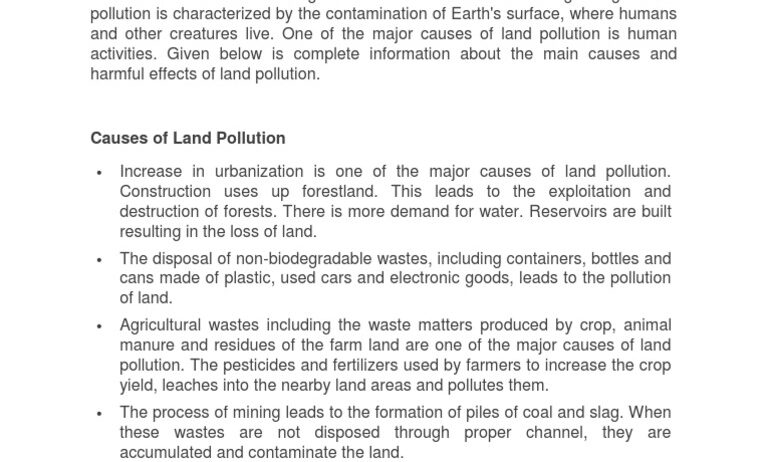
At the forefront of land pollution lies industrialization. Factories and manufacturing operations expel a mosaic of hazardous waste—chemicals, heavy metals, and solid refuse—into the environment. These pollutants infiltrate the soil, altering its composition and crippling its ability to sustain life. Excessive reliance on synthetic materials further exacerbates the issue, as the breakdown of plastics and similar debris is an agonizingly protracted process. The ramifications are dire; toxic substances can seep into groundwater, poisoning local ecosystems and posing health risks to nearby populations.
2. Agricultural Practices: The Double-Edged Sword
Agriculture, while vital for sustaining humanity, often serves as a significant source of land pollution. The use of chemical fertilizers and pesticides enhances crop yields but introduces an array of pollutants into the soil. These substances disrupt natural ecosystems and may decimate beneficial microorganisms essential for soil health. Furthermore, practices such as monoculture deplete the soil of essential nutrients, necessitating even greater chemical intervention. Yet, sustainable practices—such as organic farming and crop rotation—hold immense promise in mitigating these deleterious effects.
3. Urbanization: Concrete’s Silent Insidiousness
As human populations burgeon, urban sprawl spreads relentlessly, consuming landscapes and embedding pollution deep within the strata. Construction activities generate substantial waste, including debris and hazardous materials. Additionally, the conversion of green spaces into urban jungles diminishes natural filtration systems, resulting in elevated runoff of pollutants into the soil. The proliferation of impervious surfaces increases the risk of flooding and erosion, contributing to sedimentation and land degradation. A concerted effort to integrate green infrastructure into urban planning could curtail these adverse effects significantly.
4. Waste Disposal: The Burden of Neglect
The improper disposal of waste epitomizes a staggering disregard for environmental health. Landfills, often viewed as a straightforward solution to waste management, release harmful leachates that seep into the ground, posing a severe threat to both soil and groundwater. Moreover, illegal dumping practices exacerbate land pollution, as hazardous materials are discarded without regard for safety or environmental consequences. Embracing waste reduction initiatives and fostering a culture of recycling can catalyze a substantial transformation in waste management approaches.
5. Mining Operations: Extracting More Than Just Minerals
Mining is another guilty party in the realm of land pollution, characterized by its relentless extraction of natural resources. The consequences are profound; habitat destruction, soil erosion, and water contamination frequently follow in mining’s wake. Moreover, the process often involves the use of toxic substances, such as cyanide and mercury, which leave a devastating imprint on the landscape. Transitioning to sustainable mining practices, alongside reclamation efforts, stands as an imperative for preserving the integrity of our land.
6. Transportation: A Growing Concern
The very veins of our society, transportation networks, may also be culpable in the pollution of land. Runoff from roads, laden with oil, heavy metals, and other pollutants, can accumulate in the soil, poisoning it and reducing its fertility. Additionally, the accumulation of vehicle tire waste contributes to microplastic pollution, taxing the land’s resilience. Innovating transport infrastructures, promoting public transport, and encouraging the use of electric vehicles could mitigate some of these detrimental effects.
7. Climate Change: The Silent Catalyst
While climate change is often discussed in terms of atmospheric implications, its influence on land pollution cannot be overlooked. Climate fluctuation leads to sedimentation and erosion, destabilizing soils and making them more susceptible to contamination from pollutants. Additionally, extreme weather events, including floods and droughts, can exacerbate existing pollution problems. Fostering resilience against climate change—not just in our environments but in our approaches to land conservation—can benefit both the soil and society.
Strategies for Prevention and Mitigation
To address this pervasive issue, a multifaceted approach employing education, innovative technologies, and community engagement is essential. First, fostering awareness about the adverse effects of land pollution can cultivate a more environmentally conscientious society. Schools and local organizations can host workshops, helping individuals recognize their roles in the ecosystem.
Secondly, the advent of eco-friendly technological solutions offers another avenue towards pollution prevention. Bioremediation techniques utilize microorganisms to detoxify soils, while advancements in waste management technologies can significantly reduce the environmental footprint of landfills.
Finally, there is power in community action. Grassroots movements focused on clean-up initiatives, local gardens, and sustainable practices can inspire both individuals and organizations to take accountability for their environmental impact.
In conclusion, the intricate web of land pollution is woven from various threads of human activity—industrial, agricultural, urban, and more. Recognizing these interconnections is pivotal for sparking change and fostering a renewed commitment to our planet’s health. Each of us has a role to play in addressing this pressing issue, and with collaboration and innovative strategies, we can endeavor to heal the Earth beneath us.