


Climate change is an omnipresent phenomenon impacting ecosystems, economies, and human health. One of the least discussed yet profoundly significant consequences of climate change is its influence on the water cycle. Understanding how climate change alters the water cycle is crucial in elucidating the broader implications for environmental sustainability and human resilience. This discussion aims to illuminate the intricacies of the water cycle and how shifts in its patterns herald grave challenges that warrant immediate attention.
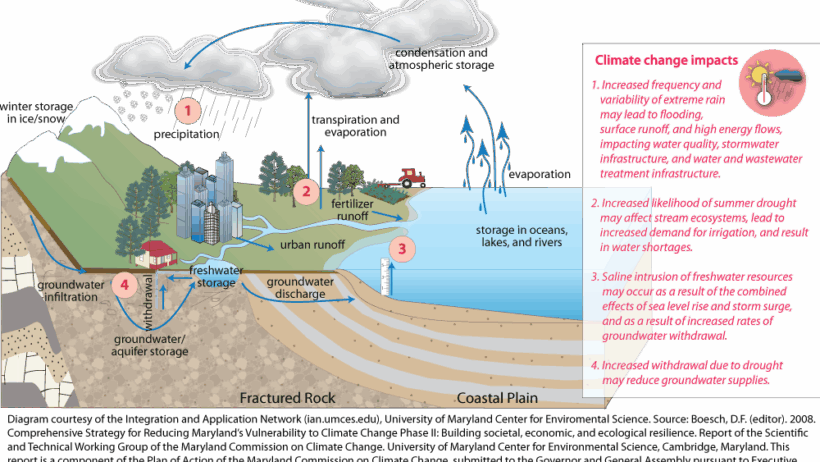
At the outset, it is vital to comprehend the fundamental components of the water cycle. It encompasses various processes: evaporation, condensation, precipitation, infiltration, and runoff. Water continuously moves between the atmosphere, land, and oceans, creating a delicate balance essential for life. Climate change disrupts this equilibrium, often in multifaceted ways.
One notable alteration induced by climate change is an increase in atmospheric temperatures. This phenomenon exacerbates evaporation rates, which in turn intensifies the quantity of water vapor present in the atmosphere. More water vapor can lead to heavier rainfall events, which may seem beneficial at first glance. However, this excess precipitation often results in severe flooding, soil erosion, and the exacerbation of waterborne diseases. The cascading effects of extreme weather events can destabilize entire communities, revealing the nuanced relationship between climate change and water resources.
Conversely, regions that experience increased evaporation may simultaneously grapple with prolonged drought conditions. As temperatures rise, areas that previously benefited from consistent rainfall now face the specter of aridity. The Intergovernmental Panel on Climate Change (IPCC) projects that many areas in the subtropics will become increasingly vulnerable to drought. This duality — where one region may receive torrential downpours while another suffers from crippling dryness — prompts us to reevaluate how we manage water resources. These fluctuations can threaten not only agriculture, which relies heavily on stable water supplies, but also drinking water availability and sanitation efforts.
What’s more, climate change is not the only culprit in this shifting water paradigm. Land use changes, such as deforestation and urbanization, exacerbate the effects of altered precipitation patterns. Forests play an indispensable role in the water cycle; they aid in maintaining humidity through transpiration and store water in their root systems. When forests are decimated in the name of agriculture or development, the landscape becomes less capable of retaining moisture. This creates a vicious cycle where reduced vegetation leads to diminished precipitation, triggering further drought conditions.
In addition, the melting of glaciers and polar ice caps, driven by climate warming, contributes another layer of complexity to the hydrological cycle. Glaciers serve as critical freshwater reservoirs, slowly releasing water into rivers and lakes even during dry periods. As they recede, they initially increase river flow, but this surge is inevitably followed by diminished supply. Communities dependent on glacial runoff face an uncertain future as their primary water sources dwindle. This dynamic shift exemplifies the urgency of adapting our water management strategies to contend with the realities of a changing climate.
Beyond local implications, the global nature of interconnected water systems commands attention. Water scarcity and flooding can catalyze migration, as populations flee inhospitable environments. This movement of people can lead to geopolitical tensions, resource conflicts, and exacerbation of social inequalities. The intersection of climate change, the water cycle, and global migration underscores the need for comprehensive, international responses to mitigate potential conflicts arising from water stress.
Moreover, the effects of altered precipitation patterns are acutely felt in terms of food security. Agriculture relies fundamentally on predictable patterns of rain and temperature. Farmers around the globe are facing uncertain planting seasons, diminished yields, and a heightened risk of crop failure. These challenges not only threaten the livelihoods of farmers but also pose significant risks to global food supplies, contributing to hunger and malnutrition in vulnerable populations. The ramifications are far-reaching, extending into health, economic stability, and social cohesion.
Addressing the repercussions of climate change on the water cycle requires a shift in perspective — one where water is viewed not merely as a resource to be exploited, but as a fundamental right and a precious, interconnected system. Adaptive measures have never been more essential. Implementing sustainable water management practices, investing in green infrastructure, and employing water-saving technologies are critical actions that can help mitigate the adverse impacts of climate change.
Education and awareness also play pivotal roles in navigating these challenges. Communities must be informed about the repercussions of their activities on the water cycle and the importance of sustainable practices. By fostering a culture of environmental stewardship, individuals can contribute to collective resilience against the unfolding effects of climate change.
Finally, policymakers should prioritize integrating climate change considerations into water management frameworks. Multi-disciplinary collaboration can yield innovative solutions tailored to specific regional challenges, enhancing both adaptation and mitigation strategies. Consequently, the complexity of the water cycle necessitates a comprehensive approach — one where ecological science and sociology converge to cultivate adaptive governance and foster community resilience.
Ultimately, recognizing the intertwining of climate change and the water cycle is imperative. By doing so, we can harness a collective commitment to preserving our water resources for future generations. Through acute awareness, proactive adaptation, and sustainable practices, we can forge a path toward a more resilient world, mitigating the pervasive threats posed by climate change to the water cycle and beyond. Each action taken today reverberates into tomorrow. Thus, the pursuit of sustainability and equity in water management is not merely an environmental imperative; it is an ethical responsibility that beckons us to act now.