


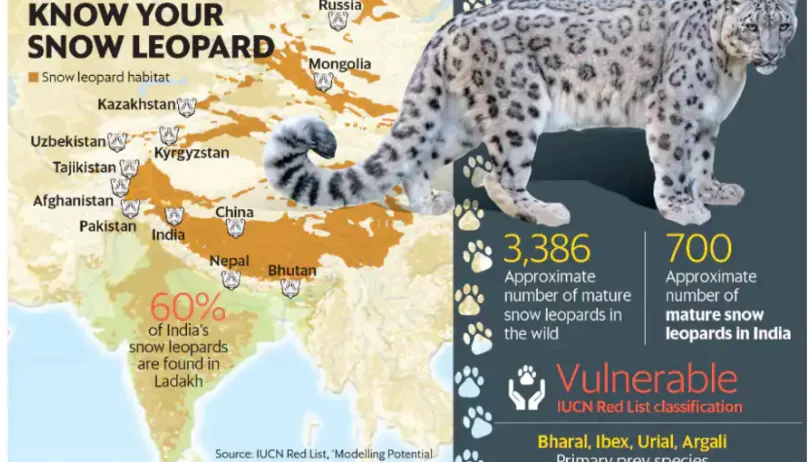

The snow leopard, an elusive and majestic feline, prowls the high-altitude mountains of Central Asia, embodying the spirit of wilderness. With piercing eyes and a thick, luxurious coat adorned with rosettes, these creatures are not just beautiful but crucial for the health of their ecosystems. But one pressing question lingers: how many snow leopards truly inhabit these rugged terrains today? As we investigate their current population, we also confront a significant challenge—how can we ensure the survival of these magnificent animals in the face of mounting threats?
Understanding the snow leopard’s population dynamics requires a multifaceted approach that considers various factors, such as habitat range, conservation initiatives, and the impact of human activities. Recent data estimates suggest that the global population of snow leopards ranges from 4,000 to 6,500 individuals. However, these figures are not just numbers; they reflect the ongoing struggle between survival and extinction. Each snow leopard represents a vital strand in the rich tapestry of biodiversity.
Snow leopards inhabit steep and rugged mountain ranges across 12 countries—including Bhutan, China, India, Mongolia, Nepal, Pakistan, and Tajikistan. Their habitats often span remote areas that are challenging to access, which complicates accurate population assessments. To monitor these elusive big cats effectively, researchers utilize a blend of advanced technologies and traditional tracking methods. Camera traps equipped with motion sensors have become an invaluable tool for capturing images of snow leopards and providing crucial data about their distribution and numbers.
As conservationists delve deeper into the snow leopard’s world, they discover that this species is a keystone predator in its ecosystem. By preying on ibex and various herbivores, snow leopards help maintain a balance that sustains their mountainous environment. Yet the delicate interplay of predator and prey faces disruption due to various human-induced pressures. Overgrazing by livestock, poaching, and habitat fragmentation threaten their survival. In several areas, snow leopards are driven closer to human settlements, leading to negative interactions that further endanger their population.
Initiatives aimed at conserving snow leopard populations have gained momentum in recent years. Transboundary collaborations and community-based projects are central to these efforts, emphasizing the need for coordinated strategies across national borders. Local communities, traditionally reliant on livestock grazing, are increasingly involved in conservation efforts. For instance, initiatives that promote sustainable livestock management help reduce conflicts between snow leopards and herders, thereby creating a more harmonious coexistence.
In addition to community engagement, successful conservation programs also focus on habitat preservation. Protecting the natural landscapes where snow leopards roam is paramount for their survival. Establishing and maintaining wildlife corridors that connect fragmented habitats enhances genetic diversity, allowing for healthier populations. Furthermore, involving local governments in conservation policies ensures that the needs of both people and wildlife are addressed, fostering an environment conducive to snow leopard recovery.
Despite these advancements, key challenges persist. Climate change poses an existential threat to high-altitude ecosystems. As temperatures rise, the snow leopard’s habitat is under pressure, pushing them to migrate to higher elevations, where food resources may become scarce. Cryptic and solitary by nature, snow leopards are particularly vulnerable during this time of ecological upheaval. How can we, as stewards of the planet, respond to this challenge adequately? What innovative solutions must we devise to mitigate the impacts of climate change on such a majestic species?
Public awareness is another crucial component in the fight for snow leopard conservation. Educational campaigns that highlight the importance of snow leopards in mountain ecosystems can galvanize support for their protection. Increasing public interest also attracts funding and resources necessary for broader conservation initiatives. As advocates share stories of snow leopards and their unique adaptations, they inspire a sense of responsibility towards their conservation. Engagement can pave the way for novel approaches, including ecotourism, which not only benefits local communities economically but also fosters understanding and appreciation for these enigmatic big cats.
Despite the numerous obstacles, hope remains palpable in the realm of snow leopard conservation. One notable beacon of success is the gradual increase in population numbers in certain regions over the past few years. Monitoring efforts show promising signs, but vigilance is essential. Conservation must be seen as an ongoing commitment rather than a finite project. Continuous research, adaptive management practices, and the nurturing of community relationships are vital in achieving longevity for snow leopards.
In conclusion, the current population of snow leopards is a troubling yet fascinating topic. While estimates suggest that around 4,000 to 6,500 individuals exist, numerous challenges threaten their survival. Climate change, habitat fragmentation, and human-wildlife conflict jeopardize not only their future but the overall health of mountain ecosystems. To ensure that snow leopards continue to grace the high peaks of Asia, concerted effort from governments, communities, and individuals alike is paramount. Understanding their plight is only the beginning; action is essential. The snow leopard’s tale is one of resilience and adaptability, but the ultimate question remains: how can we shape their future in a rapidly changing world?