


Global warming, akin to a colossal furnace stoked by human activity, has reshaped our planet’s climatic landscape over the last century. As the Earth warms, myriad scientific inquiries emerge, one of the most compelling being: how does global warming influence the Sun’s ultraviolet (UV) radiation? This query may initially seem esoteric, yet it has profound implications for health, ecology, and the very fabric of our atmosphere.
The Sun, a relentless nuclear reactor, emits radiation across the electromagnetic spectrum, including the short, high-energy UV rays that are both vital and perilous for life. These rays are divided into three types based on their wavelength: UVA, UVB, and UVC. UVA rays penetrate the skin deeply, contributing to photoaging and skin cancers. UVB rays, while less prevalent, are more potent in causing sunburn and are the principal catalyst for the onset of skin cancer. UVC rays, the most harmful, are usually absorbed by the ozone layer and do not reach the Earth’s surface, thanks to this protective shield.
As global temperatures rise, the intricate ballet between climate and UV radiation becomes more discernible. The first act in this drama is the alteration of the ozone layer, which plays a pivotal role in filtering out harmful UV rays. The ozone layer, if considered as Earth’s sunscreen, has already been subjected to an array of anthropogenic stressors. Chemicals like chlorofluorocarbons (CFCs), prevalent in refrigerants and aerosol propellants, have historically degraded ozone molecules, leading to vulnerabilities. With the onset of global warming, the dynamics of ozone and UV radiation have evolved dramatically.
Warmer atmospheric temperatures can lead to changes in the stratosphere, specifically where the ozone layer resides. Research indicates that as warming occurs, particularly at the poles, changes in the atmospheric circulation can result in an increase in ozone depletion. This depletion permits an attendant increase in UV radiation reaching Earth’s surface. For instance, in higher latitudes, the thinning ozone layer enhances UV levels, leading to concern that populations in these regions may be assailed by intensified UV exposure.
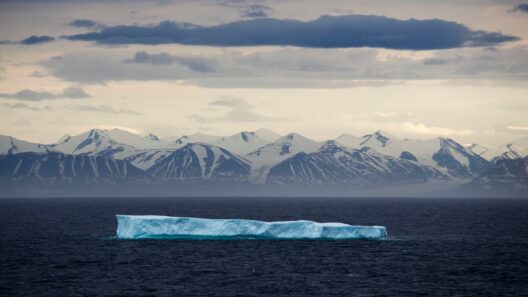
Moreover, the interplay of global warming and UV radiation does not exist in isolation; it is intertwined with myriad environmental factors including cloud cover, aerosol concentrations, and surface albedo. Aerosols, tiny particles suspended in the atmosphere, have a dual role. On one hand, they can reflect incoming solar radiation, thereby deflecting some UV rays. On the other hand, certain types of aerosols enhance UV radiation by diminishing cloud cover and increasing the brightness of snow and ice surfaces. The melting of polar ice caps, a direct consequence of global warming, diminishes Earth’s albedo – a reflective surface that once acted as a barrier to UV radiation. A darker surface absorbs more heat, leading to a vicious feedback loop that exacerbates both global warming and UV exposure.
Moreover, vegetation and ecosystems respond variably to both climate alterations and UV radiation. Plants, those stalwart defenders of our environment, possess varying degrees of resilience against increased UV exposure. However, with rising temperatures and fluctuating UV levels, many crops face augmented stress, potentially lowering yields and altering food security dynamics. The delicate equilibrium of ecosystems is threatened; species that thrive under specific UV conditions may find their survival compromised as climate dynamics shift.
Human health is also intricately linked to examinations of UV radiation and global warming. As UV levels rise, the incidence of skin cancers, cataracts, and immune system suppression is expected to increase. Public health initiatives, which once focused primarily on educating about the avoidance of prolonged sun exposure, must pivot to a more comprehensive approach addressing the multifaceted implications of altering UV radiation due to climate shifts.
There lies another layer to this multifaceted enigma. The ocean, often referred to as the lifeblood of our planet, absorbs a significant amount of UV radiation. As the temperature of ocean waters climbs, its capacity to absorb and distribute UV energy is altered. The potential repercussions are immense. A warmer ocean can lead to a higher incidence of harmful algal blooms, disrupting marine ecosystems and further introducing toxins into our aquatic food chains.
In conclusion, the relationship between global warming and UV radiation is akin to an intricate tapestry woven from strands of ozone dynamics, atmospheric changes, and ecological responses. Each factor influences others, creating a complex web where change in one can reverberate throughout the whole. As we move forward, it is vital to engage with this complexity, recognizing that individual actions and policies have the potential to illuminate a path toward sustainability. Collective awareness and robust environmental stewardship are imperative to safeguard not only our climate but also the intricate interplay that supports life on Earth, from the smallest microbe to the tallest tree. Through informed action and commitment, humanity can strive to preserve the delicate balance essential for our survival in the face of a changing world.