

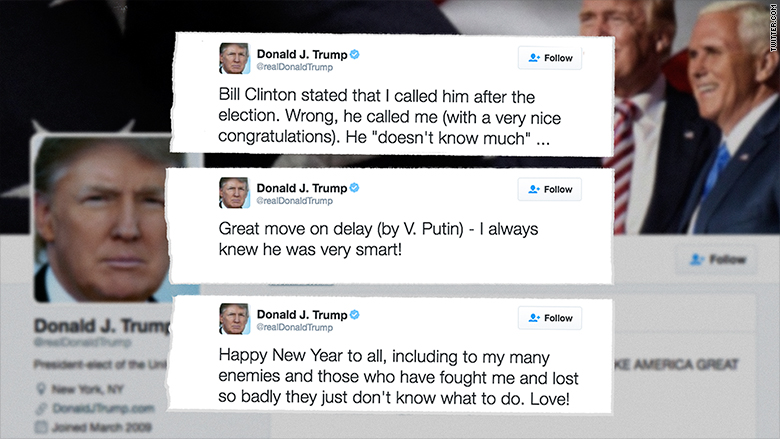

In recent years, a notable phenomenon surrounding climate change discourse has emerged: the intersection of social media, political rhetoric, and environmental science. One notable figure at the epicenter of this discussion is former President Donald Trump, whose tweets have generated extensive dialogue regarding his views on global warming and environmental policy. The implications of his statements are far-reaching, transcending mere political commentary and probing into the broader public perception of climate change.
To dissect the assertion that Trump may have wished for global warming, it is essential to contextualize his approach towards climate-related issues. At times, his tweets have dismissed the scientific consensus surrounding climate change, instead portraying it as an exaggerated concern. Such dismissals do not occur in a vacuum; they reflect a broader political climate that often prioritizes short-term economic gains over long-term environmental sustainability. This raises a critical question: What deeper motivations underlie this tendency to undermine climate science?
One possible reason for Trump’s frequent dismissal of global warming concerns is rooted in his administration’s prioritization of industry and economic progress. The fossil fuel sector, in particular, has played a pivotal role in shaping policy decisions, contributing to an energy narrative that emphasizes deregulation and economic opportunity. By downgrading the urgency of climate change, Trump positioned himself as a proponent of job creation in traditional industries, appealing to a base that values immediate economic benefits over environmental stewardship.
Moreover, one cannot ignore the role of social media in framing public discourse. Trump’s tweets often leveraged humor, sarcasm, and hyperbole, capturing the attention of his followers and facilitating a culture where complex scientific concepts were distilled into simplified slogans. Statements like “It’s cold out, where’s global warming?” exemplify this trend, merging a personal anecdote with broader climate discourse. While such comments garnered immediate engagement, they simultaneously signaled a troubling dismissal of established climate science, creating an echo chamber that trivializes critical issues.
Trump’s tweets also highlight a perplexing characteristic of contemporary political dialogue: the allure of contrarianism. By dismissing global warming, he positioned himself against the prevailing narrative of environmental urgency, captivating those who view climate discourse as part of a broader elitist agenda. This resonates particularly with individuals who harbor skepticism towards scientific institutions, bolstering a sense of identity rooted in rebellion against the mainstream. As a result, Trump’s rhetoric has not only influenced policy but has also fostered a subculture that embraces anti-establishment sentiment intertwined with climate skepticism.
Furthermore, this phenomenon can be understood in terms of the psychological mechanisms that govern public perception and belief systems. In the face of a complex, multifaceted crisis like climate change, individuals often gravitate towards simplistic explanations. Trump’s comments provided a convenient narrative that alleviated the existential anxiety surrounding climate change, allowing individuals to embrace a worldview that lacks the burden of ecological responsibility. This dynamic is not unique to Trump’s audience; rather, it reflects a pervasive societal trend wherein complex challenges are rendered digestible through oversimplification.
However, it is vital to engage critically with the consequences of such rhetoric. The minimization of climate change, articulated through Trump’s tweets, has fostered an environment that inhibits progressive climate policy. With each tweet that diminishes the reality of global warming, the urgency for concrete action diminishes alongside it. This inertia has domino effects, contributing to policy stagnation, lack of investment in renewable energy initiatives, and exacerbation of climate-related disasters.
The deliberative contrast lies in the science itself. Climate change, as supported by overwhelming empirical evidence, poses substantial risks to global ecosystems, biodiversity, and human livelihoods. As temperatures rise and extreme weather events proliferate, the ecological consequences become increasingly palpable. In this context, the trivialization of climate change through political humor and neologisms does not merely reflect personal beliefs; it embodies a profound collective dissonance between lived experience and scientific reality.
Moreover, the fascination with Trump’s tweets can be traced to their impact beyond the individual. When political leaders use social media as a tool for communication, they ultimately shape public understanding and response to critical issues like climate change. This leadership failure has tangible repercussions, undermining grassroots movements striving for meaningful environmental change while amplifying obstacles to international climate agreements.
Moving forward, a critical assessment of the narratives cultivated through social media platforms is essential. It is imperative to promote a culture of informed dialogue that upholds scientific integrity while engaging with the legitimate concerns of the public. Harnessing the complexities of climate change requires a multifaceted approach, blending political will, scientific acuity, and public engagement. Empowering citizens with accurate information and fostering a robust, evidence-based discourse can counteract the superficiality often found in political tweet-speak.
In conclusion, the assertion that Trump wished for global warming, as reflected in his tweets, invites deeper inquiries into the implications of political rhetoric on public perception. The interaction between industry, social media, and belief systems illustrates the intricate web that sustains climate denialism. It necessitates a renewed commitment to addressing climate change as a foundational global challenge and fostering dialogue that embraces complexity rather than distillation. As the conversation continues, the need for a collaborative effort to bridge the gap between scientific understanding and public belief becomes ever more critical in the pursuit of a sustainable future.